


Govt Signals Parliament Session, Accuses Congress of Snubbing Delimitation Talks
Kiren Rijiju says the Centre consulted several opposition parties after Congress failed to provide dates for discussions, intensifying speculation over a special parliamentary session to consider the proposed legislation.
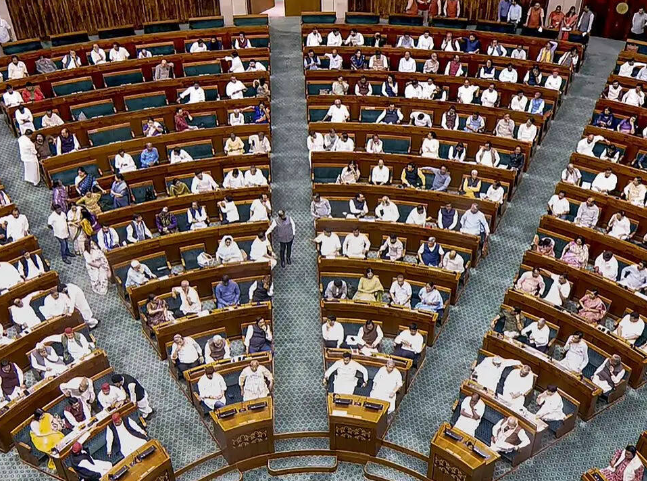
NEW DELHI: The Centre on Monday accused the Congress of avoiding discussions on the proposed delimitation legislation, saying it had already consulted several opposition parties after repeated attempts to arrange talks with the grand old party failed. The development has fuelled speculation that Parliament could be convened for a brief session to take up the proposed legislation.
Responding to Congress president Mallikarjun Kharge’s October 16 letter to Prime Minister Narendra Modi, Parliamentary Affairs Minister Kiren Rijiju said the government had approached multiple political parties to build a broader consensus on the issue.
Rijiju said the Centre had repeatedly sought dates from Congress for discussions but received no response. Consequently, the government extended its consultations to other parties, including the Samajwadi Party (SP), Dravida Munnetra Kazhagam (DMK), YSR Congress Party (YSRCP), Nationalist Congress Party (Sharadchandra Pawar), Shiv Sena (UBT), All India Majlis-e-Ittehadul Muslimeen (AIMIM) and Biju Janata Dal (BJD).
He questioned the rationale behind Congress’s repeated demand for consultations, arguing that the government had already taken steps to engage political stakeholders.
The minister’s remarks appeared aimed at highlighting Congress’s absence from the consultation process, particularly as other opposition parties had participated in discussions. Rijiju also pointed out that neither Kharge nor Rahul Gandhi, the Leader of the Opposition in the Lok Sabha, had provided a date for a meeting when he approached them during the previous parliamentary session.
In his letter to the Prime Minister, Kharge had called for an all-party meeting to deliberate on any fresh delimitation proposal. He also raised concerns over what he described as an unprecedented delay in proroguing the Monsoon Session of Parliament, which was adjourned sine die on August 13.
Rejecting the objection, Rijiju cited previous parliamentary precedents and maintained that the Constitution does not prescribe a specific timeframe for proroguing a House after it has been adjourned sine die.
He argued that the continued absence of a formal prorogation order did not, in itself, constitute any constitutional or procedural irregularity.
The exchange has brought renewed attention to the government’s proposed legislative agenda and the role of opposition parties in discussions surrounding delimitation. However, the timing and duration of any additional parliamentary session have not been formally confirmed.

