


Trump Announces New Women’s Health Research Division to Improve Diagnosis and Treatment
The US initiative will establish a dedicated division within the National Institutes of Health and a White House task force to advance research into conditions affecting women across different stages of life.
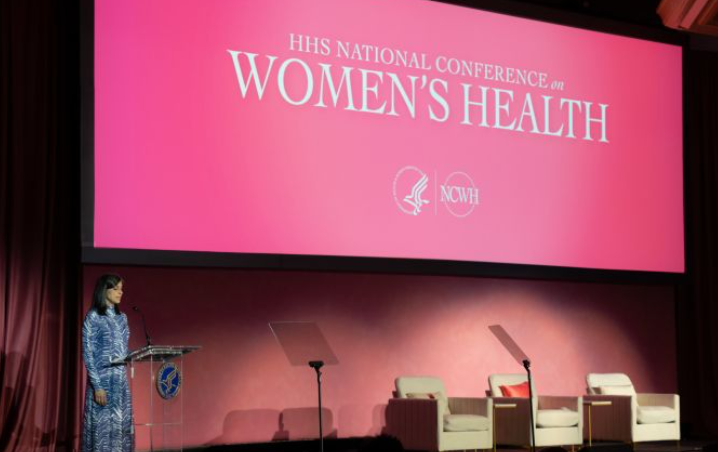
WASHINGTON, Oct 19: US President Donald Trump has signed an executive order establishing a new women’s health research division within the National Institutes of Health (NIH) and a White House task force aimed at improving medical research, diagnosis and treatment for conditions that affect women.
Announced on Monday, the initiative seeks to strengthen scientific understanding of women’s health needs, accelerate the development of medical treatments and improve access to healthcare innovations. First Lady Melania Trump has championed the effort, highlighting the need to address medical conditions that have historically received insufficient attention in research and clinical practice.
The new division is expected to be established within 90 days and will coordinate with the NIH’s existing Office of Research on Women’s Health. The White House task force will be co-led by White House Chief of Staff Susie Wiles and Health Secretary Robert F Kennedy Jr.
According to the administration, the initiative will focus on expanding research across different stages of women’s lives, improving diagnostic capabilities and supporting the development of more effective treatments. It will also seek to increase women’s representation in clinical trials and explore the use of artificial intelligence and other emerging technologies in medical research.
The announcement comes amid renewed debate in the United States over healthcare priorities, research funding and the availability of specialised medical services for women.
Addressing gaps in women’s health research
Women’s health encompasses a broad range of medical needs, including reproductive health, pregnancy-related conditions, cardiovascular disease, autoimmune disorders, chronic pain and illnesses associated with ageing.
Medical researchers have increasingly emphasised the importance of understanding how biological differences, hormones, genetics and social factors influence the development and treatment of diseases in women.
The new initiative is intended to encourage research that can improve the identification of these differences and translate scientific findings into practical healthcare benefits.
Conditions such as endometriosis, uterine fibroids and menopause-related disorders can significantly affect quality of life, yet patients may experience delays in receiving a diagnosis or finding effective treatment. The administration has also highlighted maternal health, infertility, osteoporosis, Alzheimer’s disease, heart disease and stroke as areas requiring attention.
The initiative seeks to support scientific work that can improve understanding of these conditions, identify more effective interventions and strengthen the evidence available to healthcare professionals.
Researchers have long stressed that medical knowledge should reflect the needs of the populations receiving care. When certain groups are inadequately represented in research studies, the resulting evidence may not fully capture differences in disease progression, treatment response or adverse effects.
Increasing women’s participation in clinical trials could help researchers assess whether treatments work differently across patient groups and identify potential differences in safety and effectiveness.
However, improved representation alone will not resolve every research gap. Scientists must also design studies that examine relevant biological factors, recruit appropriate participants and follow patients for sufficient periods to evaluate outcomes.
New division to coordinate research priorities
The planned NIH division will operate within the country’s principal federal medical research system. Its creation is intended to provide a more focused structure for coordinating research into women’s health and identifying areas where additional scientific attention may be needed.
The division is expected to work alongside the existing Office of Research on Women’s Health rather than replace the broader NIH research network.
Coordination between research institutions can help identify overlapping projects, encourage collaboration and direct scientific attention towards questions that remain unanswered. It can also support the development of research priorities that reflect the needs of patients and healthcare professionals.
The administration has indicated that the initiative will seek to accelerate the development of diagnostic tools and treatments. This could involve supporting studies that improve early identification of diseases, evaluating existing therapies and investigating new approaches to prevention and clinical management.
Nevertheless, the establishment of a new division does not immediately translate into new medicines or diagnostic procedures. Medical research generally requires several stages, including laboratory investigation, clinical studies, regulatory assessment and evaluation of long-term safety.
The impact of the proposed structure will depend on its priorities, staffing, coordination with existing programmes and access to sustained research resources.
The White House had not specified a dedicated funding amount for the new initiative at the time of the announcement, leaving questions about its financial scope and implementation to be clarified.
Task force to guide government action
The White House task force is intended to bring together relevant government agencies and coordinate efforts to advance women’s health research.
Its leadership by senior White House and health officials signals that the administration intends to treat the subject as a cross-government priority rather than confining it to individual research programmes.
Such coordination may be important because women’s health involves several policy areas, including medical research, healthcare delivery, public health, insurance coverage and the regulation of medical products.
The task force is expected to support the administration’s objectives of accelerating scientific progress and improving access to medical innovations. The precise implementation measures, timelines and funding arrangements will be important in determining how these goals translate into changes for patients.
The initiative also raises questions about how existing federal research activities will be integrated into the new structure. The NIH already supports extensive work across medical specialties, including research into reproductive health, cardiovascular disease, cancer and neurological conditions.
Effective coordination will require clear responsibilities and mechanisms for assessing progress. Without such arrangements, new structures can overlap with existing programmes or create administrative complexity without producing corresponding improvements in research outcomes.
Focus on conditions affecting women throughout life
The administration has highlighted a range of conditions that can affect women from adolescence through pregnancy, adulthood and older age.
Reproductive health is one area of interest, with research needs extending beyond pregnancy and fertility to include endometriosis, fibroids, hormonal changes and menopause.
Endometriosis, for example, occurs when tissue similar to the lining of the uterus grows outside it and can cause chronic pelvic pain and fertility difficulties. Symptoms vary, and diagnosis may be delayed when pain is attributed to other causes or when access to specialist assessment is limited.
Uterine fibroids are non-cancerous growths that may cause heavy menstrual bleeding, pelvic discomfort and other complications. Treatment options depend on symptoms, the size and location of the growths, and the patient’s individual circumstances.
Menopause can also bring physical and psychological changes, while the risk of several chronic conditions increases with age. Better research may help clinicians understand these changes and offer evidence-based care suited to individual patients.
Cardiovascular disease is another important area. Heart disease and stroke remain major health concerns, and symptoms, risk factors and treatment considerations can differ among individuals. Research that improves recognition and management of cardiovascular risk in women could support earlier intervention.
Autoimmune disorders and chronic pain are also among the conditions identified for attention. These illnesses can require prolonged evaluation and multidisciplinary care, making accurate diagnosis and access to appropriate treatment particularly important.
The initiative’s broad scope reflects the fact that women’s health cannot be addressed through a single specialty or limited to reproductive medicine.
Artificial intelligence and medical innovation
The administration has also indicated an interest in using artificial intelligence to support medical research and innovation.
AI-based tools may assist researchers in analysing large datasets, identifying patterns in disease progression and investigating potential treatment targets. In clinical settings, certain systems may help interpret medical images, organise patient information or identify individuals who could benefit from further assessment.
For women’s health, these technologies could potentially support research into conditions that are difficult to diagnose or that present differently across patients.
However, the value of AI depends on the quality and representativeness of the data used to develop and evaluate these systems. If training datasets inadequately represent women or particular patient groups, the resulting tools may perform less reliably for those populations.
Researchers must therefore evaluate accuracy, safety, fairness and clinical usefulness before such technologies are adopted widely. AI systems should support, rather than replace, appropriate medical judgement and patient-centred decision-making.
The new initiative’s emphasis on innovation will need to be accompanied by rigorous evaluation to ensure that emerging technologies produce measurable benefits.
Questions over funding and existing programmes
Although the announcement establishes a new policy direction, details about the resources available to support it remain important.
The NIH operates a large network of research institutes and centres, and women’s health research is already conducted across numerous programmes. Establishing an additional division could improve coordination, but its effectiveness will depend partly on whether it receives adequate staffing, financial support and authority to advance its objectives.
The announcement also rescinds a women’s health research executive order issued by former President Joe Biden in 2024, according to reporting by The Associated Press. That earlier initiative had been associated with substantial federal research commitments.
The change has prompted questions about continuity, the treatment of existing projects and whether the new framework will provide resources comparable to those previously allocated.
Critics have also questioned the administration’s wider approach to scientific research, particularly in light of changes to federal research policies and programmes. These concerns underscore the importance of transparent funding decisions and clear information about how ongoing studies will be affected.
The administration has not announced a specific funding figure for the new division and task force. Consequently, it remains too early to determine the overall financial scale of the programme or how quickly it will expand research activity.
What the initiative could mean for patients
For patients, the principal measure of success will be whether the initiative leads to better diagnosis, more effective treatments and improved access to care.
Research advances can take years to translate into routine medical practice. Even when new diagnostic methods or therapies become available, patients may not benefit equally if access depends on income, insurance coverage, geographical location or the availability of specialists.
The administration’s objectives will therefore require attention not only to scientific discovery but also to the practical delivery of healthcare.
Improved research could help identify diseases earlier, refine treatment approaches and provide clinicians with stronger evidence for medical decisions. Greater understanding of conditions that affect women may also help patients receive clearer information about symptoms, risks and available treatment options.
The new structures will need to establish measurable goals and evaluate progress over time. Relevant indicators could include research participation, the development of validated diagnostic methods, improvements in clinical outcomes and the extent to which new evidence influences medical practice.
The announcement marks a renewed federal effort to prioritise women’s health research in the United States. Its long-term significance will depend on whether the proposed division and task force can strengthen existing scientific work, address persistent gaps in medical knowledge and turn research findings into meaningful improvements in patient care.

