


Mohammed Shami Keeps India Comeback Hopes Alive Despite Missing New Zealand Tour
The experienced fast bowler remains confident in his abilities after recurring injuries disrupted his career, insisting that his focus remains on maintaining fitness and performing at the highest level.
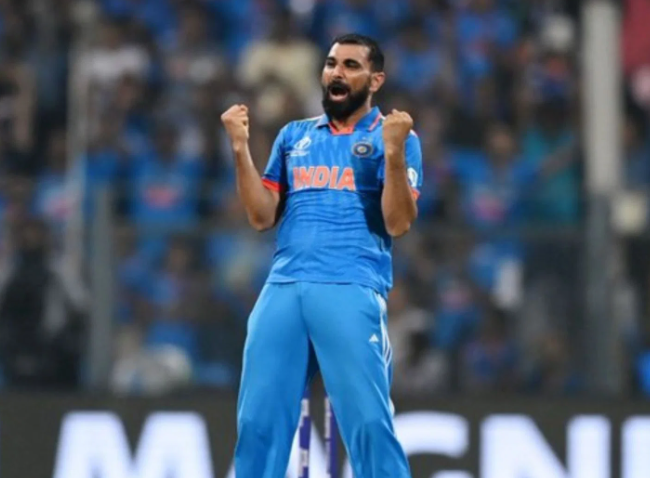
New Delhi, Oct 21: Veteran India fast bowler Mohammed Shami remains hopeful of returning to international cricket despite being left out of the squad for India’s upcoming multi-format tour of New Zealand, as the experienced pacer continues to work towards another opportunity to represent the national team.
The 36 year old, who has taken 462 wickets in 197 international matches across formats, last represented India during the Champions Trophy triumph in March 2025. His subsequent absence has been a significant talking point among cricket followers, particularly given his record in major international tournaments.
Shami’s career has been interrupted by recurring leg injuries, which have complicated his efforts to maintain a consistent presence in India’s bowling attack. Nevertheless, the fast bowler remains optimistic about his prospects and believes he still has the ability to compete at the highest level.
His omission from the New Zealand tour represents another setback in his efforts to regain an international place. However, the veteran has continued to train and maintain his focus on cricket rather than treating the selection decision as the end of his international ambitions.
India’s upcoming tour will include five Twenty20 internationals, followed by five one-day internationals and two Test matches. The extended schedule provides the national side with opportunities to assess players across formats as it manages workloads and evaluates combinations for future assignments.
Shami’s experience in all three formats could make him a valuable option if he returns to contention, although selection will depend on his performances, physical condition and the team’s requirements.
An experienced campaigner seeks another opportunity
Shami has established himself as one of India’s most effective fast bowlers through his ability to generate movement, maintain pace and deliver crucial breakthroughs under pressure.
His record of 462 international wickets reflects a career built on consistent performances against leading batting line-ups. Across formats, he has been valued for his ability to attack the stumps, exploit movement off the pitch and challenge batters with changes in length.
The pacer’s contributions have been particularly notable in major tournaments, where his experience and wicket-taking ability have often provided India with an advantage during important passages of play.
He was among the leading wicket-takers at the 2023 ODI World Cup, a campaign in which India reached the final. His performances demonstrated his ability to deliver in high-pressure situations and reinforced his reputation as a key member of the country’s fast-bowling resources.
Shami also played a role in India’s successful Champions Trophy campaign in 2025, finishing as a joint-highest wicket-taker in the tournament. That achievement remains a reminder of his ability to influence international matches when available.
However, fast bowling places considerable physical demands on players, particularly those who rely on pace and repeated high-intensity spells. For Shami, recurring injuries have made the task of maintaining fitness and returning to regular competition more challenging.
The veteran’s current objective is to remain prepared for another opportunity while continuing to demonstrate his value through competitive cricket.
Injury setbacks complicate comeback plans
Shami’s absence from India’s international assignments has been closely linked to his fitness challenges. Repeated interruptions have prevented him from enjoying the continuity that is often essential for fast bowlers seeking to maintain rhythm and match sharpness.
Returning from an injury requires more than recovering basic fitness. Bowlers must also rebuild their workloads, regain confidence in their movements and demonstrate that they can withstand the demands of sustained spells across different formats.
For an experienced player, the challenge can be particularly difficult when younger alternatives are competing for limited places in the squad.
India’s selection decisions reflect the need to balance experience with current form, availability and long-term planning. The team management must also consider the workload of fast bowlers who are expected to play across international tours and domestic competitions.
Shami’s omission from the New Zealand squad therefore leaves him needing to continue making his case through performances and fitness assessments.
The bowler has maintained that he remains in good condition and continues to train rigorously. His determination suggests he is unwilling to abandon his international ambitions simply because another selection opportunity has passed.
At this stage, however, a return date has not been established, and his future involvement with the national side remains uncertain.
Domestic cricket remains important
Domestic competition can provide experienced players with an opportunity to demonstrate their readiness for international cricket. For Shami, performances at this level could help strengthen his case for future selection while allowing him to continue developing match fitness.
His recent absence from a Ranji Trophy match for Bengal attracted attention, but the bowler explained that the decision was based on the conditions rather than concerns about his physical readiness.
The pitch was considered favourable to spin, and Shami indicated that playing a limited number of overs would not have offered the greatest benefit to the team. He also emphasised the importance of giving younger players opportunities to gain experience.
The explanation offered insight into the tactical considerations that can influence domestic team selections. A player’s omission from a particular match does not necessarily indicate a fitness problem, especially when conditions favour a different combination of bowlers.
For Bengal, managing the bowling attack according to the surface and match situation remains part of the broader strategy of competing in the Ranji Trophy.
For Shami, domestic cricket could nevertheless remain an important platform for maintaining competitive sharpness and demonstrating his ability to contribute over longer spells.
His experience could also prove valuable in helping younger players develop their understanding of fast bowling, preparation and match management.
India’s bowling options continue to evolve
India’s fast-bowling resources have expanded in recent years, increasing competition for places in the national squad. Selection committees must consider the needs of different formats while ensuring that leading bowlers are not exposed to excessive workloads.
The demands of Test cricket differ substantially from those of Twenty20 internationals, while ODI cricket requires a balance between sustained control and attacking intent.
A bowler returning from an extended absence must therefore demonstrate that he can meet the physical and tactical requirements of the format for which he is being considered.
Shami’s international experience gives him an advantage in understanding these demands. His ability to swing the new ball, attack the stumps and generate breakthroughs has been a major part of his contribution to India.
However, past achievements alone cannot guarantee a place in the team. Current performance, fitness and the availability of other bowlers will remain important considerations.
India’s lengthy New Zealand tour will also test the depth of its bowling resources. The combination of T20Is, ODIs and Tests requires careful planning, with players likely to be assessed according to their suitability for individual formats.
Although Shami has missed the current selection, his experience means a return could remain possible if he continues to perform well and meets the team’s requirements.
Determination remains central to his ambitions
Shami’s continued optimism reflects his desire to extend an international career that has included major tournament success and significant contributions to India’s bowling attack.
At 36, he faces the challenge of competing with younger players while managing the physical demands associated with fast bowling. His immediate priority is to remain prepared and take advantage of any opportunity that emerges.
The absence of a confirmed comeback timeline means the next phase of his career will depend on several factors, including competitive performances, fitness and the national selectors’ plans.
His record, however, provides a strong reminder of what he has delivered for India. With 462 international wickets, a major role in the 2023 ODI World Cup campaign and success at the 2025 Champions Trophy, Shami has built a substantial body of work.
For now, the veteran fast bowler remains focused on keeping his ambitions alive. Whether that determination leads to another international appearance will depend on his ability to sustain his form and convince the selectors that he can again contribute to India’s plans.

