


India Rejects Attempts to Tarnish World’s Largest Democracy at UN Through Unverified Allegations
New Delhi calls for transparency and non selectivity in international human rights mechanisms, opposing attempts to portray the country negatively through unverified claims and incomplete data.
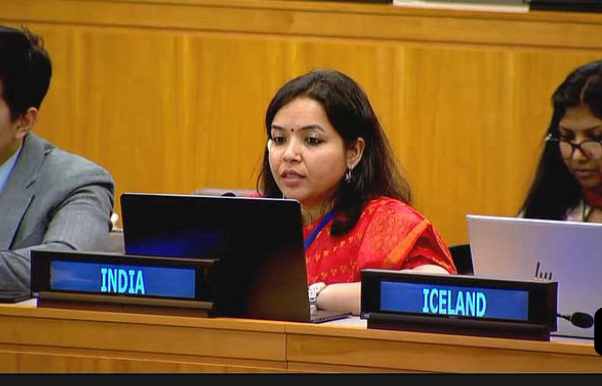
UNITED NATIONS, Oct 21: India has opposed attempts to present the world’s largest democracy in a negative light on the basis of unverified allegations and incomplete statistics, asserting that human rights should not be used as a tool for political pressure or selective targeting of countries.
Delivering India’s statement at the United Nations General Assembly’s Third Committee on Tuesday, Barkha Tamrakar, Deputy Secretary in the Ministry of External Affairs, stressed that international human rights mechanisms must function on the principles of dialogue, consultation, cooperation, transparency and non-selectivity.
India engages with these mechanisms but expects discussions to be grounded in facts and a fair assessment of the information presented, she said.
“We call on delegations to cite the report faithfully, not to inflate a humanitarian communication into a verdict,” Tamrakar said.
She emphasised that India remained willing to clarify specific cases supported by proper documentation through established channels. However, she firmly opposed efforts to use unverified claims, incomplete figures or reports that contained no country-specific observations on India to create an adverse impression of the country.
Her remarks came amid concerns expressed by UN human rights experts regarding youth-led demonstrations in New Delhi and the police response to the protests.
On Tuesday, more than 20 UN human rights experts in Geneva voiced concern over what they described as a repeatedly heavy-handed police response to peaceful demonstrations led by young people in the national capital. They urged the authorities to ensure accountability and justice in cases involving alleged human rights violations.
The latest concerns followed criticism raised by a UN human rights expert the previous week over an emerging satirical political movement involving young people in India. The expert had highlighted allegations that individuals associated with the movement faced retaliation.
India rejected the claims as hearsay and called on the expert to verify the information before making statements that could adversely affect the country’s image.
The Office of the United Nations High Commissioner for Human Rights had also expressed concern over reports of mass detentions involving demonstrators, protest organisers, civil society representatives, lawyers and journalists before and during large-scale demonstrations in Delhi.
New Delhi described the comments from the UN human rights office as unwarranted and an unacceptable interference in India’s internal affairs.
India’s intervention before the Third Committee reiterated its position that international human rights discussions should be guided by credible evidence, impartiality and respect for national sovereignty. It maintained that allegations must be examined through established procedures rather than presented as definitive conclusions without adequate verification.
The statement also highlighted India’s willingness to cooperate with international mechanisms while opposing what it considers selective scrutiny and the use of incomplete information to draw broader conclusions about its democratic institutions and human rights record.

