


India Rejects UN Rapporteur’s Description of Dawood Ibrahim’s D-Company as ‘India-Based’
New Delhi flags factual inaccuracies in a UN report on terrorism, says the fugitive gangster left India before his 2003 listing, and raises concerns over impartiality and accountability within the special rapporteur system.
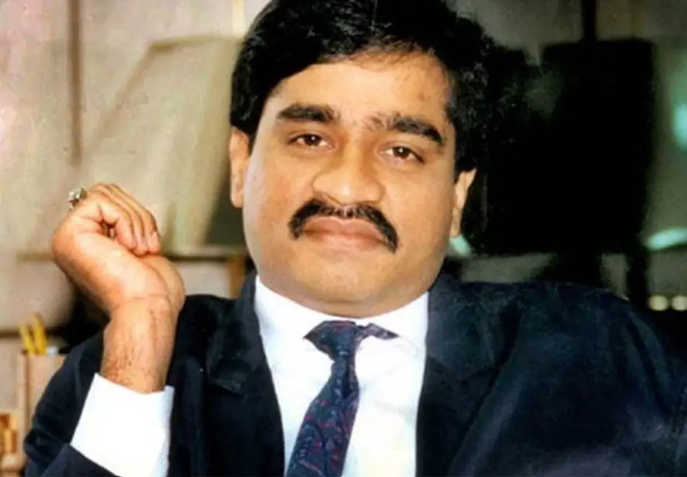
UNITED NATIONS, October 22: India has strongly objected to a United Nations special rapporteur describing fugitive gangster Dawood Ibrahim’s D-Company as an “India based” criminal organisation, accusing the report of containing serious factual errors and warning that such inaccuracies could undermine the credibility of the world body.
Raghoo Puri, First Secretary at India’s Permanent Mission to the United Nations, raised the objection while addressing the Third Committee of the UN General Assembly in response to a report by Ben Saul, the Special Rapporteur on the Promotion and Protection of Human Rights and Fundamental Freedoms while Countering Terrorism.
Puri said India had repeatedly expressed concern over reports issued by the special rapporteur containing factual inaccuracies without adequate accountability. He argued that presenting such findings to member states as established facts leaves little opportunity to correct misleading information before it enters official discussions.
“My delegation has been pointing out in other forums as well our serious concern at the unacceptable situation of the SR (Special Rapporteur) releasing reports with factual inaccuracies, while not being held accountable for them,” he said.
Describing the situation as particularly troubling for an organisation already facing questions about its legitimacy, Puri said the latest report contained what he called glaring errors concerning India.
India Challenges Description of D-Company
The Indian diplomat objected to a passage in Saul’s report stating that the UN Security Council had listed the leader of the “India-based D-Company” in 2003 for association with Al-Qaeda.
Puri said the description, when read without the relevant historical context, presented a misleading picture of the criminal organisation and its leader.
He stressed that Dawood Ibrahim has been wanted in India in connection with terrorist attacks dating back to 1993. According to the Indian representative, the relevant details are included in the narrative summary accompanying the Security Council’s listing under its 1267 sanctions regime.
“Not mentioning this fact is regrettable, and such incompetence on part of special mandate holders does this organisation tremendous harm,” Puri said.
He maintained that Ibrahim had fled India well before his 2003 listing and that his association with Al-Qaeda and its then-leader, Osama bin Laden, was recorded during the period when he was outside Indian territory.
“Let me correct it for the record,” Puri said, arguing that the report’s wording failed to communicate this distinction adequately.
India’s objection centred on the use of the term “India-based”, which it said did not accurately reflect Ibrahim’s departure from the country before the Security Council action. The Indian mission maintained that the report should have included the relevant details concerning his status and location.
Reference to Pakistan and UN Sanctions
Puri further referred to the UN listing concerning Ibrahim’s reported residence in the same country where Osama bin Laden was located before being killed by American forces.
Bin Laden was killed by US Navy SEALs during a raid in Abbottabad, Pakistan, in May 2011.
The Indian diplomat invoked this history to reinforce New Delhi’s argument that the report should have clearly distinguished between the organisation’s origins, the location of its fugitive leader and the circumstances of the UN sanctions designation.
The Security Council’s Al-Qaeda sanctions framework is intended to impose measures against individuals and entities associated with the designated terrorist network. India argued that descriptions of listed individuals should accurately reflect the information contained in the relevant UN records.
Puri said omitting essential background information risked creating an inaccurate impression about the organisation and its leader.
The intervention also reflected India’s broader concern that international reports addressing terrorism should provide complete and verifiable information, particularly when they refer to individuals accused of involvement in major attacks.
India Raises Concerns Over Impartiality
Beyond the dispute concerning D-Company, New Delhi questioned what it described as bias in several sections of Saul’s report.
Puri also referred to media allegations concerning the special rapporteur’s office and called for the highest standards of integrity, transparency and impartiality in the performance of UN mandates.
Saul is a professor of international law at the University of Sydney and an elected Fellow of the Australian Academy of Social Sciences.
The report has also attracted scrutiny over allegations concerning its author’s funding. UN Watch, a non-governmental organisation that monitors the United Nations, published a 104-page investigation in May 2026 titled From Watchdogs to Ideologues.
The investigation alleged that Saul received USD 150,000 from China in 2024 and described the Chinese government as his largest funder.
These claims were presented by UN Watch as part of its criticism of the special rapporteur system. The funding allegation remains an allegation attributed to the organisation and should not, by itself, be treated as proof of improper conduct.
India’s intervention placed the issue within a wider debate over the credibility of independent UN mandate holders and the importance of ensuring that reports are supported by accurate information and are free from political influence.
India Rejects Use of Human Rights Arguments to Defend Terrorism
Puri also criticised what he described as attempts by countries sponsoring terrorism to invoke human rights and counterterrorism principles to defend their actions.
“It seems to have become fashionable for sponsors of terror to use human rights and the framework of counterterrorism to justify their misdeeds,” he said.
He asserted that human rights mechanisms must not become a refuge for individuals or entities responsible for terrorist violence, radicalisation and extremism.
“Terrorism can never be justified,” Puri added.
The Indian representative’s remarks linked the dispute over the report to New Delhi’s long-standing position that international human rights institutions must address terrorism consistently and avoid what it considers selective application of established principles.
India has repeatedly called for international cooperation against terrorist networks and their financial and logistical support systems. It has also emphasised the importance of distinguishing between the protection of human rights and the justification of violence against civilians.
The Indian mission maintained that the international community should apply the same standards to all states and non-state actors involved in terrorism-related activities.
Exchange With Pakistan Over Jammu and Kashmir
Puri also rejected remarks made by Pakistan’s delegate against India, including references to the Union Territories of Jammu and Kashmir and Ladakh.
Describing the allegations as “pure propaganda” motivated by narrow political interests, he argued that Pakistan’s military played a decisive role in shaping the country’s policies.
He reiterated India’s position that Jammu and Kashmir and Ladakh are inalienable parts of the country and said he would not dignify the Pakistani representative’s remarks with further comment.
The exchange reflected continuing tensions between the two countries at international forums, where disputes over terrorism, security and Jammu and Kashmir frequently feature in diplomatic statements.
India has consistently opposed Pakistan’s references to the region in international discussions, while Pakistan continues to raise its claims over Jammu and Kashmir.
Wider Questions About UN Accountability
The controversy has renewed attention on the responsibilities of UN special rapporteurs, independent experts appointed to examine specific human rights situations or thematic issues.
Although special rapporteurs operate independently of governments, their reports can influence international debate and shape perceptions of countries, institutions and individuals. Accuracy, clear sourcing and the inclusion of relevant context are therefore central to maintaining confidence in their work.
India’s objection was that the description of D-Company as India-based failed to explain the circumstances surrounding Ibrahim’s departure and subsequent listing under the UN sanctions framework.
The dispute also raises questions about the procedures available to member states when they believe an independent expert’s findings contain material errors. Puri called for greater accountability, arguing that factual mistakes should not be allowed to stand uncorrected.
The Indian mission’s intervention did not merely challenge a phrase in the report; it questioned whether international assessments of terrorism can retain credibility if important details are omitted or presented without sufficient context.
For New Delhi, the central issue is that reports on terrorism should accurately identify the individuals and organisations concerned, reflect relevant UN records and avoid descriptions that could misrepresent the facts.
The remarks at the UN General Assembly’s Third Committee placed these concerns before member states as India pressed for greater consistency in the treatment of terrorism and stronger safeguards for the integrity of international reporting.

