


RBI Signals No Immediate Rate Cuts as Inflation Risks Strengthen
The central bank's policy committee warns that rising input costs, higher inflation expectations and expensive energy could require further monetary tightening, while two members caution against signalling an extended rate-hiking cycle.
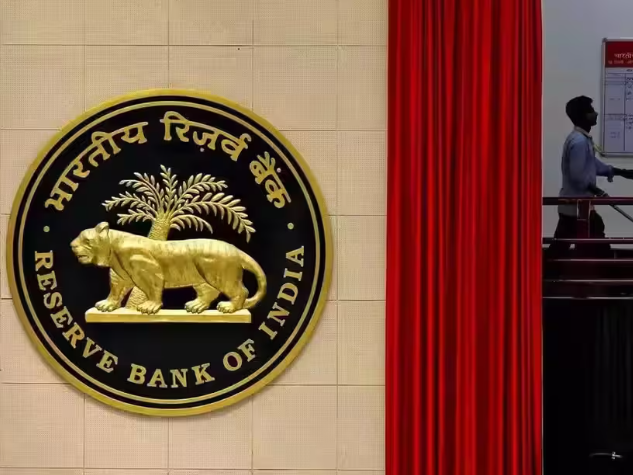
MUMBAI, Oct 21: The Reserve Bank of India’s Monetary Policy Committee has indicated that interest rate cuts are unlikely in the near term, as policymakers remain concerned about inflation spreading beyond food and fuel amid rising energy prices and persistent cost pressures.
Minutes of the committee’s October 5-7 meeting, released on Wednesday, showed that members unanimously supported a 25-basis-point increase in the benchmark repo rate to 5.50 per cent. However, the decision to shift the monetary policy stance from neutral to calibrated tightening exposed differences over how aggressively the central bank should respond to inflation risks.
RBI Governor Sanjay Malhotra said the duration and extent of any further rate increases would depend on actual economic developments, particularly the behaviour of underlying inflation, the broadening of price pressures and the possibility that supply-side shocks could influence prices across the economy.
The minutes suggest that policymakers are prepared to maintain or increase borrowing costs if inflation remains elevated. A reduction in rates is not considered the immediate priority, although future decisions will depend on incoming economic data rather than a predetermined schedule.
The policy discussion comes as India faces a combination of strong economic activity and rising inflation risks. Higher crude oil prices, uncertain energy supplies and concerns over domestic food costs have complicated the outlook, even as demand and investment continue to support growth.
Repo Rate Increased to 5.50 Per Cent
The October policy decision marked the first increase in the benchmark lending rate in nearly four years.
The MPC raised the repo rate by 25 basis points, taking it to 5.50 per cent, and changed its stance from neutral to calibrated tightening. The repo rate influences the cost at which banks borrow short-term funds from the central bank and can affect lending rates across the economy.
A higher policy rate generally makes borrowing more expensive, potentially moderating demand and reducing the risk that inflation becomes entrenched. However, the impact is not immediate and depends on how banks adjust deposit and lending rates, as well as the financial circumstances of households and companies.
Malhotra said the change in stance signalled that rate cuts were off the table for the near term. Future action, he indicated, could involve another increase or a pause, depending on the evolving outlook.
The governor also stressed that policymakers would need to assess the extent to which higher input costs were spreading into the prices of goods and services.
The committee’s decision reflects an effort to prevent temporary supply disruptions from becoming a broader and more persistent inflation problem.
Inflation Pressures Spread Beyond Food and Fuel
One of the principal concerns highlighted in the minutes was the widening distribution of price increases across the consumer basket.
Malhotra noted that the share of items in the Consumer Price Index recording inflation above 4 per cent had risen to 37 per cent in August, compared with 20 per cent in March.
This measure matters because inflation can become more difficult to control when price increases spread across a larger number of goods and services rather than remaining concentrated in a few categories.
The governor also highlighted an increase in core inflation, which excludes food and fuel, from 3.9 per cent in July to 4.2 per cent in August. Core inflation excluding precious metals rose to 2.9 per cent.
Although individual components can fluctuate, a sustained increase in underlying inflation may indicate that businesses are passing higher operating costs to customers or that demand conditions are allowing prices to rise.
The MPC is therefore monitoring whether energy and commodity shocks could generate second-round effects. These occur when an initial increase in costs influences wages, prices of other goods and services, and expectations about future inflation.
If households and businesses begin anticipating persistently higher inflation, price-setting behaviour may change, making it harder for monetary policy to restore stability.
The committee’s concern is not limited to the immediate impact of expensive fuel. It also includes the possibility that elevated transportation, manufacturing and distribution costs could spread across the economy.
Inflation Forecast Revised Upward
The RBI raised its inflation projection for the 2026-27 financial year to 5.2 per cent from the earlier estimate of 5 per cent.
The committee expects consumer price inflation to reach 6 per cent in the third quarter before easing to 5.7 per cent in the fourth quarter.
These projections indicate that inflation could approach the upper limit of the central bank’s 2-6 per cent target band during the third quarter.
The outlook remains sensitive to international energy prices, domestic food supplies, weather conditions and the extent to which businesses pass higher costs on to consumers.
A deficient monsoon and the possibility of El Niño conditions have added to concerns about agricultural output and food prices. At the same time, geopolitical tensions have increased uncertainty around fuel supplies and transportation costs.
The combination of these factors creates a difficult environment for monetary policymakers. Interest rate increases can moderate demand and inflation expectations, but they cannot directly resolve a shortage of agricultural produce or restore disrupted energy supplies.
The central bank must therefore assess whether higher inflation is primarily temporary or becoming embedded in broader pricing behaviour.
Growth Outlook Remains Resilient
Despite the inflation concerns, the RBI raised its projection for India’s real gross domestic product growth in 2026-27 to 7.1 per cent from 6.7 per cent.
The upward revision reflects the economy’s underlying momentum, including domestic demand, investment activity, manufacturing and services exports.
India recorded economic growth of 7.8 per cent in the first quarter of the financial year, providing support for the central bank’s assessment that economic activity remains resilient.
Strong demand and investment can help businesses maintain production and expand capacity. However, these conditions can also complicate inflation management if demand remains firm while supply costs increase.
The MPC must therefore balance price stability with the need to sustain economic expansion.
If interest rates rise substantially, companies that rely on bank financing could face higher costs for working capital and capital expenditure. Households may also encounter increased borrowing expenses for housing, vehicles and other credit-dependent purchases.
On the other hand, failing to contain persistent inflation could reduce household purchasing power and create uncertainty for businesses planning investments.
The policy challenge is to prevent inflation from becoming entrenched without imposing unnecessary pressure on economic activity.
Two MPC Members Oppose Change in Policy Stance
Although all six members voted in favour of the 25-basis-point repo rate increase, two members opposed changing the policy stance from neutral to calibrated tightening.
External members Nagesh Kumar and Ram Singh supported the rate increase but argued that maintaining a neutral stance would preserve greater flexibility amid economic uncertainty.
Kumar cited continuing geopolitical and trade-policy risks, suggesting that the existing stance remained appropriate given the uncertain outlook.
Singh warned that shifting towards tightening could signal an extended period of rate increases. He cautioned that expectations of substantial hikes might weaken demand in interest-sensitive sectors and discourage private investment.
Their position reflected a difference over the likely future course of policy rather than disagreement over the October rate increase itself.
The other four members supported both the increase and the change in stance, emphasising the need to respond pre-emptively to widening inflation pressures.
The discussion illustrates the difficulty of deciding how much weight to give current inflation readings, future price expectations and the potential consequences of tighter monetary conditions.
A policy stance also influences market expectations. By signalling that rate cuts are unlikely soon, the RBI can affect bond yields, deposit rates and the borrowing plans of businesses and consumers before any additional rate decision is announced.
Impact on Banks, Borrowers and Businesses
The prospect of further monetary tightening could influence financial decisions across the economy.
Banks may revise lending rates depending on their funding costs, loan portfolios and the way their interest rates are linked to the repo rate. The transmission of monetary policy varies between institutions and types of loans.
Borrowers with loans linked to external benchmarks may experience changes in their interest costs more quickly than customers whose loans are tied to other arrangements.
For households, higher rates can increase monthly instalments or extend repayment periods, depending on the lender’s terms. Prospective homebuyers may also reassess purchases if financing becomes less affordable.
Businesses that depend on borrowing for inventory, machinery and expansion could face higher financing expenses. This may be particularly important for sectors such as real estate, automobiles, construction and small manufacturing, where credit costs can influence customer demand and investment decisions.
However, higher interest rates can also benefit some savers if banks increase deposit rates. The overall effect on household finances depends on whether an individual is primarily a borrower, a saver or both.
For investors, the prospect of tighter monetary policy may influence valuations across equities, government securities and corporate bonds. Higher yields can make fixed-income assets more attractive, while increasing the discount rate applied to future corporate earnings.
Energy Prices Remain a Major Risk
International energy markets are an important factor in the RBI’s inflation assessment.
Crude oil prices rose above $110 per barrel on October 21 amid continuing concerns about supply disruptions and regional tensions. India imports a substantial share of its crude oil requirements, leaving domestic fuel costs exposed to changes in international prices and the rupee-dollar exchange rate.
Higher oil prices can increase transport expenses, manufacturing costs and the cost of distributing goods. If these pressures persist, companies may pass some of the increase on to consumers.
Currency depreciation can intensify the effect by making dollar-denominated imports more expensive in rupee terms.
These developments create a risk that inflation could remain elevated for longer than anticipated, even if some food prices moderate.
However, monetary policy cannot resolve the underlying causes of a supply disruption. Its role is to prevent the initial shock from generating persistent price increases throughout the economy.
Outlook Ahead of December Policy Meeting
The RBI’s next Monetary Policy Committee meeting is scheduled for December 2-4, when policymakers will reassess inflation, economic growth and financial conditions.
Until then, investors and businesses are likely to focus on monthly inflation readings, crude oil prices, currency movements and evidence of changes in domestic demand.
A further rate increase would depend on whether inflation remains broad-based and whether the risks identified by the committee become more pronounced. If price pressures ease or economic conditions weaken significantly, policymakers could instead choose to hold rates steady.
The October minutes do not establish that another increase is inevitable. Rather, they show that the central bank is prioritising inflation control and is unwilling to signal an early return to monetary easing.
For households, companies and financial markets, the message is that borrowing costs may remain elevated in the coming months.
The RBI will need to navigate the competing demands of price stability and economic expansion, with its next decision likely to depend on whether inflation risks intensify or begin to recede.

