


Bengaluru Doctors Warn of Rising Vision Problems Among Children, Urge Regular Eye Checks
Children reportedly account for around 30% of daily consultations at some eye hospitals, with specialists highlighting myopia, squint and lazy eye as conditions that may go unnoticed.
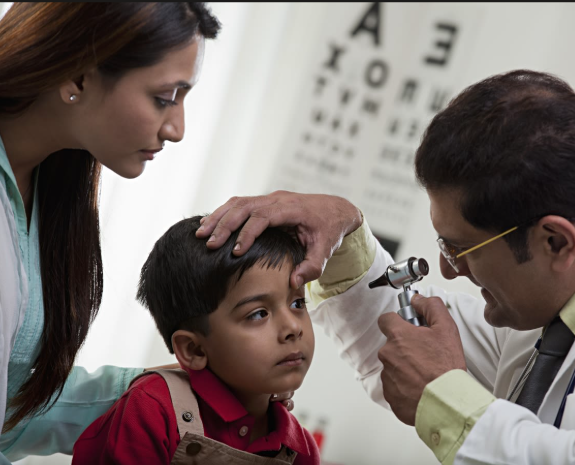
BENGALURU, Oct 22: Eye specialists in Bengaluru have raised concerns about an increase in vision-related problems among children, urging parents to arrange regular eye examinations even when youngsters do not complain of difficulty seeing.
According to ophthalmologists cited in a report published on October 22, children now account for approximately 30% of daily consultations at some eye hospitals in the city, compared with around 15% before the COVID-19 pandemic. Doctors say greater parental awareness has contributed to the rise in consultations, while increasing cases of myopia, or short-sightedness, have also become a major concern.
Specialists have cautioned that children may not always recognise or communicate vision difficulties. Signs such as squinting to see a classroom blackboard, holding books unusually close to the face, sitting near a screen or repeatedly tilting the head may indicate an underlying eye problem.
Doctors have stressed that early detection is particularly important for conditions that affect the development of vision during childhood. Regular examinations can help identify refractive errors and eye-alignment problems before they interfere significantly with learning and everyday activities.
Myopia emerges as a major concern
Myopia is a refractive error in which distant objects appear blurred while nearby objects can generally be seen more clearly. It commonly develops during childhood and adolescence, although its progression varies from one person to another.
Children with myopia may struggle to read information displayed on a classroom board while remaining comfortable reading a book held close to their eyes. Some may compensate by moving closer to the board or television, narrowing their eyes or asking others to read distant text.
Doctors in Bengaluru have identified myopia as a major contributor to the growing number of paediatric eye consultations. The increasing use of digital devices and the amount of time children spend on activities requiring sustained close-up vision are among the factors specialists are examining.
The pandemic also changed children’s daily routines. Online classes and greater dependence on electronic devices increased the amount of time many children spent looking at screens and focusing on objects at close range. When schools reopened, some children became more aware of difficulties seeing distant objects, including classroom boards.
However, screen use alone should not be treated as the explanation for every case of myopia. Eye development is influenced by several factors, including genetics, environmental conditions and visual habits. A professional examination is needed to determine the cause of a child’s symptoms and whether corrective lenses or other treatment is required.
Specialists have recommended balancing screen-based activities with outdoor play and other activities that allow children to spend time away from prolonged close-up work. One Bengaluru ophthalmologist advised encouraging at least two hours of outdoor activity each day, alongside regular eye checks.
Why children may not report poor eyesight
One challenge in identifying childhood vision problems is that children may assume the way they see is normal. A youngster who has gradually developed blurred distance vision may not realise that other children can see objects more clearly.
Some children also adapt their behaviour without explaining the problem. They may move closer to a television, sit at the front of a classroom, copy information incorrectly or avoid activities that require clear distance vision.
Parents and teachers may mistake these changes for inattention, carelessness or learning difficulties. Although such behaviour can have many explanations, specialists say persistent problems with reading from a distance or copying material should prompt consideration of an eye examination.
Repeated squinting is another sign that should not be ignored. Children may narrow their eyes to make distant objects appear clearer, while an unusual or persistent head tilt may indicate an eye-alignment problem.
Other possible clues include frequent headaches, difficulty concentrating on visual tasks and repeated complaints that words or objects appear blurred. These symptoms do not automatically establish a diagnosis, but they can help parents recognise when professional assessment is appropriate.
Doctors also caution that the absence of obvious symptoms does not rule out an eye condition. Some problems can develop gradually or remain difficult to notice until they begin affecting a child’s activities.
Squint and lazy eye require timely attention
Beyond refractive errors such as myopia, ophthalmologists have highlighted the importance of detecting squint and lazy eye during early childhood.
A squint, medically known as strabismus, occurs when the eyes do not point in the same direction at the same time. One eye may turn inward, outward, upward or downward, either constantly or intermittently.
Lazy eye, or amblyopia, develops when normal visual development is disrupted, causing reduced vision in one eye or, less commonly, both eyes. It can be associated with conditions such as squint, a significant difference in refractive error between the eyes or an obstruction that prevents clear vision during development.
These conditions may not always be immediately obvious to parents. In some cases, a child can appear to use both eyes normally, even though one eye is not developing vision as expected.
Early diagnosis matters because the visual system continues developing during childhood. Treatment options depend on the cause and severity of the problem and may include prescription glasses, patching the stronger eye, selected eye drops or treatment of the underlying condition. Some children may also require surgery for particular eye-alignment problems.
Specialists quoted in the Bengaluru report said they encounter children whose eye-alignment difficulties were present from an early age but were identified only later. They emphasised that earlier assessment can improve the opportunity to treat certain childhood eye conditions effectively.
Eye problems can affect learning
Good vision plays an important role in classroom participation, reading, writing, sports and social interaction. When a child cannot see clearly, routine school activities may become more difficult.
A student with undiagnosed myopia may struggle to read the blackboard, while a child with other refractive errors may experience blurred or distorted vision during close-up work. Difficulties copying lessons can sometimes lead to mistakes that are interpreted as spelling or concentration problems.
Such challenges can affect confidence as well as academic performance. Children who repeatedly struggle to follow visual information may become frustrated or reluctant to participate in classroom activities.
This does not mean that every learning difficulty is caused by poor eyesight. Learning, attention and developmental concerns can have multiple causes. Nevertheless, checking vision is a practical step when a child persistently struggles with reading, copying from the board or other visually demanding tasks.
Teachers can play a useful role by noticing changes in behaviour. A student who begins sitting unusually close to the board, repeatedly loses their place while reading or complains of blurred vision may benefit from an assessment.
Parents should share these observations with an eye-care professional rather than relying on school performance alone to determine whether a child can see clearly.
Digital habits and outdoor activity
The growing use of smartphones, tablets, computers and televisions has prompted doctors to encourage families to establish healthier visual routines.
Digital devices are now widely used for education, entertainment and communication. Eliminating them completely may not be practical, particularly when schools use online learning resources. Specialists instead recommend avoiding unnecessarily prolonged periods of close-up viewing and incorporating breaks into children’s routines.
Families can encourage children to take part in outdoor games, walking, cycling and other age-appropriate activities. Outdoor time provides a break from sustained near work and is associated with a lower risk of developing myopia in children, although it cannot guarantee that a child will not develop the condition.
Parents can also ensure that children use appropriate lighting while reading, maintain a comfortable viewing distance and avoid spending extended periods focused continuously on a screen.
If a child develops headaches, persistent eye discomfort or blurred vision, families should seek professional advice instead of assuming the symptoms are caused by tiredness or excessive device use.
Importantly, these measures do not replace eye examinations. A child may follow healthy screen habits and still develop a refractive error or another eye condition.
When should children have their eyes examined?
The Bengaluru report cited an ophthalmologist’s recommendation that children receive a comprehensive eye examination by around two years of age, followed by regular checks. The appropriate timing and frequency of examinations can vary according to a child’s development, symptoms, family history and existing medical advice.
Parents should seek an earlier assessment if they notice a persistent squint, an unusual head posture, difficulty focusing, apparent differences between the eyes or other concerning symptoms. Sudden vision loss, a sudden change in vision, severe eye pain or a new, pronounced eye deviation warrants urgent medical assessment.
A comprehensive examination can assess how well each eye sees, identify refractive errors and check eye alignment and other aspects of eye health. Depending on the child’s age and findings, an eye-care professional may recommend additional tests.
Routine screening and a full eye examination are not necessarily the same. Screening can identify children who may need further assessment, while a comprehensive examination helps establish whether a problem is present and what treatment is appropriate.
Parents should also inform the clinician about any family history of significant refractive errors or childhood eye conditions. This information can help guide decisions about monitoring and follow-up.
Avoiding delayed diagnosis
Doctors say awareness among parents has improved, helping bring more children to eye hospitals. At the same time, the proportion of paediatric consultations reported by some Bengaluru facilities underlines the importance of continued attention to children’s vision.
Regular checks can help distinguish ordinary changes in visual development from conditions that require treatment. They also give parents an opportunity to discuss screen habits, school-related difficulties and any concerns about eye health.
Families should avoid buying corrective glasses for a child solely on the basis of online advice or another person’s prescription. The right prescription depends on the findings of an eye examination, and certain conditions require more than spectacles alone.
Likewise, persistent eye rubbing, watering or irritation should not automatically be attributed to prolonged screen exposure. Such symptoms may be associated with dryness, allergies or other conditions that need assessment.
Prevention begins with awareness
The rise in childhood eye consultations reported by Bengaluru specialists highlights a broader need to make vision care part of routine child health.
Parents, teachers and healthcare professionals can work together to identify warning signs, encourage outdoor activity and ensure that children receive appropriate examinations. Early attention is especially valuable when a child has a condition that can interfere with normal visual development.
The reported increase in paediatric consultations does not by itself prove that every childhood eye disorder is becoming more common. Greater awareness and improved access to consultations may also influence the figures. However, doctors’ concerns about myopia and missed diagnoses reinforce the importance of not overlooking children’s vision.
For parents, the central message is straightforward: children may not always know that their eyesight is impaired. Regular eye checks, attention to behavioural changes and timely professional care can help identify problems before they have a greater effect on learning and daily life.

