


India at UN: Pakistan Refused to Accept Bodies of Its Soldiers Killed in Kargil War
Indian diplomat Bhavika Mangalanandan recalls Pakistan’s refusal to acknowledge its soldiers killed in the 1999 conflict, while questioning Islamabad’s record on religious freedom and minority protection.
UNITED NATIONS, Oct 23: India has criticised Pakistan at the United Nations, recalling Islamabad’s refusal to acknowledge its soldiers killed during the 1999 Kargil War and questioning its authority to lecture others on religious freedom, funeral rights and minority protection.
The remarks came during an interactive dialogue with UN Special Rapporteur on freedom of religion or belief Nazila Ghanea, whose interim report raised concerns over alleged restrictions on funeral rights in Jammu and Kashmir.
The report stated that the denial of bodies to families and the use of remote or secret burials in cases involving people killed during security operations in Jammu and Kashmir disproportionately affected Muslims and raised concerns regarding their religious practices.
Responding to the observations on Thursday, Bhavika Mangalanandan, First Secretary at India’s Permanent Mission to the UN, questioned Pakistan’s position on the issue.
“It is deeply ironic that a State that did not even accept the bodies of its own soldiers who were killed in combat in 1999 in Kargil unabashedly speaks with fervour on faith, religious freedom, and burials,” she said.
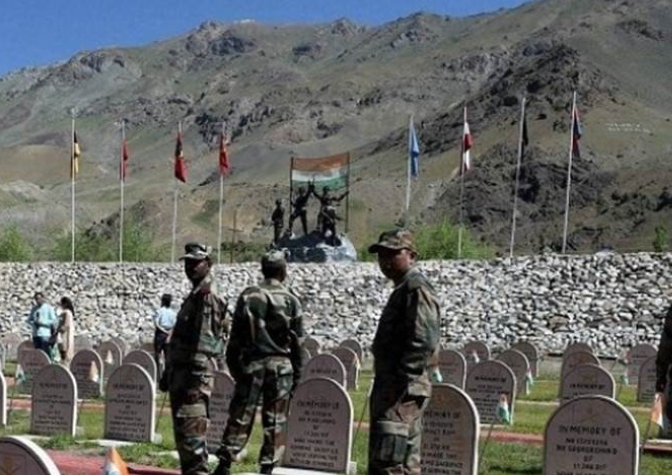
During the Kargil conflict, the Indian Army recovered the bodies of Pakistani soldiers after Islamabad declined to acknowledge the involvement of its military personnel. India subsequently buried several of them with military honours and in accordance with Islamic religious practices, Mangalanandan pointed out.
She also urged Pakistan to focus on developments in the territories of Jammu and Kashmir under its control rather than repeatedly commenting on the Indian Union Territory.
Referring to Rawalakot and other areas under Pakistani administration, the Indian diplomat raised concerns over the treatment of religious minorities in the neighbouring country.
“A State that cannot ensure the safety of its own minorities has no standing to lecture India,” she said, alleging that minority communities in Pakistan continued to face discrimination and violations of their fundamental rights.
Hindus, Christians and Sikhs constitute the principal religious minority communities in Pakistan, together accounting for a small proportion of its population.
The Human Rights Commission of Pakistan, in its seventh annual report titled Sanctuary Denied: Freedom of Religion or Belief in 2025/26, released the previous week, highlighted continuing concerns over religious freedom. These included alleged misuse of blasphemy laws, forced marriages and conversions, and discriminatory practices affecting minority communities.
Mangalanandan also challenged aspects of the report concerning funeral rights for individuals accused of terrorism. She said governments could impose restrictions in such cases within applicable legal limits, while emphasising the importance of sovereign rights and public safety.
She argued that the report placed considerable emphasis on the rights of terrorists without giving comparable attention to the victims of terrorism and their families.
“A terrorist not only kills innocent people but damages the psyche of a nation,” she said.
The Indian representative further questioned the report’s selection of examples, alleging that it relied on incidents in India dating back several years while overlooking more recent concerns in other parts of the world.
She also criticised what she described as an uneven assessment of discrimination during the COVID-19 pandemic, saying the report appeared to focus on the Global South without adequately examining comparable experiences in developed countries.
Mangalanandan cautioned against using the suffering of affected communities to establish the relevance of UN-appointed experts, stressing that international assessments should apply consistent standards across regions and countries.
Her remarks formed part of India’s broader response to the Special Rapporteur’s findings, with New Delhi disputing the report’s characterisation of developments in Jammu and Kashmir and questioning the credibility of Pakistan’s criticism of India’s record on religious freedom.

