


India, Nepal Discuss Future of International Cooperation Amid Changing Global Order
S Jaishankar and Nepal's Finance Minister Swarnim Wagle discuss the future of multilateralism, regional cooperation and practical partnerships at the NDTV World Summit 2026.
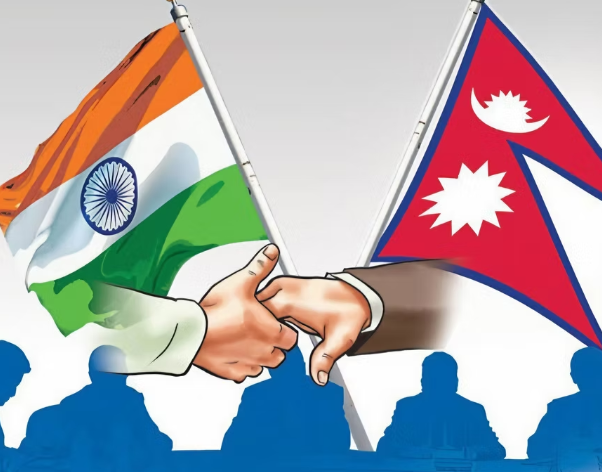
KATHMANDU, Oct 23: External Affairs Minister S Jaishankar and Nepal’s Finance Minister Swarnim Wagle have discussed the changing global order and the need for more effective international cooperation, highlighting the growing importance of flexible partnerships among nations.
The two leaders exchanged views during a session titled The Geopolitics of Sovereign Choice at the NDTV World Summit 2026 on Thursday, according to Nepal’s National News Agency. Jaishankar delivered the keynote address, while Wagle participated as a guest speaker.
The discussion focused on the future of multilateral cooperation, the changing nature of global relationships and opportunities to strengthen regional and sub-regional partnerships amid increasing geopolitical and economic fragmentation.
Wagle observed that the period following the Cold War was marked by a strong emphasis on multilateralism, particularly in trade and economic affairs. However, he said the foundations supporting this approach have weakened in recent years.
He questioned how countries could develop sustainable bilateral, trilateral and regional cooperation in critical sectors such as disaster management, nutrition, energy and clean energy, particularly as trade blocs expand and the international system becomes increasingly fragmented.
The Nepalese minister also raised the question of whether international collaboration would be more effective through formal institutions or through mutual understanding and practical engagement between partner countries.
Responding to these concerns, Jaishankar said countries had increasingly favoured practical arrangements over rigid institutional commitments during the past two decades.
He explained that establishing formal institutions often involves lengthy consultations, administrative procedures, financial commitments and negotiations over rules. While such structures remain important in areas requiring clearly defined frameworks, he said they are not essential for every form of international cooperation.
Citing the International Solar Alliance as an example, Jaishankar noted that cooperation models could differ according to the issue being addressed, the countries involved and the degree of commitment required.
He also highlighted the differences between BRICS and the Shanghai Cooperation Organisation (SCO), pointing out that BRICS operates without its own secretariat and is not governed by a single charter signed by all member countries.
These examples, he said, demonstrate that international partnerships do not necessarily need to follow one uniform institutional model.
Jaishankar observed that the broader trend was moving towards more flexible arrangements and cooperation among countries with shared interests. He said India had established around 50 such groupings over the past decade, including trilateral and quadrilateral initiatives and partnerships involving like-minded nations.
According to the minister, these arrangements have gained traction because they can reduce administrative burdens while helping participating countries achieve practical outcomes.
Earlier in the discussion, Wagle expressed appreciation for India’s assistance to Nepal following the devastating floods that affected the Bhotekoshi-Trishuli river systems on August 26.
He said Kathmandu valued New Delhi’s prompt response, with assistance reaching Nepal within hours of the disaster. Wagle also recalled India’s support following the devastating earthquake that struck Nepal in 2015.
The exchange underscored the significance of regional partnerships in addressing shared challenges, particularly natural disasters and energy security, as countries seek more adaptable approaches to cooperation in an increasingly complex international environment.

