


‘Ramayana’ Advance Bookings Cross Rs 10 Crore as Ranbir Kapoor Epic Builds Momentum
Nitesh Tiwari’s ambitious mythological drama records strong early ticket sales, with the Hindi version leading demand and Maharashtra, Delhi and Karnataka emerging as major markets ahead of its November 5 release.
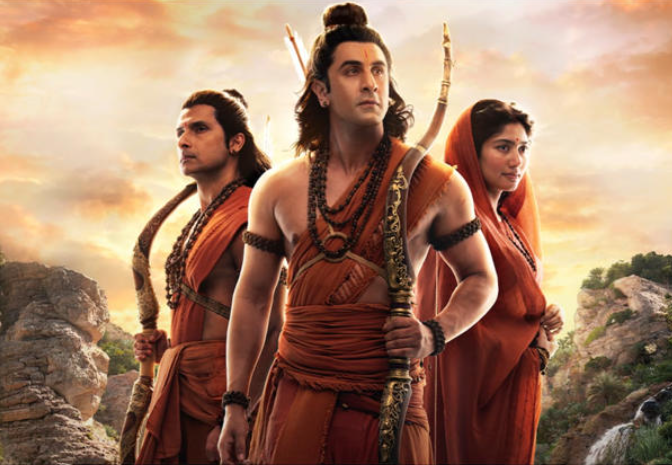
NEW DELHI, Oct 24: The upcoming mythological epic Ramayana: Rise of a Legend, starring Ranbir Kapoor as Lord Rama and Yash as Ravana, has crossed the Rs 10 crore mark in advance ticket sales in India, signalling considerable audience interest ahead of its theatrical release on November 5.
Directed by Nitesh Tiwari, the film has attracted early bookings across multiple languages, with the Hindi version accounting for the largest share of sales. The Kannada and Telugu versions have also contributed to the opening-day advance collection, indicating interest beyond the Hindi-speaking market.
According to figures reported by India Today on Saturday, the film had generated approximately Rs 10.15 crore in gross advance bookings across India as of 3 pm on October 24. The total included seats blocked by exhibitors, while confirmed consumer bookings excluding those seats stood at Rs 7.98 crore.
Around 1.81 lakh tickets had been sold across 4,352 tracked shows in 134 cities. Subsequent figures published by NDTV Profit on Saturday evening put the advance gross at approximately Rs 10.50 crore, with about 1.89 lakh tickets sold across 4,439 shows. The figures represent different reporting cut-offs during the same day.
The upward movement suggests that interest is building as the release approaches. However, with nearly two weeks remaining before the film reaches cinemas, the final opening-day performance will depend on additional screenings, ticket sales and audience response.
Hindi version accounts for the bulk of bookings
The Hindi-language version emerged as the principal contributor to advance sales. India Today’s afternoon figures placed its gross bookings at approximately Rs 8.91 crore, representing nearly 88 per cent of the total at that reporting cut-off.
The Kannada version had generated around Rs 96.57 lakh, while the Telugu version recorded approximately Rs 28.11 lakh. Later estimates showed further growth in these figures.
The distribution of bookings highlights the importance of the Hindi market to the film’s commercial prospects. At the same time, the participation of southern-language audiences could help the production reach a wider national audience.
The film’s casting also gives it a broad regional appeal. Ranbir Kapoor’s portrayal of Rama is expected to draw Hindi-speaking audiences, while Yash’s appearance as Ravana has generated interest among viewers familiar with his work in Kannada cinema.
The involvement of established actors from different film industries could help the production attract audiences across linguistic boundaries, although the extent of that appeal will become clearer after its release.
Maharashtra, Delhi and Karnataka lead regional demand
Maharashtra, Delhi and Karnataka were among the strongest state markets for the film’s advance bookings.
Maharashtra contributed approximately Rs 2.31 crore in gross advance sales in the afternoon figures, followed by Delhi at around Rs 2.13 crore and Karnataka at Rs 1.45 crore.
Among major urban markets, the National Capital Region recorded approximately Rs 2.13 crore, while Mumbai contributed around Rs 1.60 crore. Bengaluru also showed a notable rise, with bookings reaching approximately Rs 1.20 crore in the reported figures.
Hyderabad and Pune added further revenue, reflecting interest in the film across different regions.
The figures indicate that advance demand is not restricted to one geographical market. However, regional collections can change considerably as cinema chains add screenings and consumers make last-minute bookings.
The availability of more shows will be important in determining whether the early demand translates into a strong nationwide opening.
Premium formats attract early interest
Premium cinema formats, including IMAX and 4DX, have also contributed to the film’s advance sales.
According to NDTV Profit’s report, 3D screenings accounted for a substantial share of bookings, while IMAX 3D shows recorded significant advance demand relative to the number of screenings available. The 4DX 3D format also attracted early purchases.
These formats could be particularly relevant for a production built around large-scale visual effects and elaborate cinematic presentation. Premium screens generally offer audiences a more immersive viewing experience, although their higher ticket prices may limit access for some moviegoers.
Some premium seats have attracted particularly high prices. The Indian Express reported that tickets for selected screenings were priced at as much as Rs 3,170.
The availability of different formats and ticket categories gives audiences several viewing options, while also allowing exhibitors to cater to varying budgets.
A major adaptation of the Ramayana
The film is planned as the first instalment of a two-part cinematic adaptation of the ancient Indian epic traditionally associated with the sage Valmiki.
Ranbir Kapoor plays Lord Rama, Sai Pallavi portrays Goddess Sita, Yash appears as Ravana, Sunny Deol plays Lord Hanuman and Ravie Dubey portrays Lakshman. The cast also includes several established performers in supporting roles.
The production has attracted attention for its scale, cast and visual-effects ambitions. DNEG, the visual-effects company associated with major international productions, is involved in the project.
The first instalment is scheduled to reach theatres on November 5, with the second part planned for Diwali 2027.
The decision to divide the story into two films allows the production to explore the epic’s characters and narrative across a longer cinematic format. It also places considerable importance on the first instalment’s reception, since audience response could influence expectations for the follow-up.
Box-office expectations remain high
The early advance-booking figures have prompted discussion about the film’s potential opening-day collection. Trade observers have considered ambitious opening benchmarks, but advance sales alone cannot determine the final result.
The number of screenings, ticket prices, occupancy levels, regional performance and audience reactions will all influence the theatrical outcome.
The film also faces the challenge of meeting expectations generated by its subject and scale. A familiar epic offers an established narrative, but filmmakers must still deliver a compelling interpretation that connects with contemporary audiences.
Strong advance bookings can provide an encouraging starting point, yet sustained performance after the opening weekend will depend on reviews, word of mouth and repeat viewership.
The November 5 release, shortly before the Diwali festivities, gives the production an opportunity to benefit from the holiday period. At the same time, audiences will ultimately decide whether the film’s storytelling and performances justify the anticipation.
For now, the advance sales mark an important early milestone for Ramayana: Rise of a Legend. With additional screenings expected to become available, the next phase of ticket sales will offer a clearer indication of the film’s opening prospects.

