


Fed Expected to Hold Interest Rates Steady Ahead of US Midterm Elections
Persistent inflation and rising energy costs complicate the Federal Reserve’s policy outlook as officials weigh further monetary tightening before the end of the year.
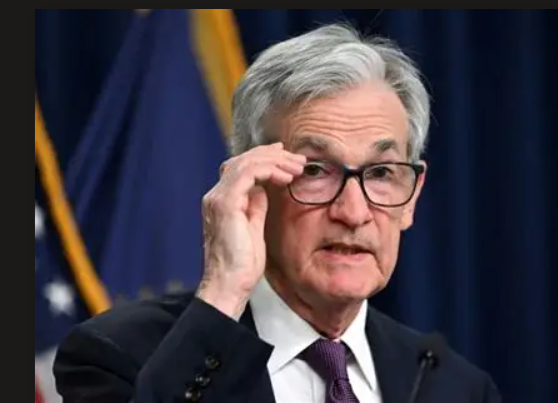
US : The US Federal Reserve is expected to leave interest rates unchanged at its upcoming policy meeting, according to analysts, despite inflation remaining above its long-term target and financial markets anticipating a possible rate increase before the end of the year.
The Federal Open Market Committee (FOMC), the central bank’s policy-setting body, will meet for two days before announcing its decision at 2 pm local time (1800 GMT) on Wednesday.
The decision comes amid continued price pressures, rising global energy costs and uncertainty over the direction of the US economy. The Fed has struggled to bring inflation sustainably down to its 2 per cent target, complicating decisions over the pace of monetary tightening.
At its September meeting, the committee raised the federal funds rate for the first time in three years, taking the target range to 3.75–4 per cent.
The latest meeting also falls just days before the November 3 US midterm elections, in which Democrats are seeking to regain control of both chambers of Congress from Republicans aligned with President Donald Trump.
Monetary policy has remained a point of contention in Washington. Trump repeatedly criticised former Fed Chair Jerome Powell over borrowing costs, arguing that interest rates were too high. However, he has so far avoided similar public pressure on Kevin Warsh, whom he appointed to succeed Powell.
Inflation and Energy Costs Complicate Fed Outlook
The Fed’s preferred inflation measure, the Personal Consumption Expenditures (PCE) price index, reached a pandemic-era peak of 7.2 per cent in 2022. Subsequent interest-rate increases helped bring inflation down to around 2.2 per cent by late 2024.
However, the president’s trade policies, including extensive tariffs, and the conflict involving Iran have added fresh uncertainty to the inflation outlook. The PCE index reportedly climbed to a three-year high of 3.9 per cent in May.
Energy markets have faced additional pressure since the United States and Israel launched attacks on Iran in late February. Tehran’s retaliatory actions disrupted oil and gas supplies moving through the Gulf, contributing to a sharp increase in international energy prices.
The impact has extended beyond fuel costs, as more expensive energy raises transportation, manufacturing and operating expenses for businesses. These increases can eventually feed into the prices of goods and services, making it harder for the central bank to contain inflation.
Rising living costs have also become a significant concern for American households ahead of the elections, adding economic pressure to an already closely watched political contest.
Economic Data Remains Central to Policy Decision
Loretta Mester, a former president of the Federal Reserve Bank of Cleveland, told AFP that the approaching elections would not influence deliberations within the policy-setting committee.
She said decisions were based on economic conditions rather than political considerations, emphasising that policymakers assess inflation, employment and other indicators when determining the appropriate direction for interest rates.
Mester said recent economic data continued to indicate resilience in the labour market, while inflation remained above the central bank’s objective. In her assessment, there was insufficient evidence that price pressures were moving sustainably towards the 2 per cent target.
These conditions, she argued, could justify further monetary tightening. Higher interest rates generally make borrowing more expensive for households and businesses, helping moderate demand and reduce inflationary pressure over time.
However, additional increases also carry risks. Tighter financial conditions can discourage investment, raise loan repayments and weaken consumer spending, potentially slowing economic growth.
December Meeting Could Bring Another Rate Increase
Despite the arguments for further tightening, Mester suggested that policymakers might prefer to maintain the existing rate range at the forthcoming meeting rather than act immediately.
Such a pause would allow officials to assess incoming economic information and determine whether inflationary pressures are becoming more persistent. The committee could then reconsider its position at its next scheduled meeting in early December.
Financial markets are also weighing the possibility of another increase before the year concludes, reflecting concerns that elevated inflation and higher energy prices could prevent a sustained return to the Fed’s target.
The central bank therefore faces a difficult balancing act: it must prevent inflation from becoming entrenched without imposing unnecessarily restrictive conditions on economic activity.
For investors, businesses and consumers, Wednesday’s announcement will offer an important indication of how policymakers assess the competing risks. Attention will also focus on the Fed’s communication about inflation, employment and the potential direction of interest rates in the coming months.
While a pause would leave borrowing costs unchanged for now, it would not necessarily signal the end of monetary tightening. The subsequent policy path will depend largely on whether inflation eases, energy prices stabilise and the labour market maintains its current strength.
With the US midterm elections approaching, economic conditions are likely to remain central to public debate, even as the Federal Reserve maintains that its decisions are guided by its statutory objectives and the available economic evidence.

