


Delhi to Enforce Pollution Curbs from November 1, Vehicle Restrictions, Construction Ban Among Key Measures
Restrictions on older vehicles, construction activities and parking, along with staggered office timings and work from home arrangements, to tackle air pollution in the capital.
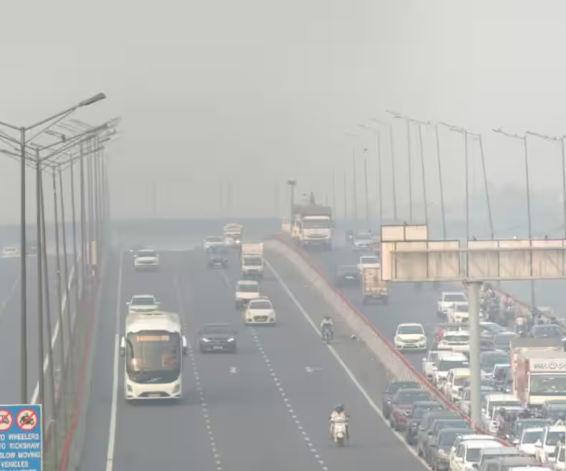
NEW DELHI, Oct 30: Delhi is set to introduce a range of measures to combat rising winter air pollution from November 1, including restrictions on older vehicles, curbs on construction activities, higher parking fees and changes in office timings.
According to an earlier order issued by the Delhi government’s Environment and Forest Department, vehicles registered outside the national capital that do not meet BS-VI emission standards will be barred from entering Delhi between November 1 and January 31.
Vehicles powered by compressed natural gas (CNG) or electricity, along with emergency vehicles such as ambulances, fire tenders and police vehicles, have been exempted.
The restrictions are expected to affect more than 10 lakh vehicles from Gurugram, Faridabad, Noida, Greater Noida and Ghaziabad, according to Transport Department estimates.
Construction activities and parking charges
Dust-generating demolition work and outdoor civil construction activities will remain prohibited from November 1 to January 31, except for essential public infrastructure projects.
Finishing, plumbing and electrical work at construction sites will be allowed, provided dust-control measures are followed.
A complete ban on construction and demolition activities, including indoor work, will be imposed from December 20 to January 20.
The government has also directed that parking charges at authorised parking facilities be doubled from November 1 to February 28 to discourage the use of private vehicles. Parking facilities owned and operated by the Delhi Metro Rail Corporation will be exempt.
New Delhi Municipal Council officials said the parking fee increase would be implemented in accordance with official directions.
However, the Municipal Corporation of Delhi (MCD) has not implemented similar parking fee hikes in previous years, citing contractual obligations with private parking operators.
The civic body has also raised concerns about the absence of consolidated data on vehicles using its parking facilities, making it difficult to assess the impact of restrictions on older vehicles.
While one official said the proposal to increase parking charges was likely to receive approval from the competent authority on Monday, another indicated that the possibility of implementing the hike remained uncertain.
Changes in office timings and work arrangements
To ease traffic congestion during peak hours, the MCD will operate its offices from 8.30 am to 5 pm, while Delhi government offices will function from 10 am to 6.30 pm between November 1 and February 28.
Government and private offices will also be required to ensure that no more than 50 per cent of their employees are physically present at workplaces between November 1 and January 31. The remaining staff will work from home.
Private establishments have been directed to introduce staggered working hours and encourage carpooling, ride-sharing and the use of public transport.
Essential services, including hospitals, fire services, public transport, electricity and water supply, sanitation and disaster management agencies, have been exempted from the work-from-home requirements.
Measures to prevent open burning
The order also places responsibility on resident welfare associations, housing societies, government and private establishments, and contractors to prevent the burning of waste, biomass, leaves, garbage and plastic on premises under their control.
These establishments have been directed to provide adequate heating facilities using electricity or other approved clean fuels to prevent workers from resorting to open burning.
Authorities have been asked to maintain strict vigilance, particularly during night hours, with drone-based surveillance among the measures being considered to detect violations.
Those found violating the directions will face penal action under the Environment (Protection) Act, 1986. The action may include prosecution, environmental compensation and sealing or closure of premises.

