


India-Brazil Trade Set to Reach $20 Billion as Cooperation Expands Across Key Sectors
Brazilian Ambassador Kenneth Felix Haczynski da Nóbrega highlights expanding investment, technology partnerships and trade negotiations as the two countries target stronger economic ties.
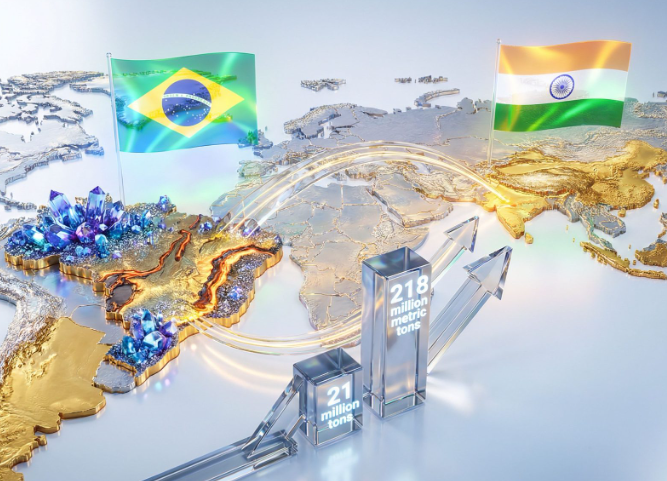
New Delhi, Oct 31: India and Brazil are looking to significantly strengthen their economic partnership, with bilateral trade expected to reach USD 20 billion in the near future as both countries expand cooperation in critical minerals, defence, energy, pharmaceuticals and artificial intelligence.
Brazilian Ambassador to India Kenneth Felix Haczynski da Nóbrega said the two countries were entering a new phase of economic engagement, supported by growing business interests, increased investment and closer cooperation in emerging technologies.
Speaking at an event marking Brazil’s National Day, the ambassador highlighted the growing importance of India-Brazil relations ahead of the 80th anniversary of diplomatic ties between the two countries. He said political commitment and expanding commercial engagement were creating fresh opportunities for businesses in both economies.
The proposed USD 20 billion trade milestone reflects the increasing importance of the partnership between two major developing economies. Both countries are seeking to diversify their international economic relationships and strengthen their positions in sectors considered essential for future growth.
“Political vision and business dynamism are converging to take Brazil-India relations to a new level,” da Nóbrega said, pointing to the expanding trade and investment relationship.
India has emerged as Brazil’s fifth largest trading partner, underlining the growing commercial significance of the relationship. The two countries are also making progress in negotiations to expand their existing trade agreement with the Southern Common Market, commonly known as MERCOSUR.
The proposed expansion of the trade arrangement could provide businesses with improved access to markets and create additional opportunities for exporters. MERCOSUR is a regional economic bloc that includes several South American countries, making its trade framework important for companies seeking to expand their presence in the region.
For Indian businesses, stronger trade arrangements could support greater access to Brazilian agricultural products, minerals and other resources while creating opportunities for Indian manufacturers, pharmaceutical companies and technology providers.
Investment ties gaining momentum
Alongside trade, investment has emerged as another important pillar of the relationship. The Brazilian ambassador said investments made by leading Indian companies in Brazil had reached approximately USD 10 billion, reflecting the growing confidence of Indian businesses in the South American market.
Major Brazilian companies are also expanding their presence in India. Aerospace manufacturer Embraer was among the prominent companies cited by the ambassador as part of the expanding Brazilian business presence.
The growing investment relationship demonstrates that cooperation is moving beyond the traditional exchange of goods towards a broader economic partnership involving manufacturing, technology, research and industrial development.
The two countries have exchanged more than 150 business and technology missions over the past three years. These engagements have helped companies identify commercial opportunities, establish institutional contacts and explore possible partnerships across different industries.
Such exchanges are particularly important for businesses operating in sectors where long-term investment, technical expertise and cooperation between institutions are necessary.
The ambassador also highlighted growing collaboration in agriculture, healthcare and digital infrastructure, indicating that the partnership is expanding across areas that directly influence economic development and industrial competitiveness.
Critical minerals and emerging technologies in focus
Critical minerals and rare earth elements have become increasingly important in global economic and industrial strategies because of their use in electric vehicles, renewable energy systems, electronics, defence equipment and advanced manufacturing.
India and Brazil have agreed to connect their efforts in the critical minerals sector, opening possibilities for cooperation in resource development, supply chains and technological applications.
For India, stronger engagement with Brazil could help diversify sources of essential industrial materials and reduce exposure to supply disruptions in international markets.
Brazil, meanwhile, could benefit from India’s technological capabilities, industrial experience and growing demand for materials required by its manufacturing and energy sectors.
Artificial intelligence is another area receiving greater attention from both countries. The digital partnership highlighted by the ambassador is expected to provide a broader framework for cooperation in technology and innovation.
Collaboration in AI, digital infrastructure and research could create opportunities for companies working in software, automation, data services and technology-based business solutions.
The pharmaceutical sector is also emerging as an important area of cooperation. Both countries have developed capabilities in healthcare and medicine production, making research partnerships and innovation important avenues for future engagement.
The ambassador said new partnerships had been established in pharmaceutical research and innovation, reflecting the intention to deepen cooperation beyond conventional commercial exchanges.
Defence and energy cooperation
Defence and energy are among the other strategic sectors identified as priorities in the expanding relationship.
Growing defence cooperation could create opportunities for industrial partnerships, technology exchanges and collaboration between companies involved in aerospace and related manufacturing activities.
The presence of major aerospace manufacturers in both countries provides a foundation for exploring commercial and technological partnerships.
Energy cooperation is equally significant as both economies seek reliable supplies, investment and technological solutions to support their development objectives.
India and Brazil have also strengthened their engagement on environmental issues and sustainable development following COP30.
According to the ambassador, Brazil has taken up co-chairmanship alongside India of the Coalition for Disaster Resilient Infrastructure and the Global Biofuels Alliance.
These initiatives provide platforms for cooperation in disaster preparedness, infrastructure resilience and the development of cleaner energy alternatives.
Biofuels are particularly relevant to both countries because of their agricultural resources and interest in diversifying energy sources. Greater collaboration could encourage the exchange of technical knowledge and support the development of sustainable fuel technologies.
Diplomatic engagement supporting economic expansion
The growing commercial relationship has been supported by regular high-level political engagement.
The ambassador referred to Prime Minister Narendra Modi’s state visit to Brazil in 2025 and Brazilian President Luiz Inácio Lula da Silva’s visit to India earlier this year, saying these engagements had provided political backing to closer economic and technological cooperation.
Both countries also work together through international platforms such as BRICS, the G20 and the United Nations.
Da Nóbrega praised India’s leadership during its BRICS chairmanship, saying both countries had worked closely to maintain dialogue among member nations on important international issues.
Their cooperation in multilateral forums has provided another channel for discussing trade, development, technology and reforms in global institutions.
The expanding relationship comes at a time when countries are increasingly looking to build diversified supply chains and strengthen economic partnerships with emerging markets.
For India and Brazil, closer cooperation offers an opportunity to combine industrial capabilities, natural resources, technological expertise and expanding consumer markets.
While reaching the USD 20 billion trade target will depend on sustained commercial activity and progress in trade negotiations, the growing investment flows and business exchanges indicate that both countries are committed to expanding their economic relationship.
The upcoming 80th anniversary of diplomatic relations is expected to provide another opportunity to highlight the progress achieved and identify new areas of cooperation.
With critical minerals, artificial intelligence, defence, energy and pharmaceuticals emerging as major priorities, India and Brazil are seeking to transform their longstanding diplomatic relationship into a broader partnership with substantial economic potential.

