


Diljit Dosanjh Defends Satluj at Delhi Concert, Responds to Critics
The Punjabi singer defended his film on human rights activist Jaswant Singh Khalra after facing criticism over his earlier comments on student protests, while CJP chief Abhijeet Dipke called for an end to the disagreement.
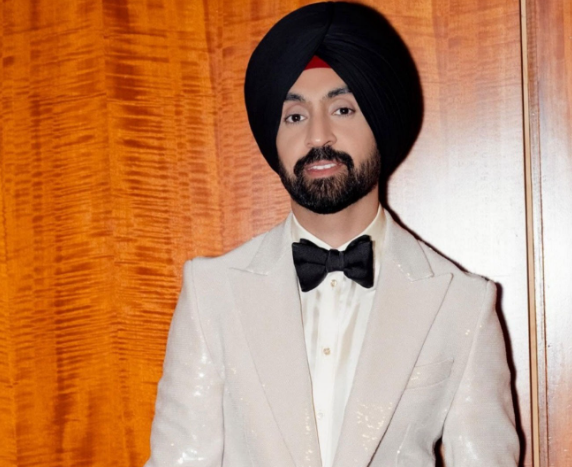
New Delhi, Oct 31: Punjabi singer and actor Diljit Dosanjh addressed criticism surrounding his film Satluj and his earlier remarks on student protests during his performance at Jawaharlal Nehru Stadium in New Delhi, delivering a strong response to those questioning his public position on social issues.
The remarks came during the opening concert of his RuPay AURA India Tour 2026 on Friday, October 30. Addressing the audience, Dosanjh said he supported people and urged critics not to question the fighting spirit of Punjabis.
Without directly naming the Cockroach Janata Party (CJP), whose leaders had criticised him over his earlier comments, the singer said, “I love all of you because I am an artist, bro. I am being quiet, so let me stay quiet. I support all of you. But don’t teach Punjabis how to fight.”
His statement attracted attention because the disagreement had developed over his response to student protests in June against an alleged NEET examination paper leak.
At the time, Dosanjh had described himself as an artist when asked about the protests. His response drew criticism from some activists who expected him to make a stronger public statement on the issue.
CJP leaders, including party president Abhijeet Dipke, had questioned the singer’s position, arguing that his identity as an artist should not prevent him from expressing solidarity with people raising concerns about public issues.
The disagreement resurfaced at the Delhi concert when Dosanjh referred to criticism directed at Satluj, his film based on the life and work of human rights activist Jaswant Singh Khalra.
Defending the project, the singer reminded the audience of the effort involved in bringing the film to the screen.
“The film you are making fun of on stage, Jaswant Singh Khalra’s film — we fought for that film for a long time. I love all of you. If someone hates us, it’s okay. But I love all of you,” he said.
The comments highlighted the importance of the project to Dosanjh and his team, particularly given the difficulties surrounding its release.
Satluj, originally titled Panjab 95, focuses on Khalra’s efforts to investigate and highlight alleged illegal killings and secret cremations in Punjab during the late 1980s and early 1990s.
Khalra, a human rights activist, became known for documenting cases involving alleged disappearances and extrajudicial killings during a period of militancy and counter-insurgency operations in Punjab.
The subject attracted considerable attention because of its historical and political sensitivity. The film faced prolonged delays and censorship-related challenges before becoming available on the ZEE5 streaming platform on July 3. It was subsequently removed within two days, triggering further debate over its release and public access.
Dosanjh’s comments at the Delhi concert therefore addressed not only criticism of his political position but also questions surrounding a project that has remained closely associated with his commitment to portraying an important chapter of Punjab’s history.
Following the singer’s remarks, Dipke issued a response on social media, explaining the reasons behind his earlier criticism and expressing a willingness to put the disagreement behind them.
Addressing Dosanjh respectfully as “Paaji”, Dipke said his comments during the student protests had disappointed him because he had expected the singer to speak more directly in support of the cause.
He clarified that his criticism was not motivated by personal hostility and said he continued to admire Dosanjh’s music, achievements and public image.
Dipke also recalled attending the singer’s concert in Chicago in May and reiterated that their disagreement had not changed his respect for him.
In his message, the CJP president indicated that a difference of opinion should not become a reason for lasting hostility. He appealed to Dosanjh to consider him a younger brother and move beyond the controversy.
The response provided a conciliatory note to an exchange that had attracted considerable attention on social media. While Dosanjh used his concert platform to defend his work and respond to critics, Dipke sought to explain that his objections were rooted in expectations about the singer’s public engagement.
The controversy unfolded against the backdrop of Dosanjh’s growing influence as an international music performer and actor. His ability to attract large audiences in India and abroad has made him one of the most prominent Punjabi entertainers in contemporary popular culture.
The Delhi concert marked the beginning of his RuPay AURA India Tour 2026 and drew significant attention even before the performance began.
Around 70,000 people were expected to attend the show at Jawaharlal Nehru Stadium, with tickets reported to be sold out. The event was organised amid extensive security arrangements and traffic management measures to handle the large gathering.
The concert had initially faced uncertainty after Delhi Police temporarily withheld permission, citing specific security-related inputs and law-and-order responsibilities during the festive period.
Organisers subsequently held discussions with the police and submitted a revised security plan. Permission was reconsidered and issued, allowing the event to proceed as scheduled.
Approximately 2,000 private security personnel were expected to be deployed at the venue. Authorities also planned restrictions on vehicle movement around the stadium, including measures to create pedestrian-only areas for concertgoers.
Dosanjh had appealed to fans to avoid private vehicles and use the Delhi Metro because general parking was unavailable at the stadium.
In a message ahead of the performance, he asked concertgoers to reach the venue and settle in by 6.30 pm. The singer also informed fans that the show would have to conclude by 10 pm because of the limited time available at the venue.
Delhi Metro services were extended until midnight on most lines to help attendees return home after the performance. Additional trains and standby arrangements were also planned to manage the expected rush.
The Delhi Traffic Police issued an advisory announcing restrictions and diversions around Jawaharlal Nehru Stadium from 1 pm until midnight on October 30. Commuters were advised to avoid affected roads and plan their journeys in advance.
The Delhi performance was the first major stop of Dosanjh’s India tour, which is scheduled to cover several cities in the coming weeks.
According to the announced itinerary, the singer is scheduled to perform in Indore on November 15, Ahmedabad on November 21, Mumbai on November 27, Bengaluru on November 29 and Lucknow on December 5. Chandigarh is also included in the tour plans, with details to be announced.
Dosanjh’s Delhi appearance brought together two important aspects of his public career: his popularity as a live performer and his growing involvement in films dealing with subjects of historical and social significance.
The exchange with CJP also reflected the expectations placed on celebrities who command large audiences and possess considerable influence beyond entertainment.
For Dosanjh, the response at the stadium was an opportunity to defend a film that had faced substantial challenges and reaffirm his connection with Punjab and its cultural identity.
Dipke’s subsequent message, meanwhile, suggested that the disagreement need not become a permanent personal conflict.
The episode is likely to keep attention focused on the relationship between public figures, artistic expression and social responsibility, particularly when entertainers take up subjects that carry historical or political significance.
As the AURA India Tour moves to its next destinations, Dosanjh’s Delhi performance will be remembered not only for launching the concert series but also for the public exchange that brought his film Satluj and his views on the role of artists back into the spotlight.

