


Assam Plans India’s First State Run Proton Therapy Centre With Rs 600 Crore Investment
The proposed advanced cancer treatment facility aims to strengthen specialised oncology services in the Northeast and reduce the need for patients to travel to other regions for advanced treatment.
GUWAHATI, Nov 1: Assam has taken a major step towards expanding advanced cancer treatment facilities in the Northeast by signing an agreement to establish India’s first state government run Proton Beam Therapy Centre in Guwahati, involving an investment of approximately Rs 600 crore.
The agreement was signed between the Assam Government and IBA Particle Therapy India Pvt. Ltd. at Lok Sewa Bhawan in the presence of Chief Minister Himanta Biswa Sarma. The project is expected to strengthen the state’s specialised oncology infrastructure and improve access to sophisticated radiation based treatment for patients who currently have limited options within the region.
The proposed facility is being viewed as an important development for cancer patients in Assam and neighbouring northeastern states, where access to highly specialised medical services has often required travelling to major metropolitan centres. The initiative is intended to bring an advanced treatment option closer to patients and reduce the financial and logistical difficulties associated with seeking care outside the region.
According to the project details, the total investment of around Rs 600 crore will comprise Rs 315 crore in World Bank assistance and Rs 285 crore from the Assam Government. The facility will be developed under the World Bank-supported Assam State Secondary Healthcare Initiative for Service Delivery Transformation, known as the ASSIST Project, through the Assam Health Infrastructure Development and Management Society.
Chief Minister Sarma described the agreement as a significant milestone in the state’s efforts to make specialised cancer treatment more accessible and affordable. He said cancer remained a major public health challenge for Assam and the wider Northeast, making it necessary to strengthen treatment infrastructure within the region.
He emphasised that patients should not have to travel long distances or face additional financial pressure to obtain quality medical attention. According to him, the government’s objective is to ensure that access to advanced healthcare is determined by medical requirements rather than geographical location or financial circumstances.
Proton Beam Therapy is an advanced form of radiation treatment that uses positively charged particles, known as protons, to target cancerous tissues. Unlike conventional radiation techniques that use X-rays, proton therapy can deliver radiation more precisely to the intended treatment area. Its physical properties allow doctors to control where much of the radiation energy is deposited, potentially reducing exposure to surrounding healthy tissues.
This precision can be particularly valuable when treating tumours located close to sensitive organs or structures. By limiting unnecessary radiation exposure, the treatment may help reduce certain side effects and long-term complications in appropriately selected patients.
The technology is considered especially relevant in the treatment of some cancers affecting the brain, spinal cord, eyes, head and neck. It may also be considered for selected cases involving the oesophagus, lungs, liver and breast, depending on the patient’s condition, tumour characteristics and clinical assessment.
Children with cancer are among the patient groups that may benefit from the technology. Since their bodies are still developing, unnecessary radiation exposure can have consequences that may emerge years after treatment. Reducing radiation exposure to healthy tissues is therefore an important consideration in paediatric cancer care.
Sarma said the proposed centre could help protect critical organs, including the brain, heart and spine, during treatment for selected childhood cancers. He also highlighted the possibility of reducing certain long-term complications and the risk of secondary cancers associated with radiation exposure.
However, specialists generally assess the suitability of proton therapy on an individual basis. It is not necessarily superior to conventional radiation treatment for every cancer patient, and treatment decisions depend on the type and location of the tumour, expected clinical benefits and available alternatives.
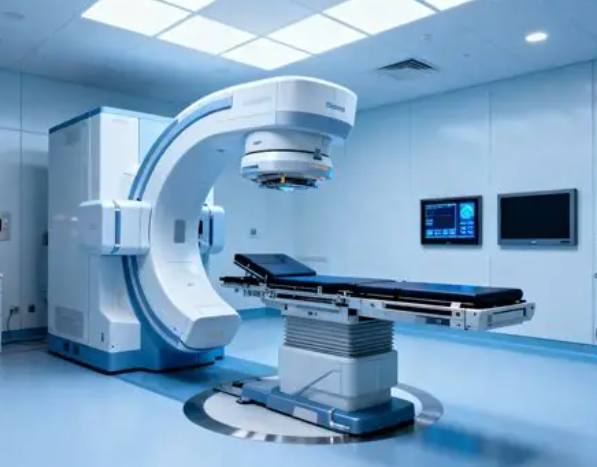
The Guwahati facility will be equipped with the ProteusONE system, an advanced proton therapy platform developed by Belgium-based Ion Beam Applications. The system is known for its compact configuration and precision-based treatment delivery.
IBA Particle Therapy India Pvt. Ltd. will be the technology partner for the project. Its parent organisation, Ion Beam Applications SA, has experience in developing particle therapy systems used by cancer treatment centres internationally. According to the project information, IBA technology has been used in treating more than 1.5 lakh patients worldwide.
Apart from installing the equipment, the agreement also includes specialised training for medical and technical personnel. Doctors, medical physicists, technicians and other healthcare professionals will receive training from IBA to ensure that the facility can operate according to the requirements of advanced radiation treatment.
Selected personnel are also expected to undergo training at international institutions where similar systems are already in use. The Assam Government has approached Tata Memorial Centre in Mumbai to support the early onboarding and practical training of medical professionals.
Developing a trained workforce will be an essential part of the project because proton therapy requires specialised knowledge in radiation oncology, medical physics, treatment planning and equipment operation. The availability of sophisticated machinery alone cannot ensure effective treatment without qualified professionals capable of managing the technology and monitoring patients throughout their treatment.
The new project will add to Assam’s ongoing efforts to build a wider cancer treatment network. Through its partnership with Tata Trusts, the state established the Assam Cancer Care Foundation to develop a three-tier system of cancer hospitals across different districts.
A total of 17 cancer hospitals are being established under the initiative. Of these, 12 are already functional, including the State Cancer Institute in Guwahati, while the remaining five are expected to become operational over the next one to two years.
The existing network has already recorded substantial patient activity. According to figures shared by the Chief Minister, its facilities have conducted more than 2.6 lakh outpatient consultations and provided inpatient treatment to over 82,500 patients.
The hospitals have also administered approximately 1.88 lakh chemotherapy cycles, while around 20,000 patients have received radiation treatment. More than 400 major cancer surgeries have been performed through the network.
The State Cancer Institute in Guwahati has also been strengthened with specialised medical facilities, including bone marrow transplantation, a Gamma Camera for nuclear medicine, robotic surgery and a catheterisation laboratory for interventional procedures.
The expansion is aimed at creating a system in which patients can receive different levels of cancer care depending on the complexity of their medical condition. District-level facilities can support diagnosis and essential treatment, while specialised institutions can handle complicated procedures and advanced therapies.
The proposed proton therapy centre is expected to complement this network by providing another specialised treatment option. It could also help ease pressure on existing proton therapy facilities in other parts of India by expanding the country’s overall treatment capacity.
Assam’s geographical position may further increase the significance of the project. Guwahati could emerge as a regional destination for specialised cancer treatment, potentially serving patients from neighbouring countries such as Bhutan, Bangladesh, Nepal and Myanmar.
The existing Assam Cancer Care Foundation network also serves as a referral system for cancer patients from Bhutan. The Chief Minister said the Union Health Ministry had recommended the state’s cancer care model to other states.
The project could generate additional opportunities in medical tourism and create employment across healthcare, hospitality, transportation and related sectors. However, its broader impact will depend on the centre’s operational readiness, affordability, availability of trained professionals and the ability of patients to access the treatment.
Cancer care experts have repeatedly stressed that advanced treatment must be supported by early diagnosis, preventive healthcare and public awareness. Many patients seek medical assistance only after the disease has progressed, making treatment more complicated and expensive.
Sarma also underlined that technology alone would not be sufficient to address the cancer burden. He said prevention, timely detection, appropriate treatment and compassionate patient care would remain essential components of the state’s healthcare strategy.
The proposed centre represents a substantial investment in specialised medical infrastructure and could expand treatment choices for patients across northeastern India. Its success will ultimately depend on how effectively the government integrates the facility with existing hospitals, referral services and affordable cancer treatment programmes.
The initiative marks another step in Assam’s attempt to strengthen its healthcare system and establish Guwahati as an important centre for advanced medical services in the region.

