


Centre Extends ₹2,700 Crore Medical Device PLI Scheme Till 2035–36 to Boost Domestic Manufacturing
Revised guidelines remove the minimum sales threshold, reduce investment requirements and encourage manufacturers to produce advanced medical equipment and critical components within the country.
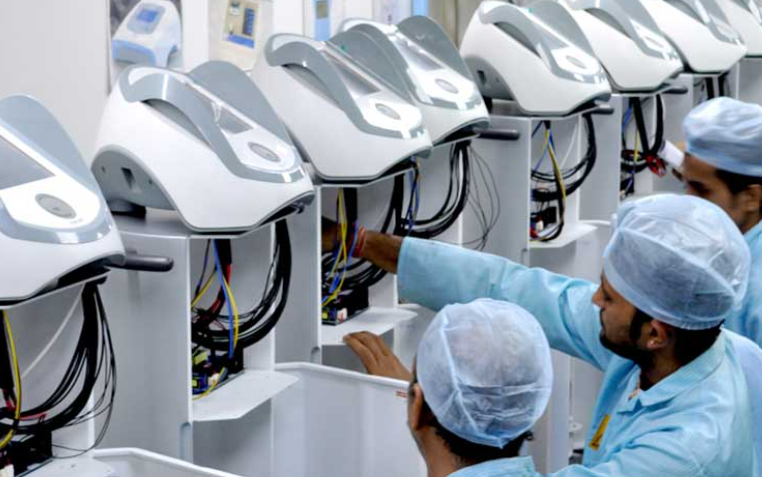
NEW DELHI, Nov 10: The Centre has extended its Production Linked Incentive (PLI) Scheme for Promoting Domestic Manufacturing of Medical Devices until the financial year 2035–36, while inviting fresh applications from manufacturers to strengthen India’s medical technology industry and reduce dependence on imported equipment.
The Department of Pharmaceuticals, under the Ministry of Chemicals and Fertilizers, announced the revised framework on Tuesday, with approximately Rs 2,700 crore available under the scheme. The government has also introduced several changes to make participation easier for companies and attract fresh investments in the domestic medical device manufacturing sector.
The revised guidelines remove the minimum sales threshold required for claiming incentives and reduce the minimum investment requirement. These changes are intended to encourage greater participation from manufacturers, including companies looking to establish production facilities for advanced medical equipment and essential components.
The initiative is expected to support the development of a stronger domestic manufacturing ecosystem for medical devices, ranging from basic healthcare products to sophisticated diagnostic and treatment equipment.
According to the Department of Pharmaceuticals, the application process will be conducted through an online portal, which is expected to become operational within the next 10 days. The government has invited eligible manufacturers to submit fresh applications under the extended programme.
Focus on reducing import dependence
India’s healthcare sector has expanded significantly, increasing the demand for medical equipment used in hospitals, diagnostic centres, laboratories and specialised treatment facilities.
Medical devices are essential for diagnosing illnesses, monitoring patients and delivering advanced medical procedures. Equipment such as magnetic resonance imaging machines, computed tomography scanners, X-ray systems, cardiac devices and dialysis machines plays an important role in modern healthcare delivery.
However, dependence on imported equipment and components remains a challenge for the domestic medical technology industry.
The extended PLI programme aims to address this issue by encouraging companies to manufacture more products within India. Greater domestic production could help strengthen supply chains, improve access to technology and support the development of local expertise.
The government’s emphasis on critical components is particularly significant because the manufacturing of advanced medical devices often depends on specialised technologies and components that require considerable technical investment.
Developing domestic capabilities in these areas could help Indian manufacturers gradually move towards more sophisticated products instead of depending primarily on the assembly of imported equipment.
More than 60 high-end devices and components manufactured
The PLI scheme was originally launched during the 2020–21 financial year to promote domestic manufacturing and attract investment in the medical device sector.
Since its introduction, the programme has facilitated the domestic production of more than 60 high-end medical devices and components.
These include X-ray tubes and detectors, 1.5 Tesla MRI systems, linear accelerators, CT scanners, mammography machines, catheterisation laboratory equipment, orthopaedic and cardiac implants, and dialysers.
The inclusion of such products demonstrates the gradual expansion of India’s medical technology manufacturing capabilities.
The production of advanced diagnostic equipment is especially important for hospitals seeking to provide specialised services. MRI and CT scanners, for instance, are widely used to identify and evaluate a range of medical conditions, while radiotherapy equipment is essential for delivering certain cancer treatments.
Similarly, cardiac and orthopaedic implants are used in specialised procedures that require precision-engineered medical products.
The domestic manufacturing of these devices can create opportunities for Indian companies to strengthen their technical capabilities, improve product development and participate more actively in the global medical technology market.
Four priority segments under the revised framework
The revised programme seeks to encourage manufacturing across different categories of medical devices and their components.
These include medical consumables, disposables and implants; critical components; high-end medical devices with limited domestic manufacturing; and advanced devices that are currently manufactured in India mainly through assembly operations.
The approach is intended to cover different stages of the medical technology supply chain.
Medical consumables and disposables are regularly required by hospitals and healthcare institutions. Their consistent availability is necessary for routine treatment, surgical procedures and patient care.
Implants represent another important segment, as they are used in procedures involving bones, joints and cardiac conditions.
Critical components are equally important because they form the technological foundation of sophisticated medical equipment. Encouraging their domestic production could help manufacturers develop stronger supply chains and reduce dependence on overseas suppliers.
The programme also places emphasis on high-end devices that are not yet manufactured extensively within the country. This includes products requiring advanced engineering, precision manufacturing and specialised technical knowledge.
Eligibility conditions made easier
One of the major changes introduced under the extended scheme is the removal of the minimum sales threshold for claiming incentives.
Under the revised framework, companies will no longer have to meet the earlier minimum sales requirement to qualify for incentive claims.
The government has also reduced the minimum investment requirement, making the programme more accessible to additional manufacturers.
Another important provision allows applicants to submit multiple applications across one or more target segments.
This flexibility could encourage companies operating in different areas of medical technology to expand their participation without being restricted to a single manufacturing category.
The application window will also remain open for an extended period, providing companies with greater flexibility to prepare and submit their proposals.
Applicants will be given three years to establish manufacturing facilities under the identified target segments.
These modifications reflect the government’s effort to make the scheme more investor-friendly and improve the ease of doing business in the medical technology sector.
Opportunities for domestic manufacturers
The extension of the scheme could provide fresh opportunities for Indian manufacturers looking to expand their production capacity and enter specialised areas of medical technology.
The medical device industry requires substantial investment in research, engineering, manufacturing infrastructure, quality control and regulatory compliance.
For companies entering the high-end equipment segment, developing reliable products also requires access to skilled professionals and advanced production facilities.
Financial incentives can help reduce some of the investment-related challenges and encourage businesses to consider long-term manufacturing projects.
The revised programme may also support partnerships between domestic manufacturers, technology providers and research institutions.
Such collaborations can contribute to the development of new products, improved manufacturing processes and stronger technical capabilities.
Increased domestic production could also create employment opportunities in engineering, manufacturing, research, testing, quality assurance and related services.
Importance for hospitals and patients
The development of a stronger domestic medical device industry has implications beyond manufacturing and investment.
Hospitals depend on the continuous availability of reliable equipment to provide diagnostic and treatment services. Disruptions in supply chains or delays in obtaining specialised components can affect the availability of medical services.
A stronger domestic manufacturing base could improve the resilience of supply networks and provide healthcare institutions with additional sourcing options.
It may also create opportunities for manufacturers to develop products suited to the requirements of Indian hospitals, including facilities serving smaller cities and rural areas.
However, increased domestic production alone will not automatically translate into lower prices or improved patient access. Affordability will also depend on manufacturing costs, competition, product quality, distribution networks and procurement practices.
Medical equipment must meet appropriate safety and performance standards before being used in healthcare facilities. Maintaining quality will therefore remain essential as domestic manufacturing expands.
Building a competitive medical technology ecosystem
The medical device sector is becoming increasingly important as healthcare systems adopt advanced diagnostic technologies, minimally invasive procedures and specialised treatment methods.
For India, strengthening domestic manufacturing could support the broader objective of developing a competitive medical technology industry.
The government’s decision to extend the PLI scheme provides a longer policy framework for companies planning investments in manufacturing facilities and advanced equipment.
The removal of certain eligibility barriers is also expected to encourage wider participation and attract businesses that may previously have found the requirements difficult to meet.
The next phase will depend on how effectively companies utilise the available incentives and establish production facilities across the identified segments.
The government will also need to ensure that the programme encourages genuine technological development rather than limiting growth to basic assembly operations.
The availability of trained manpower, research infrastructure, testing facilities and reliable supply chains will remain important factors in determining the industry’s progress.
With the extended programme continuing until 2035–36 and fresh applications being invited, the Centre is seeking to give domestic medical device manufacturing a longer term push.
The initiative is expected to contribute to India’s healthcare infrastructure by supporting local production, encouraging investment and strengthening the country’s ability to manufacture advanced medical technologies.

