


Vaishnavi Adkar and Rutuja Bhosale Create History Despite Chennai Open Final Defeat
The Indian duo becomes the first all Indian pair to reach a WTA Tour level doubles final but falls to Switzerland's Simona Waltert and Naima Karamoko in the championship clash.
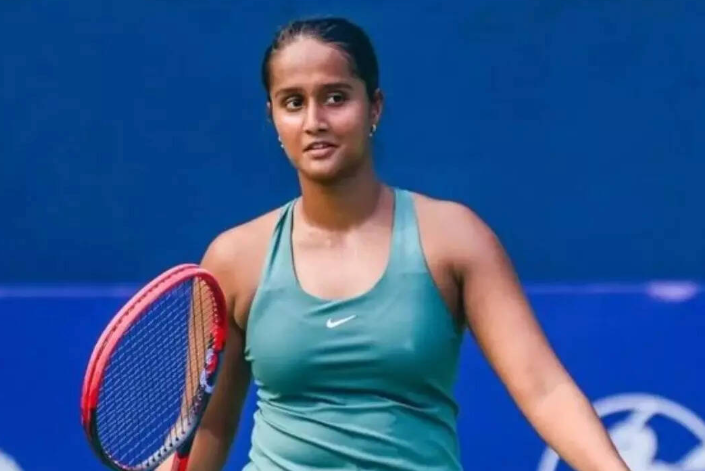
CHENNAI, Nov 10: Indian tennis players Vaishnavi Adkar and Rutuja Bhosale have achieved a historic milestone by becoming the first all Indian women’s doubles combination to reach a WTA Tour level final, despite finishing as runners up at the Chennai Open 2026.
The Indian pair produced an impressive campaign at the WTA 250 tournament, defeating several competitive combinations to secure a place in the championship match. However, their hopes of lifting the title ended after they suffered a straight sets defeat against Switzerland’s Simona Waltert and Naima Karamoko in the final.
The Swiss combination registered a convincing 6-2, 6-0 victory at the SDAT Tennis Stadium, displaying superior coordination, aggressive net play and effective serving throughout the contest.
Although the final result was disappointing for the home favourites, Adkar and Bhosale’s achievement remained a significant moment for Indian women’s tennis.
Their qualification for the final marked the first time an entirely Indian women’s doubles team had reached the championship match of a WTA Tour-level tournament.
The performance highlighted the growing competitiveness of Indian players in international tennis and provided encouragement for the country’s emerging generation of professionals.
Historic Achievement for Indian Women’s Tennis
Adkar and Bhosale entered the Chennai Open with the objective of producing a strong performance against an international field.
The second-seeded Indian combination gradually established its rhythm and demonstrated impressive coordination during the opening rounds.
Their campaign gathered momentum as they progressed through the draw, overcoming opponents with a combination of strong baseline play, effective returns and improved understanding between the partners.
The duo’s journey became particularly significant when they secured a place in the semi-finals.
In the last-four encounter, they faced the Polish American combination of Weronika Falkowska and Alana Smith.
The Indian players started strongly, winning the opening set 6-2. However, their opponents responded in the second set, taking it 6-2 and forcing the match into a deciding super tie break.
Under pressure, Adkar and Bhosale displayed excellent composure and fought back to secure a 10-8 victory.
The win confirmed their place in the final and created history for Indian tennis.
Their achievement was especially important because reaching a WTA Tour level final requires players to compete against established international professionals and maintain consistency across multiple rounds.
The Indian pair’s performance therefore represented a significant step forward for women’s doubles tennis in the country.
Swiss Combination Dominates the Final
The championship match proved considerably more difficult for the Indian players.
Waltert and Karamoko entered the final with confidence and quickly established control through their aggressive approach.
The Swiss duo used their serving strength and sharp net play to put the Indian combination under pressure from the opening exchanges.
Karamoko was particularly effective around the net, intercepting returns and closing down angles. Her anticipation made it difficult for Adkar and Bhosale to find open spaces.
Waltert complemented her partner’s efforts with strong serves and deep groundstrokes, forcing the Indian players to defend for extended periods.
The Swiss combination secured the opening set 6-2, gaining an early advantage in the contest.
The second set proved even more challenging for the Indian team.
Adkar and Bhosale struggled to establish their rhythm, while their opponents continued to dominate the rallies and capitalise on scoring opportunities.
The Swiss pair maintained its intensity and completed the match with a 6-0 second-set victory.
The result handed Waltert and Karamoko the Chennai Open doubles championship.
For Karamoko, the victory marked her first WTA doubles title, while Waltert added another important achievement to her professional career.
The Swiss players received 250 ranking points and a prize cheque of USD 13,000, while the Indian runners-up earned 163 ranking points and USD 7,650.
Strong Performance Throughout the Tournament
Despite the final defeat, Adkar and Bhosale demonstrated considerable consistency throughout their Chennai Open campaign.
Their opening-round performance provided a positive start, as they defeated the fourth-seeded British-American combination of Madeleine Brooks and Amelia Rajecki 6-4, 6-4.
The victory helped the Indians establish confidence and move into the quarter-finals.
They continued their impressive run by defeating Jodie Burrage of Britain and Robin Montgomery of the United States 7-5, 6-4.
The quarter-final victory was particularly important because it placed the Indian duo among the final four combinations competing for the title.
Their subsequent success against Falkowska and Smith in the semi-finals completed a memorable journey to the championship match.
The three victories demonstrated their ability to compete against experienced international opponents.
Although they could not maintain the same level in the final, their overall campaign represented an important achievement.
The Indian players also benefited from the experience of competing together at a major international event, which could prove valuable in future tournaments.
Rohan Bopanna’s Academy Connection
The historic performance also attracted attention because Vaishnavi Adkar has been associated with the tennis academy of former Indian doubles star Rohan Bopanna.
Bopanna, one of India’s most accomplished doubles players, has played an important role in inspiring younger players through his international achievements and contribution to the sport.
His presence around the development of emerging Indian talent has been significant for the country’s tennis ecosystem.
Adkar and Bhosale’s performance at Chennai demonstrated the potential of Indian doubles players to compete at the international level.
The two Maharashtra players also brought renewed attention to the importance of partnerships, coordination and specialised doubles preparation.
Their achievement is expected to encourage other Indian players to pursue opportunities on the professional circuit.
Indian Singles Campaign Also Draws Attention
The Chennai Open also witnessed encouraging performances in the singles competition.
Teenage Indian player Maaya Rajeshwaran Revathi attracted attention after reaching the quarter-finals.
Her run was particularly significant because she became the first Indian since Sania Mirza in 2012 to reach the last eight of the singles draw at a WTA Tour-level event.
Although Maaya’s singles campaign ended in the quarter-finals, her performance represented an important development for Indian women’s tennis.
She also participated in the doubles competition alongside Shrivalli Bhamidipaty.
The Indian pair advanced to the quarter-finals after defeating Czech opponents Aneta Kucmova and Aneta Laboutkova in the opening round.
However, they could not progress further after losing to the Dutch-Hungarian combination of Isabelle Haverlag and Panna Udvardy.
Olympian Ankita Raina also participated in the doubles event, partnering Japan’s Hiroko Kuwata. Their campaign ended in the opening round following a defeat against Gabriella Da Silva-Fick of Australia and Zhibek Kulambayeva of Kazakhstan.
These performances demonstrated the presence of several Indian players competing across different sections of the tournament.
Chennai Open Marks an Important Chapter
The 2026 edition of the Chennai Open carries additional significance as it marks the final staging of the tournament in India before its planned relocation to the Philippines next year.
The event has provided Indian players with an opportunity to compete on home soil against international professionals.
For emerging players, such tournaments offer valuable exposure and allow them to gain experience without having to travel extensively for every international competition.
The Chennai Open has also helped bring professional women’s tennis closer to Indian audiences.
The performances of Adkar, Bhosale and Maaya have demonstrated the potential of Indian players to challenge established international competitors.
The tournament’s relocation will mark the end of an important chapter in Chennai’s association with the WTA calendar.
However, the achievements recorded by Indian players during the 2026 edition will remain an encouraging development for the country’s tennis community.
A Positive Sign for India’s Future in Women’s Tennis
Adkar and Bhosale’s historic final appearance has provided Indian tennis with an important reason for optimism.
Although the pair missed out on the championship trophy, their performance demonstrated that Indian players can reach the latter stages of major international tournaments.
The experience gained during the Chennai Open could help them improve their competitive understanding and prepare for future challenges.
Doubles tennis requires effective communication, quick decision-making and the ability to anticipate an opponent’s movements. The Indian combination displayed these qualities during its successful run to the final.
Their achievement also highlights the importance of continued investment in professional coaching, international exposure and tournament participation.
For Indian women’s tennis, producing more players capable of competing consistently at the WTA level remains an important objective.
The success of the Chennai Open campaign could encourage younger athletes to pursue professional careers and aim for international recognition.
While Waltert and Karamoko ultimately secured the title, Adkar and Bhosale left the tournament with a historic achievement.
Their journey has established an important benchmark for Indian women’s doubles tennis and provided a platform for further progress.
The final defeat may have prevented the Indian pair from lifting the trophy, but their landmark appearance has strengthened hopes for a brighter future for Indian tennis on the international circuit.

