


Veteran Hollywood Actor Stacy Keach Dies at 85 After Long Battle with Heart Condition
The acclaimed American performer, remembered for playing private detective Mike Hammer and portraying literary legend Ernest Hemingway, leaves behind a distinguished career spanning theatre, television and cinema.
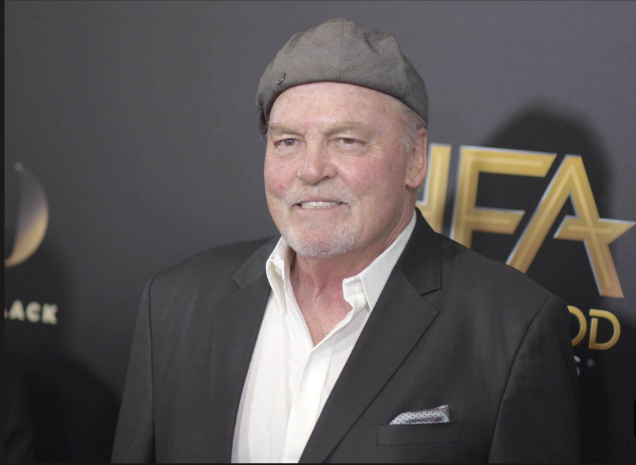
LOS ANGELES, Nov 11: Veteran American actor Stacy Keach, widely recognised for his portrayal of fictional private detective Mike Hammer and his acclaimed performances in theatre, television and films, has died at the age of 85.
Keach passed away on Tuesday at his home in Magdalenka, Poland, following a prolonged battle with a serious heart condition and heart failure, according to a statement from his wife, Malgosia Tomassi Keach.
His death marks the end of a remarkable acting career that extended across several decades and included performances in classical theatre, television dramas, crime series and major Hollywood productions.
Although Keach worked in numerous genres, he became particularly famous for playing Mike Hammer, the tough and determined private investigator created by American crime novelist Mickey Spillane. His interpretation of the character became one of the defining roles of his television career.
The actor portrayed Hammer in the television series Mickey Spillane’s Mike Hammer, which gained popularity during the 1980s. His performance helped establish a strong association between the actor and the fictional detective, whose investigations frequently involved murder mysteries, criminal organisations and complicated cases.
Keach later returned to the role in subsequent television productions, further strengthening his connection with the character. His portrayal was appreciated for its combination of toughness, confidence and traditional detective-story atmosphere.
However, his professional achievements extended far beyond crime television. Keach was also regarded as an accomplished stage performer, particularly for his interpretations of Shakespearean characters and other demanding theatrical roles.
His theatre career demonstrated his versatility as an actor capable of moving between classical literature and contemporary screen productions. He earned considerable respect for his command of dialogue, stage presence and ability to portray complex personalities.
One of his notable theatrical achievements was a Tony Award nomination for his performance as Buffalo Bill in the Broadway production of Indians. The recognition reflected his standing as a serious stage actor at a time when he was also developing his reputation in television and cinema.
Keach’s portrayal of American novelist Ernest Hemingway in the television miniseries Hemingway was another major highlight of his career. His performance earned him a Golden Globe Award and an Emmy nomination, bringing further recognition to his ability to transform himself into real-life historical figures.
The role required him to capture the personality, mannerisms and complicated character of one of America’s most influential literary figures. His performance demonstrated the depth of preparation and commitment that became characteristic of his work.
His film career included several notable productions, among them Fat City, The Ninth Configuration, The Long Riders and American History X. He also appeared in numerous television programmes, including Prison Break, Blue Bloods and Two and a Half Men.
In Fat City, directed by John Huston, Keach played a struggling boxer navigating personal difficulties and professional uncertainty. The film became one of the memorable works in his early career and helped establish his reputation among filmmakers and critics.
He also appeared in The Ninth Configuration, a psychological drama that further demonstrated his ability to handle complex and emotionally demanding material.
His association with established directors and performers allowed him to build a career that was not limited to one particular genre or type of character.
Born in Savannah, Georgia, Keach developed an interest in acting at an early age. He pursued formal education in the performing arts, studying at the University of California, Berkeley, and the Yale School of Drama before continuing his training at the London Academy of Music and Dramatic Art.
His academic background provided him with a strong foundation in classical performance and theatrical techniques. These experiences influenced his approach to acting and helped him establish himself as a respected stage performer.
Unlike actors whose careers are primarily associated with blockbuster cinema, Keach built his reputation through a wide variety of performances across theatre, film and television.
His ability to move between Shakespearean drama, crime entertainment and character-driven films made him a distinctive presence in the American entertainment industry.
However, his professional journey was not without serious personal and career challenges.
In 1984, Keach was arrested at London’s Heathrow Airport in connection with an attempt to smuggle cocaine into Britain. The incident resulted in a prison sentence and became one of the most difficult periods of his life.
He served six months of a nine-month sentence, and the case threatened to derail his acting career at a time when he had already established himself as a prominent performer.
Following his release, Keach spoke openly about his struggles with cocaine addiction and the consequences of substance abuse. He later used his experiences to encourage awareness about addiction and recovery.
His willingness to discuss the incident publicly became an important part of his personal journey. Rather than allowing the controversy to define his professional identity permanently, he gradually returned to acting and rebuilt his career.
In 1986, he resumed his association with the Mike Hammer character, marking an important step in his professional comeback.
Over the following years, Keach continued working in television and cinema, demonstrating that his career could recover from significant personal setbacks.
His performances in Prison Break introduced him to another generation of television viewers. In the series, he appeared as Henry Pope, the prison warden, a character who became an important part of the show’s storyline.
He also made appearances in other popular television productions, maintaining a consistent presence in the entertainment industry.
Keach’s career reflected the changing landscape of American television and cinema. He worked during a period when traditional network television, theatrical productions and Hollywood films were the primary platforms for performers, while also adapting to the expansion of modern television entertainment.
His professional achievements were recognised not only through awards but also through his continued demand as an actor across different formats.
According to reports, Keach had previously experienced serious health difficulties, including a mild stroke and an apparent heart attack while performing on stage. His latest health battle eventually led to his death.
Following the announcement, tributes and remembrances focused on his contribution to American acting, particularly his work in theatre and his memorable interpretation of Mike Hammer.
For many television viewers, he will remain closely associated with the fictional detective whose personality became an enduring part of crime entertainment during the 1980s.
For theatre audiences, however, his legacy extends to his Shakespearean performances and his ability to bring literary and historical personalities to life.
His portrayal of Hemingway also remains among the most recognised performances of his career, demonstrating his range beyond conventional television characters.
Keach’s professional journey was an example of longevity in an industry where actors frequently face changing audience preferences and intense competition.
He continued to work across different entertainment formats while maintaining his identity as a performer with strong theatrical foundations.
His death has brought renewed attention to a career that combined artistic recognition, popular television success and personal resilience.
Keach is survived by his wife, Malgosia Tomassi Keach, and his family. His contribution to American entertainment will be remembered through the many stage productions, films and television programmes in which he appeared.

