


Rahul Gandhi Says India Has Lost Its Democratic Status Under BJP Rule
Addressing the Bharat Summit in Hyderabad, the Congress leader questioned the credibility of India's electoral system, alleged misuse of institutions and criticised the growing influence of corporate interests in politics.
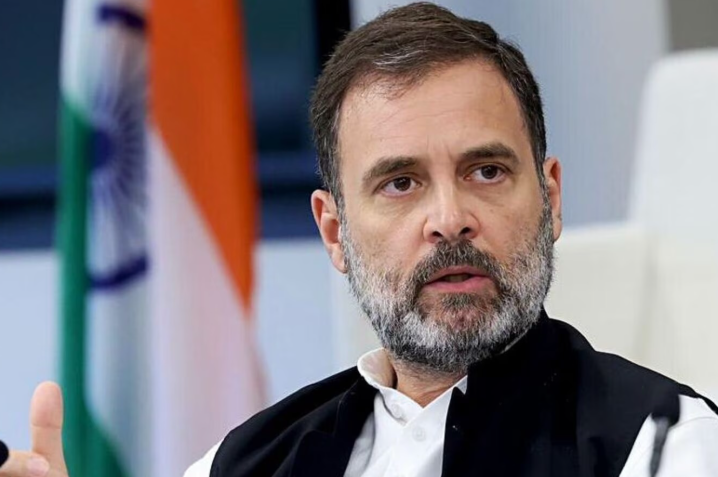
HYDERABAD, Nov 14: Congress leader Rahul Gandhi on Saturday launched a sharp attack on the BJP-led government and Prime Minister Narendra Modi, alleging that democratic institutions and electoral processes in India had been weakened since the BJP came to power in 2014. He asserted that the Opposition would eventually defeat the Modi government through public outreach and democratic resistance.
Speaking at the two-day Bharat Summit organised by the Telangana government in Hyderabad, Gandhi claimed that India could no longer be considered a functioning democracy in its present political circumstances. He also expressed confidence that the Congress and its allies would succeed in removing the BJP from power.
Questioning the credibility of the electoral system, Gandhi referred to the Special Intensive Revision (SIR) of electoral rolls conducted in several states. He alleged that around 140 million people who had participated in the 2024 Lok Sabha elections were subsequently classified as non-existent or ineligible voters.
He questioned how elections could be considered legitimate if such a large number of voters were removed or declared invalid during subsequent electoral exercises.
Gandhi alleged that the political landscape underwent a fundamental transformation in 2014, when the Congress-led United Progressive Alliance (UPA) government lost power and Narendra Modi became Prime Minister. He claimed that substantial financial resources and a different style of election campaigning had altered the country’s political environment.
According to him, the Congress initially struggled to understand the changes taking place but gradually identified what it described as systematic interference with democratic institutions.
“What we discovered, and we have proven without any doubt, is that democracy was destroyed in India in 2014,” he said.
The Congress leader also raised questions about electoral outcomes in Maharashtra, alleging irregularities in the voting process. He claimed that the Congress-led alliance secured a similar vote share in successive elections but experienced a dramatic reversal in the results within three months.
Gandhi alleged that approximately seven million additional voters appeared on the electoral rolls during that period and claimed that all of them voted for the BJP, contributing to its victory. He suggested that similar developments had taken place in other states.
Describing India as one of the world’s most important democratic countries, Gandhi said the preservation of democratic values in the country had significance beyond its borders. He argued that India’s democratic institutions were essential to the broader global struggle for representative government.
Turning to the relationship between business and politics, Gandhi criticised the growing influence of major corporate groups, particularly that of businessman Gautam Adani. He alleged that the distinction between the interests of the BJP government and those of Adani had increasingly disappeared.
He pointed to Adani’s business expansion across sectors such as airports, ports, bridges, cement, defence and infrastructure, alleging that the concentration of economic power was undermining fair competition.
Gandhi further claimed that the BJP’s financial assets had increased elevenfold over the past decade, giving the ruling party an enormous financial advantage over its political opponents.
Discussing the Opposition’s strategy, he said Congress had initially believed that conventional political instruments, including the media, would be sufficient to challenge the BJP. However, he alleged that institutions had come under the influence of the ruling establishment and opposition leaders were increasingly facing legal cases.
He said the Opposition subsequently realised that establishing a direct connection with ordinary citizens was more effective than relying on institutional platforms.
Gandhi cited the Congress-led Bharat Jodo Yatra as an important step in this direction, claiming that the campaign received an encouraging response from people across the country.
He maintained that truth, non-violence and love would remain the party’s strongest weapons against the BJP government. He also alleged that the Prime Minister and Union Home Minister Amit Shah were increasingly concerned about the growing public opposition to their politics.
The Congress leader also expressed regret over the absence of several international delegates from the Hyderabad summit, alleging that the Union government had prevented some foreign participants from attending.
The issue arose after reports that visas had been denied or revoked for more than 100 foreign invitees, including Norwegian journalist Helle Lyng. Several hundred other participants reportedly received permission to attend the event.
Congress MP Shashi Tharoor had earlier raised concerns over the matter, stating that 115 of the 315 speakers cleared by the Ministry of External Affairs were subsequently denied entry into India or had their visas cancelled.
Tharoor criticised the reported restrictions, arguing that preventing critical voices from participating in an international gathering reflected poorly on India’s democratic image.
Responding to questions about the visa issue, External Affairs Ministry spokesperson Randhir Jaiswal said that visa decisions were sovereign matters handled by individual countries and governments.
Telangana Chief Minister A Revanth Reddy, members of his Cabinet, senior Congress leaders and international delegates attended the summit.
Meanwhile, members of the Bharatiya Janata Yuva Morcha (BJYM), the BJP’s youth wing, staged a protest near the Hyderabad International Convention Centre, where the summit was being held.
BJYM state president Ganesh Kunde criticised Gandhi’s visit and said the Congress leader should first ensure the implementation of the promises made by his party during the Telangana Assembly elections.

