


Four senior NC leaders likely to get key J&K Assembly committee posts ahead of Budget Session
Speaker Abdul Rahim Rather expected to fill two chairperson and two member vacancies through consultations with political parties as committees prepare to submit reports during upcoming Budget Session
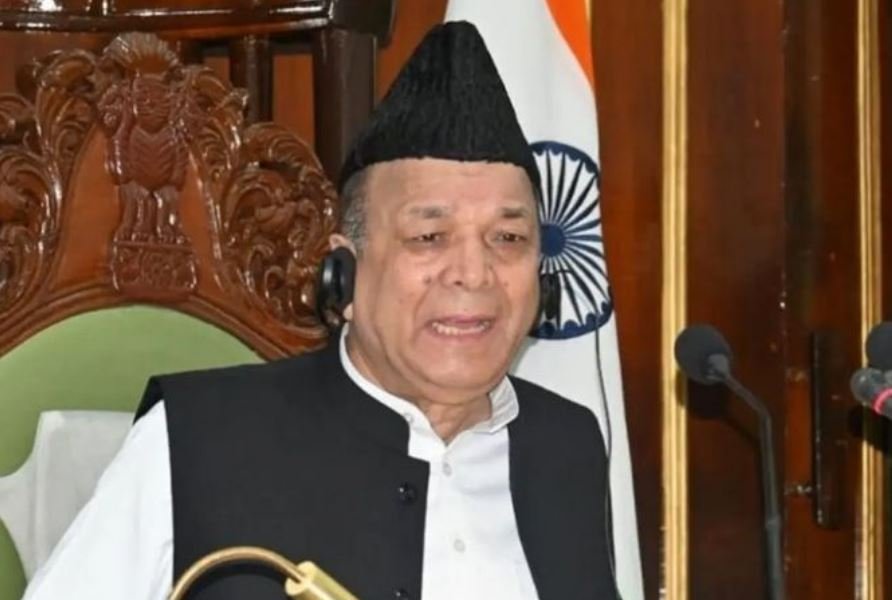
- Four senior National Conference leaders likely to be nominated to J&K Assembly House Committees ahead of Budget Session
- Vacancies arose following induction of Ali Mohammad Sagar, Saifullah Mir, Shamim Firdous and Altaf Ahmad Wani into Council of Ministers
Jammu, November 15: Jammu and Kashmir Legislative Assembly Speaker Abdul Rahim Rather is expected to nominate four senior leaders of the ruling National Conference to various House Committees shortly, filling vacancies created following the induction of their previous occupants into the Council of Ministers.
According to official sources cited in reports, the proposed appointments will involve two chairperson positions and two membership positions across three important legislative committees. The exercise assumes significance as the committees are required to finalise and submit their reports during the forthcoming Budget Session of the Legislative Assembly, expected to be held in February-March 2027.
The vacancies arose following the induction of senior National Conference leaders Ali Mohammad Sagar, Saifullah Mir, Shamim Firdous and Altaf Ahmad Wani, popularly known as Kalloo, into the Council of Ministers.
Under the applicable rules governing legislative committees, members appointed as ministers cease to hold their positions on such panels, necessitating fresh appointments to ensure their continued functioning.
Sources indicated that the Speaker is likely to initiate the process of filling the vacancies after returning to Jammu from Srinagar, with consultations expected to be held with leaders of different political parties represented in the Assembly.
Although elections are generally conducted for the constitution of House Committees and selection of their members, the committees formed following the Budget Session in April 2026 were constituted through a consensus-based arrangement among political parties.
Since all four vacancies previously belonged to the National Conference, the Speaker is reportedly considering filling them through consultations rather than initiating a fresh electoral process.
Official sources suggested that four experienced National Conference legislators could be accommodated against the vacant positions, although the final nominations have yet to be announced.
Among the affected panels is the Committee on Government Assurances, which was earlier headed by veteran National Conference leader Ali Mohammad Sagar.
The committee plays an important role in monitoring assurances, promises and commitments made by ministers on the floor of the Legislative Assembly and examining the progress of their implementation.
Another important vacancy has emerged in the Committee on Public Undertakings, previously headed by National Conference leader Saifullah Mir.
The committee examines the functioning and performance of public sector undertakings, contributing to legislative oversight of their administration, financial management and operational accountability.
Two membership positions have also fallen vacant in the Public Accounts Committee following the induction of Shamim Firdous and Altaf Ahmad Wani into the Council of Ministers.
The Public Accounts Committee is regarded as one of the Legislature’s important financial oversight mechanisms, entrusted with examining government accounts and matters arising from audit findings.
Its work contributes to strengthening financial discipline, transparency and accountability in the utilisation of public resources.
The proposed appointments are considered important for maintaining continuity in the functioning of these committees, particularly as they are expected to complete their assigned work and present reports before the Legislative Assembly during the approaching Budget Session.
Sources maintained that filling the vacancies promptly would enable the committees to proceed with their pending responsibilities without unnecessary administrative delays.
The process also carries political significance in view of earlier differences expressed over the composition of legislative committees.
When the House Committees were initially announced, Leader of Opposition Sunil Sharma had accused Speaker Abdul Rahim Rather of favouring the National Conference by allocating a larger share of committee positions to the ruling party.
The Speaker’s anticipated consultations with political leaders are therefore likely to be closely watched, particularly regarding the continuation of the earlier consensus-based arrangement.
However, sources indicated that the four vacancies would be filled from among National Conference legislators, as the positions had been held by members of the ruling party before their ministerial appointments.
The selection of experienced legislators is expected to help maintain continuity in the committees’ work and facilitate the preparation of reports for consideration by the House.
Legislative committees perform an essential function in parliamentary governance by examining government expenditure, reviewing the functioning of public institutions and monitoring the implementation of commitments made by the executive.
Their proceedings allow legislators to undertake detailed scrutiny of administrative and financial matters that may not receive the same level of attention during regular Assembly debates.
The forthcoming Budget Session adds urgency to the proposed appointments, as timely completion and presentation of committee reports form an important part of legislative accountability.
With the Speaker expected to take a decision shortly, attention will remain focused on the names of the legislators selected for the vacant positions and the arrangements adopted to ensure the smooth functioning of the committees.
The appointments, once finalised, will restore the affected panels to their intended composition and enable them to pursue their responsibilities ahead of the Budget Session.
The broader importance of the exercise lies in strengthening legislative scrutiny, ensuring continuity in committee proceedings and maintaining effective oversight of government assurances, public undertakings and financial administration in Jammu and Kashmir.

