


Blinken Says US Must Respect India’s Right to Self-Defence, Maintain Zero Tolerance for Terrorism
Former US Secretary of State Antony Blinken describes India-US ties as a global strategic partnership, stresses counter terrorism cooperation and highlights the need for diplomatic efforts to prevent escalation between India and Pakistan.
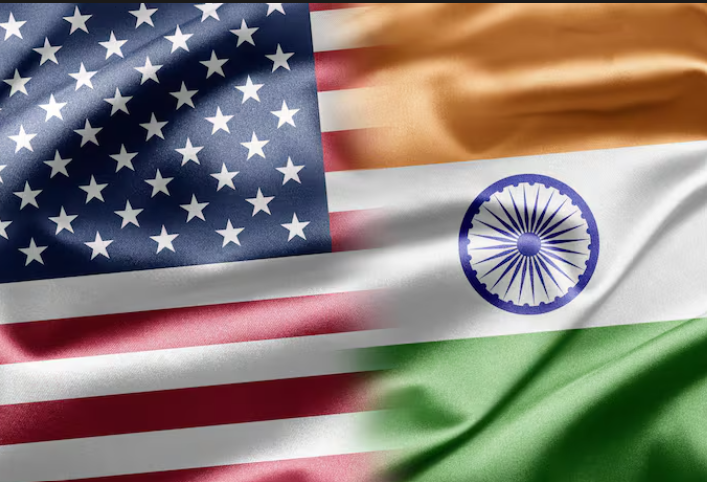
NEW DELHI, Nov 14: Former US Secretary of State Antony Blinken has said the United States must respect India’s right to defend itself against terrorism and adopt a zero tolerance approach towards terrorist activities, emphasising that Washington’s relationship with New Delhi is fundamentally different from its engagement with Islamabad.
Speaking at the Hindustan Times Leadership Summit 2026 in New Delhi, Blinken described India as a global force and said the strategic interests shared by India and the US extended far beyond regional concerns.
During a conversation with Jawed Ashraf, chairman of the India Trade Promotion Organisation, Blinken said Washington’s partnership with New Delhi was global in character, whereas its engagement with Pakistan remained primarily regional.
“India is a global force,” he said, highlighting the growing importance of bilateral cooperation between the two countries.
Blinken acknowledged that Pakistan continued to be relevant to American interests, particularly in areas such as counter-terrorism. However, he stressed that the nature and scope of the two relationships were substantially different.
“We have to have a zero-tolerance policy for terrorism. Period. And that means that we have to have respect for India’s right to defend itself,” he said.
He maintained that American policy should recognise India’s security concerns while simultaneously encouraging diplomatic engagement to prevent tensions from escalating between New Delhi and Islamabad.
Given that both countries possess nuclear weapons, Blinken said preventing a wider confrontation remained essential. He argued that supporting India’s response to terrorist attacks and pursuing diplomatic channels to avoid further escalation should form part of Washington’s approach.
Reflecting on America’s historical engagement with Pakistan, the former secretary of state suggested that strategic considerations during the Cold War and the Afghanistan conflict may have influenced successive US administrations to adopt a less critical position towards Pakistan’s civil-military establishment.
He indicated that Washington had opportunities to do more in addressing these concerns.
India-US partnership enters a new phase
Discussing the evolution of India-US relations, Blinken described the transformation over recent decades as a significant shift from estrangement to a genuine strategic partnership.
He said the relationship had developed through shared geopolitical interests, growing economic cooperation and strong connections between the people of the two countries.
According to Blinken, the partnership was supported not only by government-level engagement but also by longstanding social, cultural and professional links between Indian and American communities.
He identified emerging technologies as one of the most promising areas for future cooperation, particularly in space exploration, quantum technology and artificial intelligence.
Blinken said the next stage of bilateral engagement should focus on strengthening technological collaboration and expanding opportunities for both countries to work together in advanced research and innovation.
He suggested that cooperation in these fields could play an important role in shaping the global technological landscape.
Differences over Russia acknowledged
On India’s longstanding relationship with Russia, Blinken recognised the historical significance of the partnership and said Washington understood that New Delhi would continue maintaining its independent foreign policy.
He clarified that the United States did not expect India to abandon its longstanding engagement with Moscow, despite differences in their respective positions on international developments.
“There will be places where we don’t have the same perspectives. For Russia, we understand there is deep history between India and Russia. So, we don’t want them to end it,” he said.
Blinken’s remarks reflected Washington’s recognition of India’s strategic autonomy and its preference for maintaining relationships with multiple global powers.
Technological changes and global challenges
Reflecting on the changing international environment, Blinken described the current period as a major turning point, driven by rapid technological advancements, economic inequalities and shifting geopolitical influence.
He pointed to the extraordinary pace at which artificial intelligence was transforming society, comparing the adoption of ChatGPT with the much slower spread of earlier inventions such as the telephone.
He said ChatGPT reached 50 million users in approximately one month, whereas the telephone took around 75 years to achieve a comparable level of adoption.
According to Blinken, private companies were increasingly driving technological innovation, while governments and traditional institutions were struggling to respond at the same speed.
He also expressed concern over widening economic inequalities, particularly among younger generations, who increasingly felt excluded from economic opportunities and worried about their future prospects.
Blinken warned that the United States could undermine its own technological and economic advantages by weakening cooperation between government institutions, universities and research organisations.
He also highlighted the importance of attracting skilled professionals from other countries, arguing that restrictions on international talent could damage America’s long-term competitiveness.
“The biggest danger I think we face is a huge self-inflicted wound,” he said.
Blinken comments on US midterm election results
Addressing American domestic politics, Blinken said the outcome of the November 3 midterm elections represented more than an ordinary electoral setback for the party holding the presidency.
He attributed the results partly to public dissatisfaction over rising living costs and concerns about corruption.
The Democratic Party secured majorities in both chambers of Congress, taking control of the House of Representatives and the Senate from Republicans.
Blinken said the results reflected broader concerns among American voters about economic conditions and political accountability.
Criticism of US military campaign against Iran
On developments in West Asia, Blinken described the US-Israeli military campaign against Iran, launched in February by President Donald Trump, as a “war of choice”.
He linked the present crisis partly to the first Trump administration’s decision to withdraw from the 2015 nuclear agreement with Tehran.
The agreement, formally known as the Joint Comprehensive Plan of Action (JCPOA), required Iran to remove 97 per cent of its enriched uranium and imposed restrictions on its centrifuge activities while establishing an extensive international inspection mechanism.
Following Washington’s withdrawal from the agreement in 2018, Iran accelerated its nuclear programme, Blinken said.
He questioned whether military action could achieve a lasting solution, arguing that forcing the Iranian leadership to surrender was considerably different from persuading it to return to negotiations.
“It is very hard to try to force this Iranian regime to capitulate; it is possible to get it to negotiate. And these are very different things,” he said.
Blinken called for a diplomatic exit strategy to prevent the conflict from expanding further. He cautioned that continued hostilities could lead to attacks on regional infrastructure, American military installations and countries allied with Washington.
He also highlighted the growing threat to international energy security, particularly because of disruptions in the Strait of Hormuz.
The strategically important waterway is among the world’s busiest routes for oil transportation. Blinken observed that restrictions on shipping through the passage had created serious concerns for global energy supplies.
Calls for Palestinian state alongside secure Israel
Turning to the wider West Asian situation, Blinken said a durable regional settlement would remain difficult without addressing the Palestinian question.
He reiterated his support for a two-state solution involving a sovereign Palestinian state existing alongside Israel, with security guarantees for both sides.
He argued that the populations of Israel, the West Bank and Gaza had deep-rooted connections to the region and that neither community could simply be displaced.
“There are seven million Jews in Israel. There are seven million Arabs and Palestinians between Israel proper, the West Bank and Gaza. No one is going anywhere despite what extremists on both sides would like to see happen,” he said.
Blinken maintained that a peaceful settlement required recognising the legitimate aspirations and security concerns of both communities.
“The solution remains, I fully believe, even though this is not a popular view, a secure Israel and a sovereign state of Palestine,” he added.
Blinken served as the 71st US Secretary of State from 2021 to 2025 under former President Joe Biden. His comments at the summit covered India’s security interests, shifting global alliances, technological competition and major international conflicts, highlighting the challenges facing American foreign policy.

