


Small Island Nations Urge Stronger Climate Action at UN Talks Amid Rising Threats
Vulnerable island countries have called on wealthy nations to deliver stronger emission cuts and climate financing, warning that rising sea levels, record ocean temperatures and extreme weather are threatening their survival.
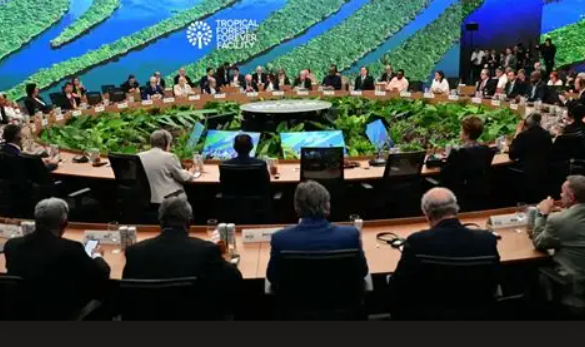
ANTALYA (TURKEY), Nov 18: Small island nations have intensified their demands for urgent global action against climate change at the United Nations climate conference, warning that rising sea levels, extreme weather events and warming oceans are putting their populations and economies at increasing risk.
As the second and final week of the climate negotiations gets underway in Turkey’s coastal city of Antalya, representatives of vulnerable island countries are pressing major economies to move beyond promises and deliver concrete measures to address the climate crisis.
The 31st Conference of the Parties (COP31) is taking place against a backdrop of climate-related disasters, geopolitical tensions and an increasingly intense El Nino phenomenon, creating additional challenges for countries already struggling with environmental vulnerabilities.
Tonga Prime Minister Fatafehi Fakafanua said small island nations were no longer looking for additional research or prolonged negotiations, but wanted governments to implement meaningful climate policies.
“We don’t need more studies. We don’t need more negotiations. We just need more action,” he said in an interview with The Associated Press.
Tonga is among the countries facing serious consequences from global warming. Although its land territory is relatively small, its maritime zone extends across a vast area of the Pacific Ocean, making marine ecosystems essential to its economy, food security and livelihoods.
Rising ocean temperatures are threatening marine biodiversity and affecting the resources on which coastal communities depend. Meanwhile, melting glaciers and expanding seawater volumes are contributing to rising sea levels, increasing the risks of coastal erosion, flooding and damage to settlements.
These challenges are shared by several Small Island Developing States (SIDS), which are among the most exposed countries to the consequences of climate change despite contributing relatively little to global greenhouse gas emissions.
Island Nations Present a United Front
Small island countries have increasingly coordinated their positions in international climate negotiations to strengthen their influence over decisions taken by larger economies.
The Alliance of Small Island States (AOSIS), which represents 39 island and low-lying coastal countries, has emerged as an important negotiating bloc.
Ilana Seid, chair of AOSIS and Palau’s ambassador to the United Nations, said individual island economies often lacked the financial and political influence needed to persuade major countries to address their concerns.
However, collective representation allows them to present a stronger position during international negotiations.
She said the environmental challenges confronting these countries were remarkably similar, regardless of whether they were located in the Pacific, Caribbean or African regions.
Their common concerns include rising sea levels, coastal flooding, freshwater shortages, damage to fisheries and the growing financial burden of responding to climate-related emergencies.
Island representatives are particularly demanding greater financial assistance from developed economies, arguing that countries responsible for a substantial share of historical emissions should help vulnerable nations manage the consequences.
Their demands include funding for climate adaptation, disaster recovery, infrastructure protection and programmes aimed at reducing the impact of global warming.
Climate Finance Becomes a Major Negotiating Issue
Financial support has emerged as one of the central demands of island representatives at COP31.
The alliance is seeking to secure USD 500 million for climate resilience programmes and an additional USD 200 million to strengthen early-warning systems for natural disasters.
These funds would help vulnerable countries prepare for extreme weather, protect coastal communities and improve their ability to respond to emergencies.
For many small island economies, even relatively limited environmental damage can result in significant financial losses because of their dependence on tourism, fisheries and coastal infrastructure.
Rebuilding after cyclones, floods and other disasters can place enormous pressure on national budgets, forcing governments to divert resources from education, healthcare and economic development.
Fakafanua argued that financial assistance should reflect the responsibility of countries that have contributed most significantly to the climate crisis.
The demand also reflects a wider debate over climate justice, with developing nations calling for more equitable distribution of the financial burden associated with global warming.
Although international agreements have recognised the importance of climate finance, vulnerable countries continue to face difficulties accessing sufficient and predictable funding.
Island representatives want commitments made during international conferences to translate into accessible financial resources rather than remaining declarations of intent.
Pacific Countries Seek Greater Influence
This year’s negotiations have provided Pacific island countries with a more prominent platform, partly through Australia’s involvement in the conference arrangements.
Turkey and Australia are jointly hosting COP31, while Fiji organised a preparatory meeting in October ahead of the main negotiations.
Fakafanua welcomed the increased visibility of Pacific nations, saying their concerns had received greater attention during this year’s discussions.
He described the development as an important step towards ensuring that communities facing the most immediate climate threats have a meaningful role in shaping international decisions.
However, island representatives believe that greater visibility must be accompanied by stronger political commitments and measurable results.
The negotiations have also attracted participation from young climate activists, who are demanding that governments take responsibility for protecting future generations.
Atiterentaai Rinimarawa, a 24-year-old youth representative from Kiribati, said the future of younger generations depended heavily on the decisions being taken by world leaders.
She emphasised that island communities were seeking justice and meaningful commitments rather than expressions of sympathy.
For young people in countries such as Kiribati, climate change is not simply an environmental concern but a direct threat to their homes, cultural heritage and long-term security.
1.5-Degree Target Remains Critical
Another major concern for island nations is the growing possibility that the international community will fail to limit global warming to 1.5 degrees Celsius above pre-industrial levels.
The United Nations has warned that the world is not currently on track to achieve this objective, raising concerns about the consequences of further temperature increases.
For small island countries, the 1.5-degree threshold represents a particularly important limit because additional warming could intensify sea-level rise, coral bleaching, extreme heat and other environmental pressures.
Adelle Thomas, senior director at the Natural Resources Defense Council and a climate expert from the Bahamas, described the target as a matter of survival for vulnerable island communities.
She said the challenge was whether political decisions could catch up with the environmental conditions already affecting people around the world.
Thomas acknowledged that international climate negotiations had contributed to limiting the scale of projected global warming, although progress had not kept pace with the urgency of the crisis.
She argued that the COP process should continue because abandoning international cooperation could make the situation considerably worse.
Political and Economic Pressures Complicate Negotiations
The climate conference is also taking place amid international political tensions and economic uncertainty.
For the second consecutive year, the United States, the world’s largest economy and one of the major greenhouse gas emitters, is absent from the negotiations.
Its absence has added to concerns about the ability of international climate agreements to secure participation and cooperation from major economies.
Meanwhile, geopolitical developments, including the Iran war, have contributed to volatility in global energy markets and increased fuel costs.
Higher energy prices can complicate national efforts to transition towards cleaner energy sources, particularly in countries facing economic and infrastructure constraints.
At the same time, the impact of global warming is becoming increasingly visible in communities across different regions.
Climate-related disasters are affecting homes, agricultural production, public infrastructure and local economies, strengthening calls for governments to adopt more ambitious policies.
Thomas said individual citizens and communities also had an important responsibility to ensure that political leaders addressed climate change effectively.
Extreme Weather Adds to Island Vulnerabilities
Environmental conditions have made this year’s negotiations particularly important for small island countries.
Global ocean temperatures reached record levels in August, while the intensifying El Nino phenomenon has raised concerns about further disruptions to weather patterns.
Warmer oceans can damage marine ecosystems, threaten coral reefs and affect fisheries that provide food and employment for island populations.
Rising sea levels also increase the likelihood of coastal flooding and erosion, potentially forcing communities to relocate from vulnerable areas.
For countries with limited land resources, such developments create serious questions about long-term settlement, infrastructure planning and national security.
Early-warning systems are therefore among the priorities being discussed at COP31.
Improved forecasting, communication networks and disaster preparedness programmes could help island governments protect lives and reduce economic losses during extreme weather events.
However, establishing these systems requires financial resources, technical expertise and international cooperation.
Youth Activists Demand Renewed Confidence
Young environmental activists have also called for the conference to restore public confidence in international climate negotiations.
Qiyun Woo, a youth environmentalist from Singapore, said the discussions needed to demonstrate that global institutions and political leaders remained committed to securing a safer future.
She stressed that younger generations were looking for evidence that international commitments would result in practical improvements.
The concerns reflect growing frustration among young people who believe that climate discussions have frequently produced ambitious declarations without sufficiently rapid implementation.
For vulnerable island communities, the consequences of delays are particularly severe because environmental changes are already affecting their daily lives.
As COP31 approaches its conclusion, small island nations are seeking clear commitments on financial assistance, emission reductions and disaster preparedness.
Their message is that the global response must reflect the urgency of the challenges confronting the countries most exposed to climate change.
The outcome of the negotiations will be closely watched by island governments and environmental organisations, which want stronger international cooperation to protect vulnerable populations.
For these nations, climate action is not simply about achieving long-term environmental targets. It is about protecting their territories, preserving their economies and ensuring that future generations can continue living in their ancestral homelands.

