


CJI Surya Kant Proposes Mandatory Legal Aid Training for Law Students, Seeks AI Guidelines
Addressing an international legal education conference in Hyderabad, the Chief Justice emphasised practical courtroom exposure, compulsory community service and transparent rules for AI-assisted academic research.
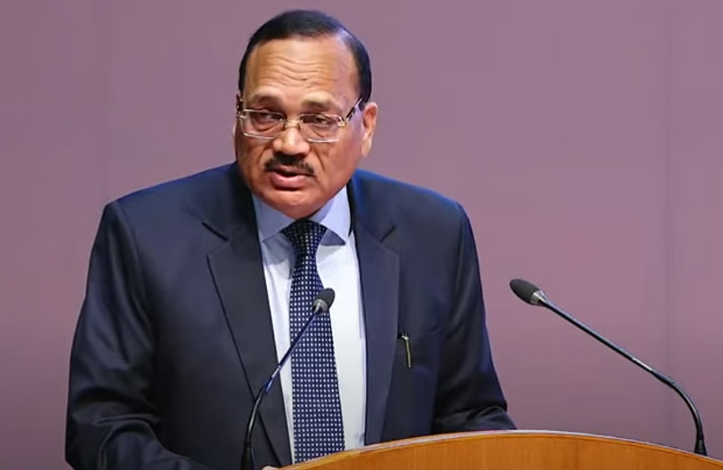
HYDERABAD, Nov 22: Chief Justice of India (CJI) Surya Kant has called for a comprehensive approach to modernising legal education, proposing compulsory legal aid work for law students before graduation and clear guidelines governing the use of artificial intelligence in academic research.
Addressing the inaugural session of the first annual International Conference on Legal Education 2026, organised by the Commonwealth Legal Education Association (CLEA) in Hyderabad, the Chief Justice stressed that legal education must extend beyond textbooks and classroom instruction.
He said future lawyers should receive practical exposure to the challenges faced by ordinary citizens while developing a responsible understanding of emerging technologies that are transforming legal research and professional practice.
The conference, held under the theme ‘Globalising Legal Education: Reimagining Law Schools’, brought together judges, legal practitioners, academics, university representatives and researchers to discuss the changing requirements of legal education.
Among the key suggestions made by the CJI was the introduction of a minimum period of legal aid service as a compulsory requirement for every law student seeking graduation.
He also proposed awarding additional academic credits to students who undertake legal assistance beyond the prescribed minimum requirement.
“I would further suggest that a minimum period of legal aid work be made compulsory for every student to graduate, with additional credits for those who go beyond it,” he said.
The proposal seeks to strengthen the connection between legal education and access to justice by encouraging students to engage directly with individuals who require legal assistance but may lack the resources to approach professional legal services.
Legal aid to become an important part of legal education
The Chief Justice emphasised that law schools should prepare students not only to understand legal provisions but also to apply their knowledge in addressing real-life problems.
He indicated that legal aid clinics should play a more active role in the academic development of students and should not remain limited to occasional classroom exercises.
Such clinics can provide an opportunity for students to understand the difficulties faced by economically disadvantaged communities, assist people in navigating legal procedures and gain practical knowledge under the supervision of qualified professionals.
The CJI referred to the role of legal services authorities, panel lawyers and para-legal volunteers in extending legal assistance to people in villages and settlements.
He suggested that law students should be encouraged to work alongside these professionals and participate in activities that improve public access to justice.
He also stressed that legal aid activities should continue beyond regular academic semesters.
Students who volunteer during semester breaks should receive certificates recognising the work they have completed. Those who contribute additional time and effort could be rewarded through academic credits.
Such recognition, he indicated, would encourage students to treat legal service as an important part of their professional development rather than merely an academic obligation.
The CJI also suggested that legal aid clinics could function as continuing learning centres where students, panel advocates and legal services officers regularly discuss cases and exchange practical experiences.
These interactions could help students understand how legal principles operate in real situations and how different procedural and social factors influence access to justice.
Practical learning must extend beyond specialised courses
The Chief Justice also raised the question of how practical training could be integrated into the wider law curriculum.
He suggested that clinical legal education should not be confined to a separate segment of academic programmes but should become an integral part of the teaching of core legal subjects.
Subjects such as Evidence, Criminal Procedure, Family Law and Constitutional Law could incorporate practical exercises to help students connect theoretical knowledge with actual legal situations.
For instance, students studying evidence-related provisions could examine how evidentiary principles are applied in court proceedings. Those studying criminal procedure could gain a better understanding of investigation, trial processes and the rights of individuals involved in criminal cases.
Similarly, practical exercises in family law and constitutional law could help students understand disputes, legal remedies and the functioning of constitutional protections.
Such an approach could improve students’ ability to analyse cases, interpret legislation and communicate legal arguments.
It could also help reduce the gap between university education and the professional responsibilities that graduates encounter after entering the legal field.
CJI seeks common guidelines for AI use
Apart from practical training, the use of artificial intelligence in legal education was a major focus of the Chief Justice’s address.
With generative AI tools increasingly being used to summarise judgments, organise research material and prepare legal arguments, he said educational institutions must establish clear standards for their responsible use.
He urged the Commonwealth Legal Education Association to take the lead in developing model guidelines on disclosing AI assistance in legal research.
These guidelines could subsequently be adapted by law schools and academic journals across Commonwealth countries according to their individual requirements.
The Chief Justice said students should understand which applications of AI are permitted and which forms of assistance require disclosure.
He cautioned that although AI tools can help researchers locate and organise legal material, their outputs cannot automatically be considered accurate or reliable.
One significant concern is the possibility of fabricated legal authorities or incorrect references being presented in a convincing manner.
Such errors could create serious problems in legal research and professional submissions, where the accuracy of case laws, judicial precedents and statutory provisions is essential.
He stressed that researchers must verify every legal authority against its original source, disclose any substantial assistance received from AI systems and remain personally accountable for their work.
The use of AI, therefore, should complement a student’s research abilities rather than replace independent reasoning and legal understanding.
Against blanket restrictions on artificial intelligence
The CJI made it clear that completely prohibiting AI tools in legal education would neither be practical nor a wise response to technological developments.
He observed that artificial intelligence had already become part of academic and professional environments, making it necessary for institutions to develop appropriate systems for its use.
A blanket ban, he suggested, could push students towards using such tools without guidance or transparency.
Instead, universities should establish clear rules and educate students about the limitations and responsibilities associated with AI-assisted research.
He emphasised that the central issue was not whether students would use these technologies but whether their submitted work continued to reflect their own understanding, reasoning and appreciation of the law.
The growing ability of AI systems to generate polished answers, summarise judgments and suggest legal arguments has also challenged traditional methods of assessing academic knowledge.
A written assignment may no longer provide sufficient evidence that a student has independently understood the subject matter.
To address this challenge, the Chief Justice suggested that law schools consider assessment methods that require students to explain their written submissions orally, defend the legal authorities they have cited or identify mistakes in AI-generated responses.
Such exercises could help teachers determine whether students possess the knowledge and analytical ability reflected in their submitted work.
Concerns over AI detection software
The Chief Justice also cautioned educational institutions against relying exclusively on AI-detection software to determine whether a student’s assignment has been generated by artificial intelligence.
He referred to a 2023 study that examined seven widely used detection tools.
According to the study cited by him, the software performed almost flawlessly when assessing essays written by schoolchildren in the United States but incorrectly identified more than three in every five essays written by non-native English speakers as AI-generated.
The findings, he indicated, raised concerns about the possibility of genuine student work being wrongly classified as academic misconduct.
This issue is particularly relevant across Commonwealth countries, where English is frequently used as a second or third language.
Students may have different writing styles, vocabulary levels and language backgrounds, which could affect the accuracy of automated detection systems.
The CJI cautioned that an allegation of academic dishonesty should not be based solely on the assessment of a machine.
Educational institutions must ensure that students are treated fairly and are given an opportunity to explain their work.
A combination of oral assessments, research verification and direct academic evaluation could provide a more reliable way of determining whether students have genuinely understood the material they submit.
Legal education must respond to technological changes
The conference also highlighted the wider transformation taking place in legal education as emerging technologies reshape the practice of law.
Acting Chief Justice of the Telangana High Court, Justice P Sam Koshy, described the conference theme as timely and important, saying discussions on legal education must move beyond the traditional teaching of statutes, precedents and procedural rules.
Supreme Court judge Justice P S Narasimha also cautioned against excessive dependence on AI, warning that it could weaken students’ ability to think independently.
He observed that the process of learning law was as important as the final outcome and that technology should assist human thinking rather than replace it.
His remarks reinforced the importance of maintaining academic discipline and independent reasoning while adapting to technological developments.
Telangana Advocate General A Sudarshan Reddy said the state government was introducing 10 new subjects into the undergraduate law curriculum.
These include cyber laws and cyber security, emerging technologies and law, among other subjects.
He said the proposed additions were academically justified and aligned with global developments in legal education.
The inclusion of such subjects reflects the growing need for lawyers to understand digital systems, cyber-related disputes and the legal questions emerging from technological innovation.
Uniform citation standards across Commonwealth countries
The conference also addressed the importance of improving consistency in legal research and the identification of judicial decisions.
During discussions on uniform citation practices across Commonwealth jurisdictions, the CJI referred to the use of neutral citations assigned by courts.
He said such citations should serve as the primary identifiers of judgments wherever they are available.
The Supreme Court has adopted neutral citations since 2023.
He suggested that a common minimum citation format containing the year, court, decision number and paragraph reference could make judicial decisions easier to locate and verify across different jurisdictions.
A consistent system could assist researchers, lawyers and students in identifying relevant judgments while reducing confusion arising from different citation practices.
The proposal also reflects the importance of reliable legal information in an environment where digital research tools are becoming increasingly prominent.
The inaugural conference was attended by senior members of the judiciary, including Solicitor General Tushar Mehta and Attorney General for India R Venkataramani, along with judges from various High Courts, vice-chancellors, deans, academics and legal practitioners.
Justice E V Venugopal of the Telangana High Court delivered the welcome address.
A broader vision for future lawyers
The suggestions made by the Chief Justice point towards a legal education system that gives equal importance to academic knowledge, professional responsibility, practical experience and technological awareness.
Compulsory legal aid work could encourage students to develop a stronger understanding of social realities and the difficulties faced by people seeking justice.
At the same time, clear AI guidelines could help universities maintain academic integrity without preventing students from learning about technologies that are increasingly influencing professional work.
The emphasis on practical exercises, reliable research and fair assessment also highlights the need to prepare graduates for responsibilities that extend beyond passing examinations.
As legal institutions adapt to rapid technological changes, law schools will have to balance innovation with the fundamental principles of accuracy, independent thinking and accountability.
The Chief Justice’s proposals offer a framework for discussion among legal educators and policymakers on how future lawyers can be equipped to serve society while adapting to an increasingly technology-driven legal environment.

