


AR Rahman Rejects 10–12 Film Offers to Focus on Ramayana, Reveals Three Year Musical Journey
Speaking at IFFI in Goa, the Oscar winning composer revealed that several tracks underwent repeated revisions while he worked alongside Hans Zimmer on the ambitious mythological production.
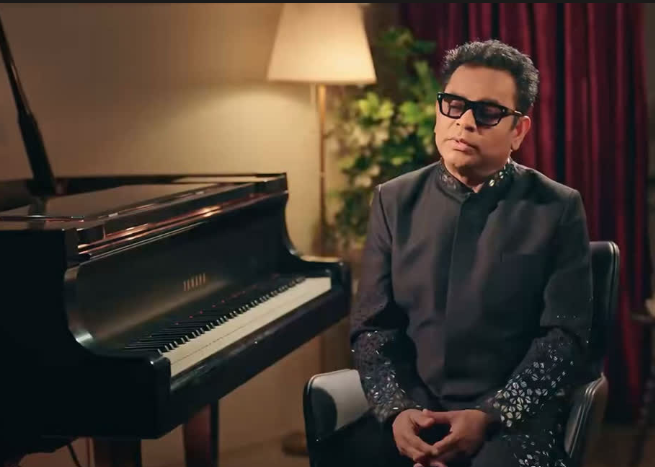
PANAJI, Nov 22: Oscar winning music composer AR Rahman has revealed that he turned down nearly 10–12 film projects to dedicate himself to the music of the ambitious mythological epic Ramayana, describing the experience as a rewarding creative journey that kept him immersed in the world of the film for almost three years.
Rahman, who is collaborating with renowned German composer Hans Zimmer for the Nitesh Tiwari directed project, shared details of the extensive musical process during a press conference at the International Film Festival of India (IFFI) in Goa on Sunday.
The composer said the decision to prioritise Ramayana required him to step away from several important assignments offered by prominent filmmakers. However, he expressed satisfaction with his choice, explaining that he wanted to remain completely focused on developing the film’s musical identity.
“The process was beautiful. Because of Ramayana, I left almost 10-12 movies, just to be in the zone. Many, many important big filmmakers I left. And I’m proud of it,” Rahman said.
The musician explained that the soundtrack involved years of creative exploration, with individual themes undergoing several rounds of revisions before reaching their final form.
He cited ‘Ravana Tandav’ as an example of the detailed work involved, revealing that the composition went through approximately 12 to 13 versions before the team settled on the arrangement they collectively preferred.
“We’ve been doing ‘Ramayana’ music for three years, the themes and everything. And some of them have, like, 12-13 versions. The Ravana Tandav actually had 12-13 versions, and then we finally found a version which everybody liked,” he said.
Rahman’s comments offer an insight into the scale of the musical preparation behind one of Indian cinema’s most ambitious productions. The collaboration with Zimmer has also attracted considerable attention because it brings together two internationally recognised composers with distinct musical backgrounds.
While Rahman is celebrated for blending Indian classical influences with contemporary sounds, Zimmer is known for his expansive orchestral compositions and work on major international film productions.
Their partnership aims to create a musical landscape that reflects the epic’s cultural roots while offering an international cinematic experience.
During the interaction, Rahman also discussed his approach to selecting projects, explaining that he does not accept assignments simply because they come from established filmmakers or carry substantial commercial expectations.
Instead, he prefers working on stories that generate genuine creative enthusiasm and allow him and his team to explore new artistic possibilities.
He said a project becomes particularly meaningful when it inspires the entire creative team and encourages them to approach their work with renewed excitement.
Rahman acknowledged that experimenting with different musical traditions can sometimes be challenging, especially when attempting to bring together contrasting styles.
“It is terrifying but we have to do it because I love both,” he said while discussing his interest in traditional and contemporary musical forms.
The composer described himself as multicultural in his approach to music, explaining that his exposure to different styles has influenced the way he creates compositions.
He recalled that even while working with traditional musical arrangements, he would continue listening to modern music, allowing different influences to develop alongside one another.
According to Rahman, this interaction between musical traditions has shaped his creative outlook, although balancing contrasting influences can occasionally leave him uncertain about the direction of a particular composition.
His remarks come amid considerable public discussion surrounding the music of Ramayana. Several songs released from the film have generated strong reactions among listeners, with audiences expressing both appreciation and criticism of the compositions.
‘Ravana Tandav’ has particularly attracted attention because of the musical treatment given to the character of Ravana. Some listeners have debated whether the composition captures the intensity and grandeur traditionally associated with the mythological figure.
Another track, ‘Mangal Rang’, featuring singers Arijit Singh and Shreya Ghoshal, has also generated discussion over its musical influences and arrangement.
Despite the differing reactions, Rahman’s latest comments indicate that the creative team invested considerable time in developing the soundtrack and refining its individual elements.
The composer has previously demonstrated an ability to adapt his musical language to different cinematic genres, from romantic dramas and historical productions to science fiction and international projects.
His collaboration with Zimmer is particularly significant because it brings together two composers whose careers have been shaped by different cultural and musical environments.
Rahman has received international recognition for his work in Indian and global cinema, including two Academy Awards for his compositions in Danny Boyle’s Slumdog Millionaire. His achievements have helped establish Indian film music as an important part of the international entertainment landscape.
Zimmer, meanwhile, has composed music for several acclaimed productions, including The Lion King, Gladiator, Inception, Interstellar and Dune. His work has earned him numerous awards and widespread recognition within the global film industry.
The combination of their musical approaches has made Ramayana one of the most closely followed projects in the Indian film industry.
Directed by Nitesh Tiwari, the ambitious adaptation features Ranbir Kapoor as Lord Rama, Sai Pallavi as Sita, Yash as Ravana, Ravi Dubey as Lakshman and Sunny Deol as Hanuman.
Produced on a reported budget of around Rs 4,000 crore for its two-part presentation, the project is among the largest cinematic undertakings in Indian film history.
The production aims to bring the ancient Indian epic to the big screen through large-scale visual effects, elaborate sets, extensive performances and a soundtrack designed to complement its mythological setting.
The story of the Ramayana has been adapted numerous times across Indian cinema, television, theatre and regional storytelling traditions. However, the scale of the current production and its international creative collaboration have generated expectations of a different cinematic interpretation.
For Rahman, the assignment has involved more than composing individual songs. Developing recurring musical themes for major characters and important narrative moments has required a sustained creative process.
His revelation that some compositions underwent more than a dozen versions highlights the attention given to refining the soundtrack.
The decision to reject other projects also demonstrates the level of commitment he brought to the assignment. In an industry where leading composers frequently balance multiple productions, dedicating nearly three years to a single film represents a substantial professional choice.
Rahman said he accepts projects when they connect with his artistic interests and provide an opportunity for creative growth. He believes that genuine enthusiasm is important not only for the composer but also for everyone involved in the music-making process.
The latest remarks have renewed interest in the musical direction of Ramayana, particularly as audiences continue to discuss the songs and the collaboration between Rahman and Zimmer.
The composer has not suggested that every listener will respond to the soundtrack in the same way. However, his comments underline the effort involved in bringing together different musical influences for a story with deep cultural and historical significance.
The IFFI interaction also provided an opportunity for Rahman to discuss his broader musical philosophy and the importance of remaining open to different traditions.
As anticipation surrounding the film continues, the soundtrack remains an important part of the project’s identity.
With three years of preparation behind the music and several compositions refined through repeated revisions, Rahman believes the experience has been worthwhile.
His decision to turn down other assignments reflects the importance he attached to the project and his determination to give the epic his undivided creative attention.

