


AZAD’S SECOND INNING
Editorial . . . . .
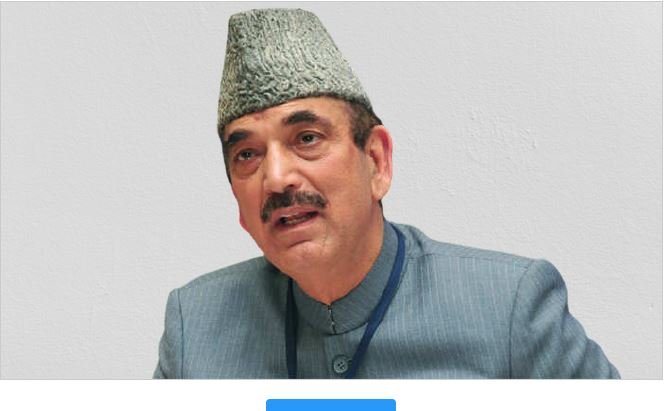
Since leaving the Congress, the party he had been a part of for more than 50 years, Ghulam Nabi Azad will be in Jammu and Kashmir starting on September 4 to create a new party, adding another inning with another symbol to the collection of political flags already flying in the Union Territory. According to all accounts, he is a well-known political figure who has significant experience in a variety of roles. The fact that Azad will have to build his political base from scratch without the support and organizational infrastructure of his former party is also another notable aspect. He will find it quite difficult to emerge from Congress’ shadows and create parties with radically diverse ideologies. It has already come under fire that he left the party at the BJP’s urging. His proximity to the prime minister is used as support. Overall, he faces a difficult assignment. Even if he has a large number of followers, including individuals who have held prominent roles in UT administrations and Congress, his path ahead will not be easy. About a dozen well-known people, some of them former ministers, have resigned thus far, but it is currently unknown how many party members will come forward to be tallied. It is also widely known that Azad has strongholds in the Kashmir Valley and Jammu, particularly in the districts of Anantnag and Baramulla in the Valley, as well as the five districts of Jammu’s Jammu region i.e. Doda, Ramban, Kishtwar, Rajouri, and Poonch. But a lot has changed since he last ran for office in J&K, including the repeal of Article 370, the demise of the state, and the rise of Hindu feeling in Jammu’s plains, which is now positioned against Islamic radicals in the Valley, which is home to the majority of Muslims. The likelihood of a settlement between these two diametrically opposed groups has sparked divisions in the public’s thinking. His supporters are confident that he is the only leader in Jammu and Kashmir with a higher approval rating than any other leader. In addition to his high national prominence and familiarity with the complexities of politics and national concerns.
He gets along well with the leaders of other parties with whom he has been regularly interacting. This is the reason, Dr. Farooq Abdullah, the head of the National Conference, praised Azad so highly and cited Congress as the cause of the loss of a significant political asset. However, when there is political rivalry, this friendliness either manifests as mutual criticism or partnerships. According to his followers, it is too early to anticipate what will happen to the party that Azad is going to create in less than a fortnight as it is unclear what shape politics of Azad will take at this moment. On the other hand, Azad’s relationship with the PDP was turbulent, especially after the 2002 assembly elections, when there was a rotation of chief ministers. Mufti began and served as chief minister for three years (2002 to 2005), and Azad succeeded him. However, Azad’s three-year term was cut short when the PDP withdrew its support over the issue of the land’s allocation to the Shri Amarnath Shrine Board in May 2008. PDP was against it. The advantages and disadvantages of repealing Article 370 now temper political discourse. Azad will now have to deal with criticism from Congress, as well as many other political parties, especially which has recently taken birth in Kashmir and Jammu region. Several obstacles are in his path. Time will tell, so wait and watch.

