


SC verdict on Monday on pleas challenging abrogation of Article 370 and Jammu & Kashmir Reorganization Act
Decoding the Legal Labyrinth: Supreme Court's Final Say on Article 370 and J&K's Constitutional Transformation
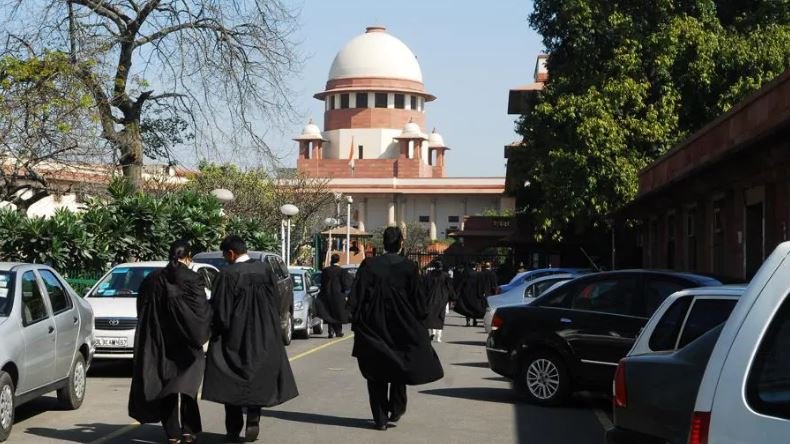
New Delhi, 07-12-2023 : The Supreme Court is set to announce its verdict on December 11 regarding a series of petitions challenging the abrogation of Article 370 of the Indian Constitution, which granted special status to the former state of Jammu and Kashmir. The decision will be delivered by a five-judge constitution bench, led by Chief Justice D Y Chandrachud, and consisting of Justices Sanjay Kishan Kaul, Sanjiv Khanna, B R Gavai, and Surya Kant, according to the cause list for December 11 posted on the apex court’s website.
The culmination of this legal process follows the Supreme Court’s reservation of its verdict on September 5 after an extensive 16-day hearing. Throughout the proceedings, the court heard representations from various legal figures, including Attorney General R Venkataramani, Solicitor General Tushar Mehta, and senior advocates Harish Salve, Rakesh Dwivedi, and V Giri, who defended the government’s decision to abrogate Article 370.
Conversely, senior advocates such as Kapil Sibal, Gopal Subramanium, Rajeev Dhavan, Zaffar Shah, and Dushyant Dave represented the petitioners, focusing on issues encompassing the constitutional validity of the August 5, 2019 decision to repeal Article 370, the legality of the Jammu and Kashmir Reorganisation Act, the imposition of Governor’s rule in June 2018, and the subsequent imposition and extension of President’s rule in December 2018 and July 2019, respectively.
The legal debate delved into the constitutional intricacies surrounding the revocation of Article 370 and questioned its transformation from a temporary provision, as originally specified in the Constitution, to a seemingly permanent status after the Jammu and Kashmir constituent assembly concluded its term in 1957. Some petitioners argued that, with the constituent assembly’s dissolution, Article 370 attained permanence, contesting the government’s right to repeal it. In contrast, the Centre contended that there was no “constitutional fraud” in annulling the provision, emphasizing that it was within the constitutional framework to revoke the special status granted to Jammu and Kashmir.
The matter, involving petitions challenging the abrogation of Article 370 and the subsequent reorganization of Jammu and Kashmir into two union territories, Jammu and Kashmir, and Ladakh, had been referred to a Constitution bench in 2019. Commencing on August 2, the hearings scrutinized the legal, constitutional, and historical aspects surrounding the contentious decision, ultimately leading to the eagerly awaited verdict scheduled for December 11.
#Article370Verdict #SupremeCourtDecision #JammuAndKashmir #ConstitutionalChallenge #LegalDebate #HistoricRuling #JusticeChandrachud #ReorganizationAct #ConstitutionalValidity #VerdictDay

