


AAP Faces Major Setback as Raghav Chadha and Several MPs Switch to BJP
Internal discord, legal scrutiny, and leadership tensions converge to deliver a major political jolt ahead of key elections
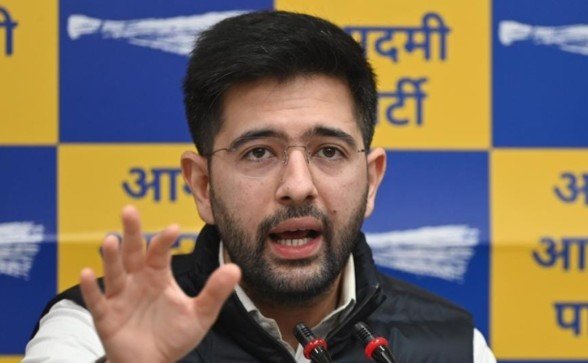
New Delhi, Apr 25 : The AAP political crisis reached a dramatic flashpoint on Friday, marking one of the most defining upheavals in the party’s history. Senior leader Raghav Chadha, once considered a trusted confidant of Arvind Kejriwal, formally exited the Aam Aadmi Party along with six Rajya Sabha Members of Parliament, joining the Bharatiya Janata Party. The development signals a serious rupture within AAP, exposing long-standing internal conflicts and reshaping the party’s political trajectory.
Roots of the Crisis
The current turmoil traces back to a controversial episode in May 2024 involving Swati Maliwal, a Rajya Sabha MP who alleged misconduct by a close aide of Kejriwal at the Chief Minister’s residence. The incident triggered widespread unease within party ranks, gradually evolving into a broader confrontation over leadership, accountability, and internal governance.
What initially appeared to be an isolated controversy soon intensified, deepening divisions and eroding trust among senior leaders. Over time, these unresolved tensions began to manifest publicly, weakening the party’s internal cohesion.
Escalating Power Struggle
The situation deteriorated further in recent weeks when Chadha was removed from his role as deputy leader in the Rajya Sabha. This decision was widely seen as a turning point, amplifying speculation about a widening rift between the party leadership and influential members.
Reports of dissatisfaction among MPs had already been circulating, and Chadha’s removal appeared to confirm that a significant internal shake-up was underway. The eventual mass resignation of MPs underscored the scale of discontent brewing within the party.
Role of Investigations and Political Pressure
The crisis unfolded against the backdrop of heightened scrutiny by central agencies. The Enforcement Directorate conducted raids linked to a Foreign Exchange Management Act (FEMA) case, including searches connected to educational institutions in Punjab.
AAP leader Sanjay Singh alleged that the developments were part of a broader strategy often described by opposition parties as “Operation Lotus,” claiming that political pressure and fear of investigations influenced the decisions of departing MPs. While these claims remain contested, they added a layer of political tension to an already volatile situation.
Chadha’s Rise and Fall
Raghav Chadha’s political journey within AAP had been marked by rapid ascent. Elected to the Rajya Sabha from Punjab in 2022, he quickly emerged as a prominent face of the party, especially after AAP’s electoral success in Punjab under Chief Minister Bhagwant Mann.
However, his influence appeared to decline following Kejriwal’s legal troubles in the excise policy case. Chadha’s relative silence during critical moments and his absence from key political developments raised questions about his standing within the party.
Immediate Trigger and Political Fallout
The immediate catalyst for the mass exit was Chadha’s removal from a key parliamentary role. Prior to his resignation, he had hinted at a strong response, using metaphorical language to suggest an impending political shift. The coordinated departure of multiple MPs soon validated those संकेत, delivering a major setback to the party.
The timing of the crisis is particularly significant, as it comes ahead of crucial assembly elections in states like Punjab, Gujarat, and Goa. The loss of senior leaders and parliamentary strength could impact AAP’s electoral strategy and organizational stability.
Allegations and Internal Criticism
Swati Maliwal, in her statement following the developments, cited concerns about governance and internal culture within the party. She raised issues related to alleged misconduct, lack of accountability, and what she described as the growing influence of questionable elements.
Her remarks highlighted deeper concerns about the party’s internal functioning, adding to the narrative of systemic issues rather than isolated disagreements.
A Defining Moment for AAP
The unfolding AAP political crisis represents more than just a leadership dispute—it reflects a structural challenge that could redefine the party’s future. With key figures exiting and internal divisions now out in the open, the party faces a critical test of resilience.

