


African Asylum Seekers Build New Lives in Unexpected American Communities
Thousands of Mauritanian asylum seekers have transformed a small Ohio community, finding jobs, support networks and a new sense of belonging while navigating an uncertain immigration process.
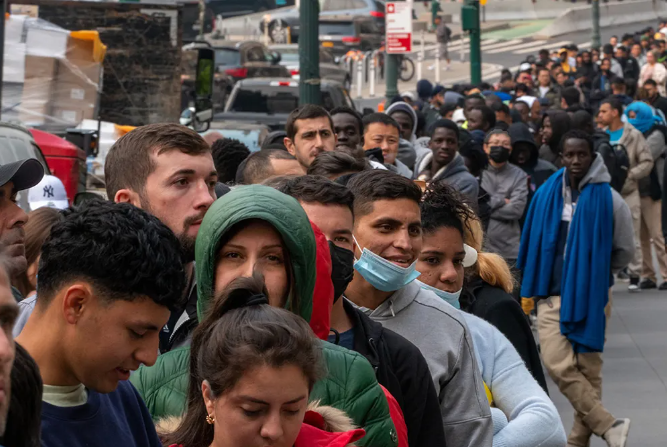
LOCKLAND, Ohio, Sep 17: A small town outside Cincinnati has become an unexpected destination for thousands of Mauritanian migrants who arrived in the United States seeking safety and a fresh start.
Among them is Samba Diallo, who now works at a meatpacking plant, drives his own car and shares a two-bedroom apartment with four other men. His American clothes occupy his closet, while traditional African clothing, including a blue robe from Mauritania, remains packed away in a suitcase.
Diallo’s circumstances have changed considerably since he arrived in the United States three years ago. In 2023, about 2,000 people from Mauritania came to Lockland, increasing the town’s population by more than half and rapidly changing the character of the community.
The arrivals were part of a broader increase in migration to the United States. An Associated Press analysis of government data found that about 4.5 million migrants crossed the southern US border between October 2018 and July 2025, with people arriving from more than 150 countries. Many settled not only in major immigrant hubs but also in smaller communities across the country.
For Lockland, the sudden arrival of so many newcomers presented challenges. The town had few formal services for immigrants, and many of the newcomers initially had nowhere to turn for housing, transportation, employment and help with paperwork.
Members of an existing West African community stepped in to assist them. Local residents also became involved, helping migrants learn to drive, prepare job applications and understand everyday life in the United States.
One of the most important gathering places became “Bikes and Stuff,” a bicycle shop operated by local volunteer Vincent Wilson. He began collecting donated bicycles and offered them to migrants who helped repair them. The shop eventually developed into a community center where people could meet, work on bikes and receive assistance with documents and other practical matters.
Wilson also became closely involved in helping Mauritanian migrants navigate the US immigration system. He has accompanied several people, including Diallo, to regular check-ins with Immigration and Customs Enforcement.
Diallo’s journey to America was driven by his opposition to the Mauritanian government, according to his account in immigration documents. He said he had participated in protests and was arrested after helping organise demonstrations and recording police actions.
Many other migrants from Mauritania told similar stories of discrimination and persecution. Most of those arriving in Lockland were Fulani, a Black African ethnic group whose members speak Pular. The US State Department has documented discrimination against Black Mauritanians, including reports of people being detained without charge.
The newcomers initially faced severe housing pressures. Some apartments housed more than a dozen people, with mattresses placed side by side on floors. Many also had to wait for work permits before they could legally take jobs.
Over time, conditions improved. Work permits began arriving, and migrants found employment in factories, warehouses, stores and other workplaces. Some purchased cars and moved into more suitable housing.
Khalidou Sy, another Mauritanian migrant, eventually saved enough money to purchase a house in Lockland. He also helped explain the community’s background to local residents and spoke at churches and community meetings.
The arrival of thousands of newcomers also generated tensions. Rumours circulated about the migrants, while extremist groups held demonstrations and distributed threatening material. Local residents who had built relationships with the newcomers pushed back against misinformation and tried to explain who the new arrivals were and why they had come.
Despite those difficulties, a growing network of relationships has developed between the migrants and longtime residents.
For Diallo, the future remains uncertain because his asylum case is still pending. He continues to attend immigration appointments and worries about the possibility of detention or deportation.
During a recent appointment, Wilson accompanied him to an ICE office. Diallo carried a red folder containing his immigration documents. Less than half an hour later, he walked out smiling.
Diallo then asked an ICE officer to take a photograph with him. The officer shook his hand, and the two smiled for the camera a small moment reflecting the complicated new life he is building in America.

