


AI, Deep-Tech and Global Partnerships Redefine India’s Education Economy
Artificial intelligence research, international collaborations and deep-tech investments are transforming Indian higher education into a strategic business and innovation sector.
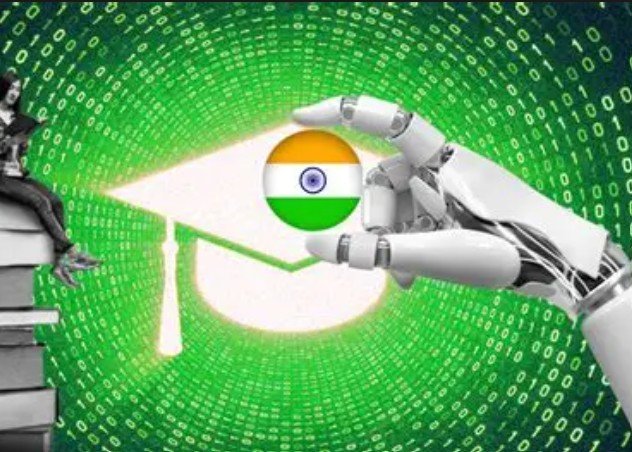
India, May 12 : India’s higher education sector is rapidly evolving into a major driver of the country’s technology economy as universities, startups and policymakers accelerate investments in artificial intelligence, deep-tech innovation and global academic partnerships. Recent developments between May 11 and May 12, 2026 highlighted how education is increasingly being linked with industrial growth, research commercialization and startup expansion.
Artificial intelligence has emerged as one of the most influential forces reshaping Indian universities. Discussions around National Technology Day 2026 focused heavily on how AI is changing classroom learning, research priorities and business opportunities within educational institutions. Experts noted that universities are no longer treating AI merely as a subject of study but as a central pillar of future economic competitiveness.
The rapid adoption of AI technologies has encouraged institutions to establish dedicated innovation centers, incubation labs and industry partnerships aimed at preparing students for technology-driven industries. Educational analysts say the integration of AI into higher education is creating new opportunities for startups, software development firms and research organizations.
At the same time, India’s deep-tech startup ecosystem is receiving stronger policy backing. Revised startup recognition rules introduced earlier this year expanded support for research-intensive sectors such as semiconductors, aerospace, advanced manufacturing and biotechnology. The reforms are designed to help startups survive longer development cycles without losing government recognition benefits.
Industry experts believe the policy changes are particularly important for university-linked startups where scientific research often requires years of investment before commercialization becomes viable. Educational institutions are increasingly collaborating with venture capital firms, incubators and government agencies to support such long-term innovation projects.
International engagement is also becoming central to India’s education-business strategy. Under the “Bharat Innovates 2026” initiative, Indian universities and startups are being connected with foreign companies, investors and research institutions through overseas roadshows and networking events. A recent innovation outreach program in Paris aimed to strengthen collaboration between Indian innovators and global organizations ahead of a larger summit planned in France later this year.
Officials say such international partnerships are expected to boost technology transfer, research funding and global market access for Indian startups emerging from universities and academic incubators.
Management institutes and private universities are also strengthening their focus on entrepreneurship. Startup-focused conclaves and innovation competitions organized in recent days showcased student-led ventures working in fields ranging from AI software and health technology to sustainable manufacturing and digital services.
India’s growing emphasis on AI and innovation has simultaneously increased investor attention on technology infrastructure. Industry reports suggest that domestic and international companies are exploring opportunities in semiconductor manufacturing, satellite communications and digital infrastructure development linked to India’s expanding innovation ecosystem.
The industrial expansion underway in regions such as Maharashtra’s Chakan-Talegaon corridor further reflects the connection between education, technology and business growth. Authorities are conducting infrastructure reviews to support the expansion plans of global manufacturing and semiconductor firms expected to generate thousands of jobs. Analysts believe such developments could strengthen collaboration between industries and nearby technical institutions.
Business leaders argue that educational institutions must now function as research and talent pipelines for emerging industries rather than simply producing graduates. The increasing demand for engineers, AI specialists, semiconductor researchers and data scientists is forcing universities to redesign curricula and expand technical training capabilities.
However, experts caution that rapid technological expansion also risks widening inequality within the education sector. Institutions in metropolitan areas are advancing quickly due to stronger infrastructure and corporate partnerships, while smaller colleges continue to face resource limitations. Concerns over digital access, faculty training and ethical AI implementation remain significant challenges.
The growing commercialization of education has also triggered debate over balancing academic independence with industry-driven priorities. Some experts argue that universities should preserve their role as centers of critical thinking and public research even while expanding entrepreneurial activities.
Despite these concerns, momentum behind India’s innovation-driven education economy remains strong. Government policies, private investment and industry participation are collectively pushing campuses toward a more business-oriented future where research, startups and commercialization play a central role.
Technology firms and investors increasingly view Indian universities as important contributors to the country’s economic transformation. Educational institutions are expected to play a critical role in supplying skilled talent for emerging sectors including AI, digital infrastructure, clean energy, advanced manufacturing and telecommunications.
India’s ambition to position itself as a global technology and innovation hub depends heavily on the success of these educational reforms and startup initiatives. Recent developments suggest the country is moving toward a model where higher education serves not only academic purposes but also acts as a powerful engine for entrepreneurship, industrial development and international collaboration.

