


AI Tools Help Indian Farmers Improve Crop Mapping and Agricultural Decisions
Google DeepMind researchers say satellite imagery and artificial intelligence can provide farmers with more precise information while complementing traditional agricultural knowledge.
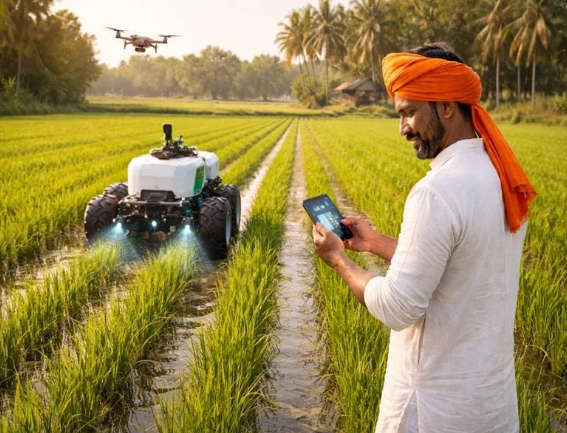
NEW DELHI, Sept 6: Artificial intelligence is emerging as a tool to improve agricultural decision-making in India, with new AI models using satellite imagery and data to provide more detailed information about crops and farmland.
Researchers working with Google DeepMind’s agriculture and sustainability team said AI could complement traditional farming knowledge by helping generate more precise insights in areas where detailed agricultural data remains limited.
One of the models developed by the team uses satellite imagery collected over several years to map agricultural fields and identify crops. The system can be updated periodically, allowing changes in farmland and cultivation patterns to be tracked over time.
Such technology could help move agricultural planning away from broad district-level assessments towards more targeted information for individual fields.
AI-generated insights could potentially assist with decisions involving weather conditions, crop demand, market prices and the use of agricultural inputs.
The technology is particularly relevant for India, where farming decisions are often influenced by local conditions that can vary significantly even within the same region.
By combining satellite observations with artificial intelligence, researchers aim to make agricultural information more accessible and useful for farmers, policymakers and other stakeholders.
Experts involved in the work have stressed that AI is not intended to replace traditional agricultural knowledge. Instead, the technology can provide additional information that farmers can use alongside their experience and understanding of local conditions.
The development comes as artificial intelligence expands into sectors beyond conventional technology industries, including agriculture, healthcare, education and public services.
For India’s farming sector, wider adoption of such tools could improve the precision of agricultural planning while helping policymakers develop interventions based on more granular and frequently updated data.
However, the effectiveness of AI-based agricultural systems will also depend on access to reliable data, digital infrastructure and the ability of farmers to understand and use the information generated by these technologies.

