


Amarnath Yatra 2026 begins under massive security cover as first batch of pilgrims reaches Kashmir base camps
Lieutenant Governor Manoj Sinha flags off the first batch from Jammu while authorities roll out multi-layer security, convoy management and traffic restrictions for the annual pilgrimage to the holy cave shrine.
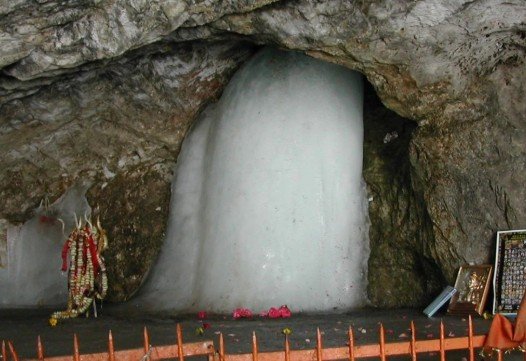
Srinagar, July 03 : The annual Shri Amarnath Ji Yatra began on a high-security and deeply devotional note in Jammu and Kashmir on July 3, 2026, as the first batch of pilgrims was flagged off from Jammu and later moved towards the twin base camps in Kashmir amid elaborate security arrangements, strict traffic regulation and a large-scale administrative deployment across the Union Territory.
The start of the 2026 pilgrimage marked one of the most significant annual religious and logistical exercises in Jammu and Kashmir, bringing together the civil administration, police, security agencies, shrine board officials, disaster response teams and local departments in a coordinated operation aimed at ensuring a safe, orderly and smooth Yatra season. The pilgrimage this year is scheduled to run from July 3 to August 28, with pilgrims taking the traditional Baltal and Pahalgam routes to reach the holy cave shrine of Shri Amarnath.
Officials said the first batch of yatris was flagged off from the Bhagwati Nagar base camp in Jammu in the early hours amid chants of “Bam Bam Bhole”, heavy security presence and an atmosphere of religious fervour. Lieutenant Governor Manoj Sinha, who has been closely monitoring preparations for the Yatra, oversaw the ceremonial flag-off and reiterated the administration’s commitment to making the pilgrimage safe, secure and hassle-free for devotees arriving from across the country.
The launch of the Yatra comes at a time when Jammu and Kashmir is simultaneously dealing with monsoon-related weather concerns, making the task of managing road movement, camp facilities and emergency preparedness even more critical. Authorities have therefore adopted a layered approach that combines security planning with weather monitoring, traffic control and medical readiness.
According to officials, thousands of security personnel from Jammu and Kashmir Police, Central Armed Police Forces and other agencies have been deployed along the Yatra route, at transit camps, base camps, vulnerable road stretches and key junctions. The security grid has been tightened particularly on the Jammu-Srinagar National Highway, at the Baltal and Nunwan-Pahalgam base camps, and around the holy cave route to ensure that the movement of pilgrims remains protected at every stage.
The administration has also issued repeated advisories asking pilgrims to travel strictly on their registered date and in designated convoys, a move intended to prevent congestion, reduce risk on mountain roads and ensure proper monitoring of all Yatra vehicles. Officials stressed that only registered pilgrims carrying valid documents and following the approved travel schedule would be allowed to proceed.
For Jammu city, the Bhagwati Nagar Yatri Niwas once again served as the principal starting point of the pilgrimage. In the days leading up to the Yatra, the camp witnessed a heavy inflow of devotees from different states. Arrangements were put in place for registration verification, lodging, sanitation, food, health screening and security checks. The camp was also equipped with public announcement systems, help desks and medical support counters to facilitate yatris before departure.
The significance of the Yatra extends far beyond a religious event. Every year, it becomes a large social, economic and administrative exercise for Jammu and Kashmir. Local transporters, shopkeepers, pony operators, hoteliers, labourers and small traders all become part of the pilgrimage economy, while government departments are required to maintain a delicate balance between religious movement, public convenience and security preparedness.
This year, the Yatra began under especially close scrutiny because of the combination of security sensitivity and adverse weather forecasts in parts of the Union Territory. Police and traffic authorities had already issued a comprehensive advisory in advance, detailing restrictions on civilian vehicle movement during Yatra convoy hours and asking tourists, transporters and local commuters to plan travel carefully. The advisory made it clear that regulated movement through sensitive highway stretches, including around the Navyug Tunnel, would be enforced during the pilgrimage period in the interest of convoy security and road management.
Officials said that one of the major priorities this year is to avoid traffic chaos on the Jammu-Srinagar National Highway, which remains the lifeline for the pilgrimage. The road often comes under pressure due to Yatra convoys, tourist movement, goods transport and weather related disruption. In view of that, authorities have imposed time based movement controls and are monitoring road conditions round the clock through district administrations, traffic units and control rooms.
The administration has also appealed to the general public to cooperate with restrictions and avoid unnecessary movement on the highway during convoy timings. Residents have been advised to stay updated through official bulletins, traffic advisories and district-level alerts. For pilgrims, the message has been consistent: do not attempt to travel independently outside your allotted date, and follow the official route, convoy system and medical advisories.
At the heart of the annual pilgrimage are the two routes leading to the holy cave shrine. The Baltal route in Ganderbal district is shorter but steeper, while the traditional Pahalgam route in Anantnag district is longer and more gradual. Both routes require extensive logistical support, including camp management, sanitation, drinking water, food supplies, rescue teams, health units and communication facilities. This year, officials said, special attention has been given to route safety because of the early monsoon conditions affecting several parts of Jammu and Kashmir.
In the days before the Yatra commenced, senior police and civil officers carried out multiple inspections of the route, transit camps and security arrangements. Reviews focused on anti-sabotage checks, deployment of quick response teams, surveillance coverage, communication preparedness and crowd management systems. DGP-level reviews and coordination meetings were also held to assess preparedness at the Pahalgam axis and other critical points.
The administration has underlined that a seamless Yatra depends not just on security deployment but on inter-department coordination. Health, PHE, power, public works, disaster management, food supplies, municipal services and transport departments have all been tasked with ensuring uninterrupted services. Medical units have been stationed at camps and along the route, with emergency response mechanisms prepared for dehydration, altitude sickness, weather-related incidents and other health emergencies.
One of the most important concerns this year is the weather. The onset of the southwest monsoon in Jammu and Kashmir has already triggered heavy rainfall, flash flood incidents and landslide warnings in some districts. As a result, authorities are maintaining close coordination with the Meteorological Department and district disaster management units. Pilgrims are being advised to remain alert, carry rain protection and warm clothing, and strictly follow route instructions from officials on the ground.
Despite these concerns, the opening day of the Yatra saw a strong spirit of devotion among pilgrims. Many yatris described the pilgrimage as a once-in-a-lifetime spiritual journey and expressed satisfaction with the arrangements made at Jammu and along the route. Chants, prayers and scenes of enthusiasm were visible as pilgrims boarded escorted vehicles and headed towards Kashmir.
Officials said the successful movement of the first batch is an important test case for the weeks ahead, when the number of pilgrims is expected to rise significantly. The administration is therefore treating the first few days of the Yatra as a period of close observation, during which crowd flow, convoy timings, camp operations and weather response mechanisms will be constantly reviewed and adjusted if needed.
Security agencies, meanwhile, are leaving little to chance. Multi-tier frisking, route sanitisation, convoy escorting, CCTV surveillance, area domination and emergency interception mechanisms have all been integrated into the Yatra security plan. Sensitive stretches are under enhanced watch, and intelligence-based monitoring has been intensified. Security officials have stressed that the objective is not merely to prevent any untoward incident but to maintain public confidence and ensure uninterrupted pilgrimage movement.
The local administration in Kashmir has also focused on camp readiness at Baltal and Pahalgam, where accommodation, medical aid, sanitation and supply systems are under continuous monitoring. Pilgrims reaching the base camps are being briefed about weather conditions, trekking timings and safety protocols before they proceed further towards the shrine.
Economically, the Yatra season is expected to bring a significant boost to local businesses in both Jammu and Kashmir regions. Hotels, dhabas, transport operators, retailers, service providers and seasonal workers usually witness increased demand during the pilgrimage. Officials and trade bodies have expressed hope that a smooth Yatra will not only facilitate religious tourism but also support livelihoods linked to the annual pilgrimage economy.
At the same time, the administration is aware that any disruption whether from weather, traffic bottlenecks or security concerns can quickly affect the entire Yatra system. That is why district authorities have activated control rooms, emergency contact lines and inter-agency communication channels to respond rapidly to any developing situation.
The broader message from the Jammu and Kashmir administration is that the 2026 Amarnath Yatra is being conducted with a mix of faith, caution and high-level preparedness. The successful flagging off of the first batch has set the pilgrimage in motion, but the real challenge lies in sustaining safe movement and service delivery for the full duration of the Yatra season.
With thousands of pilgrims expected to arrive over the coming weeks, every day will test the efficiency of convoy planning, route management, weather response and security coordination. For now, however, the opening of the pilgrimage has brought a moment of reassurance for devotees and officials alike. The first batch has moved, the camps are active, the routes are under watch and the annual spiritual journey to the Amarnath cave shrine is officially underway.
As the Yatra progresses deeper into July and August, authorities are likely to keep refining the movement plan based on weather conditions, pilgrim volume and route safety. More advisories, traffic updates and weather linked instructions are expected in the coming days. But on day one, the dominant image remained one of faith on the move: pilgrims leaving Jammu with prayers on their lips, security forces lining the route, and the administration attempting to ensure that one of India’s most significant religious pilgrimages proceeds without disruption.
For Jammu and Kashmir, the Yatra is never just an event. It is a test of governance, coordination, public resilience and the region’s ability to host a major spiritual movement under complex terrain and security conditions. The 2026 edition has now begun, and all eyes will remain on how successfully the Union Territory manages the long pilgrimage season ahead.

