


Amit Shah Inaugurates Language Museum in Kolkata, Calls for Preservation of Indian Languages
Union Home Minister calls on young Indians to learn an additional Indian language, highlights the role of libraries and technology in preserving the country's rich linguistic and cultural legacy.
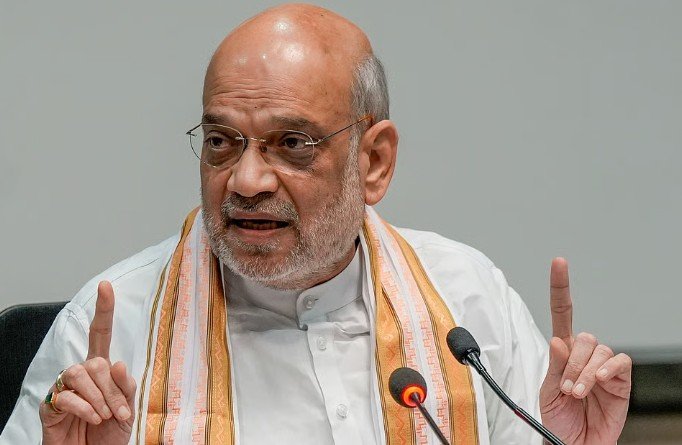
Kolkata, July 19: Union Home Minister Amit Shah on Sunday inaugurated Shabdalok – the Museum of Word, India’s first immersive language museum, at the National Library in Kolkata. During the inauguration, he emphasized that safeguarding India’s linguistic diversity is essential to preserving the nation’s cultural identity and urged every young citizen to learn at least one Indian language in addition to their mother tongue.
Calling the occasion a landmark moment for India’s cultural renaissance, Shah said languages are the foundation of civilisation and serve as the primary medium through which a nation’s traditions, values, and history are passed on to future generations. He noted that the museum would help visitors, especially students, understand the long journey of Indian languages and appreciate their contribution to the country’s rich heritage.
Museum Dedicated to India’s Linguistic Diversity
Developed by the National Library under the Ministry of Culture, the Museum of Word has been designed as an immersive and technology driven cultural space that showcases the evolution of India’s spoken and written languages.
The first phase of the museum features nine thematic galleries exploring the origins of words, the development of scripts, oral storytelling traditions, literary contributions, performing arts, public discourse, and the history of libraries in India. Through holograms, digital installations, motion sensing exhibits, and interactive displays, visitors can experience how languages have transformed over centuries.
The museum also celebrates all 22 languages listed in the Eighth Schedule of the Indian Constitution, presenting their journey from oral traditions and ancient manuscripts to printed books and modern digital communication.
Youth Encouraged to Learn More Indian Languages
Addressing the gathering, Shah appealed to young Indians to embrace multilingualism while remaining deeply connected to their mother tongue.
He said that every student should make an effort to learn another Indian language because such an initiative would strengthen national unity while ensuring the survival of the country’s linguistic traditions. According to him, India’s diverse languages are not barriers but bridges that connect different regions, cultures, and communities.
The Home Minister stressed that preserving languages is a shared responsibility and that future generations should inherit this invaluable cultural wealth.
Language and Culture Are Inseparable
Shah underlined that language is far more than a communication tool, describing it as the soul of a civilisation.
He observed that every language carries centuries of history, customs, beliefs, and collective experiences. Without language, he said, cultural identity cannot be fully understood or expressed. He added that protecting India’s linguistic diversity is essential for maintaining the country’s civilisational continuity in an increasingly globalised world.
According to Shah, institutions such as Shabdalok can play a significant role in ensuring that younger generations remain connected to their roots while embracing modern advancements.
Libraries Hold the Key to an Informed Society
During his address, Shah also appealed to students to cultivate the habit of reading and make greater use of libraries.
He remarked that the strength of a nation is determined not merely by the number of educational institutions it has but by the reading culture of its people. Encouraging young people to participate in the library movement initiated by the Ministry of Culture, he said libraries help shape personalities, encourage independent thinking, and nurture informed citizens.
He urged educational institutions to inspire students to spend more time reading books and exploring India’s intellectual traditions.
Museum Should Embrace the Digital Era
After touring the museum, Shah suggested expanding its scope to include the impact of computers and Artificial Intelligence on language development.
He recommended incorporating exhibits that demonstrate how Indian languages are adapting to modern digital technologies, including AI-powered applications and computing systems. Such additions, he said, would help ensure that Indian languages remain relevant and widely used in the digital age.
Shah reiterated that India has historically welcomed innovation while preserving its traditions, adding that technological progress and cultural heritage should complement each other rather than exist separately.
India’s Intellectual Tradition Rooted in Open Dialogue
The Home Minister highlighted India’s long-standing tradition of intellectual freedom and philosophical debate.
He said Indian civilisation has always encouraged discussions, welcomed new ideas, and promoted continuous learning. Rather than restricting thought, India’s knowledge systems have historically evolved through dialogue, debate, and openness to diverse perspectives.
This tradition, he noted, has enabled the country to preserve its cultural richness while adapting to changing times.
Bengal’s Contribution to Indian Heritage
Praising West Bengal’s remarkable contribution to India’s intellectual and cultural landscape, Shah recalled the achievements of literary icons, scientists, philosophers, and freedom fighters from the state.
He referred to personalities such as Rabindranath Tagore, Bankim Chandra Chattopadhyay, and Sri Aurobindo, saying their works continue to inspire generations and have significantly shaped India’s cultural identity.
Shah observed that Bengal has historically served as a centre of literature, philosophy, and national awakening, making invaluable contributions to the country’s intellectual development.
Political Remarks During the Event
Alongside his cultural observations, Shah also made political remarks regarding West Bengal’s future.
He expressed confidence that the state could once again emerge as a leading force in India’s cultural and intellectual progress. He further stated that the vision of a prosperous “Sonar Bangla” could be realised through strong leadership and sustained development.
Leader of Opposition Suvendu Adhikari, who attended the programme, said Shah had written to him regarding greater recognition for the Bengali language and indicated that the matter would be discussed in the West Bengal Assembly.
Interactive Experience for Visitors
The Museum of Word has been designed to provide visitors with an engaging learning experience rather than functioning as a traditional museum.
Among its major attractions is an interactive feature that allows visitors to explore how individual words have changed in pronunciation, spelling, meaning, and usage over hundreds of years. Advanced digital displays, audio-visual presentations, holographic storytelling, and immersive installations make the museum accessible to visitors of all age groups.
Officials believe the institution will become an important destination for researchers, students, language enthusiasts, and tourists interested in India’s extraordinary linguistic heritage.

