


Art Honours Ancient Sharda Script
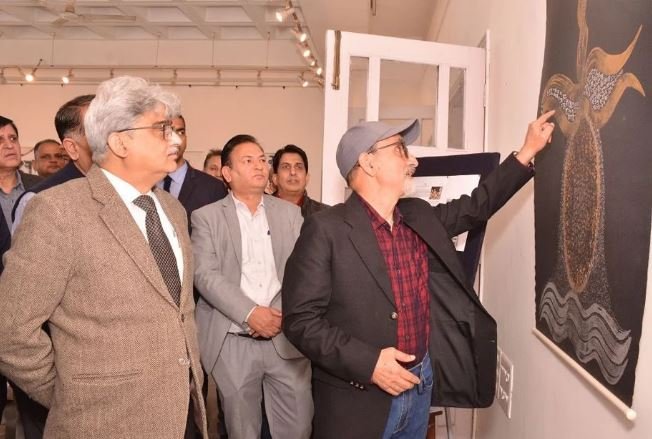
The three-day exhibition of Sharda calligraphy paintings at the G R Santosh Gallery in Kala Kendra offered visitors a rare and meaningful journey into one of the oldest cultural traditions of Kashmir. What unfolded inside the gallery was much more than an art display. It was an intimate reminder of a script that once shaped the spiritual learning, scholarly pursuits, and cultural identity of the region. Through the graceful strokes of contemporary calligraphy, the exhibition brought the ancient Sharda script back into the public eye and allowed viewers to reconnect with a heritage that has quietly endured across centuries.
Sharda, as a script, carries an emotional depth that goes beyond its written form. It represents memory continuity and the collective wisdom of generations. When seen through the delicate artistry of calligraphy, it reveals its beauty in a fresh and inviting way. The works of Subash C Razdan displayed at the exhibition reflected this sensitivity. Each piece showed a thoughtful blend of scriptural authenticity and artistic imagination, suggesting how traditional scripts can find new expression in the modern world. Visitors moved from one frame to another with a sense of calm curiosity, discovering a script they may have heard of but never truly encountered. Such exhibitions play an important role in keeping cultural traditions alive, especially those that risk fading with time. In Jammu, the event carried added significance as it reminded people of the region’s deep-rooted connection to art, culture, and scholarship. The participation of historians, artists, and cultural thinkers at the inauguration highlighted that the revival of Sharda is not simply an artistic initiative but also a shared cultural responsibility. It showed that when heritage is presented with care, people naturally respond with interest and appreciation. The timing of this initiative is also meaningful. Institutions in Jammu and Kashmir have begun taking encouraging steps to safeguard traditional scripts and art forms. The introduction of structured calligraphy courses through collaborations between cultural academies and universities reflects a growing commitment to nurturing these traditions in an organized way. Such academic support is important because it helps younger generations approach scripts like Sharda Urdu and Devanagari with curiosity and confidence. When learning is paired with artistic expression, the chances of cultural revival grow stronger and more sustainable. Calligraphy itself brings a soft, reflective quality to this revival effort. The gentle curves and flowing lines of the Sharda script carry an almost meditative grace. Many of the pieces displayed at the exhibition drew inspiration from Kashmiri Shaivism and ancient philosophical texts, giving the script a spiritual presence on the canvas. Experts who attended the event observed that these artworks do more than display a script. They interpret its essence and open a quiet space for viewers to reflect on the deeper cultural and philosophical world the script represents. One of the most encouraging aspects of the exhibition was how it demonstrated the power of public art platforms in bringing attention to endangered scripts. By offering a welcoming environment where people could see the script displayed beautifully, the exhibition helped spark conversations and curiosity among visitors of different age groups. It showed that preserving linguistic and cultural diversity becomes easier when communities are given gentle reminders of the treasures that belong to them.
As the exhibition concludes, the hope is that it inspires more such efforts in the future. Reviving the Sharda script is not only about protecting an ancient writing system. It is about honouring the cultural journey of Jammu and Kashmir and ensuring that its rich heritage continues to be appreciated with warmth and pride. With continued collaboration between artists, scholars, and cultural institutions, this revival can grow into a lasting movement that keeps the spirit of Sharda alive for generations to come.

