


Ayush Verma Strikes Gold in Shot Put After Javelin Bronze at Asian Para Games
The Indian para-athlete records a winning throw of 8.16 metres in the men's F53 final, securing his second medal at the continental competition and strengthening India's athletics campaign.
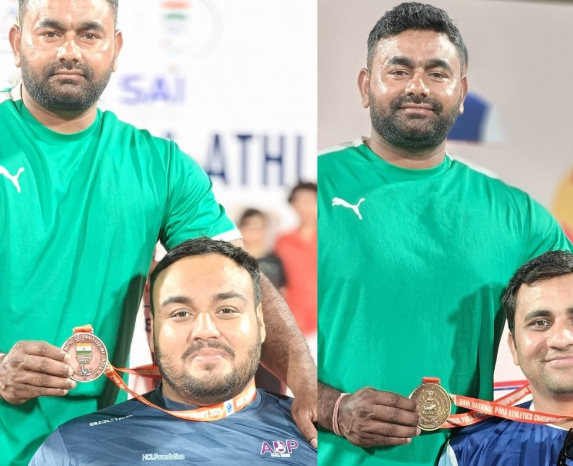
Nagoya, Oct 21: Indian para athlete Ayush Verma delivered an impressive performance at the 2026 Asian Para Games, winning gold in the men’s shot put F53 event on Wednesday after adding another medal to India’s growing tally at the continental competition.
Verma registered his best effort of 8.16 metres on his fifth attempt to finish at the top of the standings. Iran’s Alireza Hemami claimed silver with a throw of 8.09 metres, while Kazakhstan’s Makhambet Serikkaliyev secured bronze with 6.81 metres.
The victory marked Verma’s second medal at the Games. He had previously won bronze in the men’s javelin throw F53/F54 event on Tuesday, making his opening campaign in Aichi-Nagoya a memorable one.
His gold medal also added to India’s growing success in para-athletics, where competitors have been producing strong performances across track and field disciplines.
Verma’s achievement highlighted the importance of consistency, technical execution and composure in seated throwing events, where athletes must generate power while maintaining control and balance throughout the movement.
A decisive fifth attempt
The men’s F53 shot put competition remained closely contested between Verma and Hemami, with the Indian athlete ultimately securing the advantage through his 8.16-metre effort.
Verma’s winning throw came during his fifth attempt, demonstrating his ability to produce a decisive performance when the competition demanded it. His distance of 8.16 metres placed him seven centimetres ahead of the Iranian competitor.
Hemami’s best effort of 8.09 metres kept the contest competitive, but Verma’s throw proved sufficient to secure the gold medal. Serikkaliyev finished third with a best mark of 6.81 metres.
The result reflected the fine margins that can separate athletes in elite para-athletics. In throwing events, even a small improvement in distance can determine the final podium positions, making every attempt important.
Verma’s performance also demonstrated the value of maintaining concentration across multiple rounds. Athletes must manage their energy and technical execution while responding to the performances of their competitors.
His ability to deliver the decisive throw during the latter part of the event ensured that he finished ahead of the field and secured India’s gold medal.
Understanding the F53 classification
The F53 category is designed for field athletes with significant limitations in trunk and leg movement, while hand function is comparatively less affected. Competitors perform their throws from a seated position and rely on their upper body to generate power.
Unlike standing shot put athletes, competitors in this classification must carefully coordinate their chest, shoulders and upper back while maintaining stability in the throwing frame.
The technical demands require considerable strength, timing and precision. Athletes must transfer force efficiently through the upper body while ensuring that their position remains within the rules governing the event.
For Verma, the 8.16-metre throw represented the successful execution of those demands on a major international stage.
Para-athletics includes several classifications designed to ensure fair competition between athletes with comparable functional abilities. These categories allow competitors with different impairments to participate in events that recognise their athletic skill and performance.
The F53 event is one of the seated throwing disciplines in which athletes use specialised equipment and carefully developed techniques to maximise distance.
From javelin bronze to shot put gold
Verma’s success in the shot put followed an encouraging performance in the javelin throw a day earlier.
He secured bronze in the men’s javelin F53/F54 competition, recording a personal best in what was described as a memorable debut at the Games.
The achievement established an early foundation for his campaign before he returned to competition in the shot put.
Winning medals in two different throwing disciplines requires athletes to adapt their preparation and technique to the specific demands of each event. Although both involve generating power, shot put and javelin require different movement patterns and approaches to release.
The shot put depends heavily on controlled upper-body force and the ability to propel a heavier implement over a relatively short movement. Javelin, by contrast, requires athletes to manage the release angle, speed and trajectory of a longer implement.
Verma’s ability to succeed in both events demonstrated his versatility as a field athlete.
His two-medal return also gave India another positive result during a busy competition schedule, in which athletes across several sports were seeking to convert strong qualifying performances into podium finishes.
India continues to build its medal tally
India entered the third day of the Asian Para Games with considerable momentum after a productive second day that brought medals across athletics, shooting, badminton and other disciplines.
The contingent had accumulated 35 medals by the start of Wednesday’s programme, including nine gold, 11 silver and 15 bronze medals, according to the reported standings.
Verma’s gold provided another boost as Indian athletes continued to compete in finals across track and field, archery, swimming and other events.
The performance also reflected the growing breadth of India’s para-sports programme. Athletes competing in different classifications have increasingly gained opportunities to participate in international competitions and demonstrate their abilities against strong continental opposition.
Success at multi-sport events depends on more than individual performances. Coaching, physical preparation, access to training facilities and the ability to manage pressure all play important roles in determining outcomes.
For competitors in technical events such as shot put, preparation includes developing a repeatable movement pattern, improving upper-body strength and ensuring that equipment and positioning are suited to their individual requirements.
Verma’s result offered a clear example of how these elements can combine to produce a winning performance.
A significant milestone for Verma
Winning a gold medal at a major continental event provides athletes with an important competitive milestone and the opportunity to measure their progress against leading international opponents.
For Verma, the combination of a javelin bronze and shot put gold made the Games particularly rewarding. The two results also demonstrated his ability to remain competitive across different events within a demanding schedule.
The Indian athlete’s success adds to the country’s growing achievements in para-athletics, a discipline in which Indian competitors have earned recognition at Asian and global competitions.
However, the result should also be viewed within the wider context of para-sport development. Sustained progress requires continued investment in coaching, athlete support, competition opportunities and facilities that allow competitors to train consistently.
India’s performance in Aichi-Nagoya has provided several encouraging examples of athletes translating preparation into medals. Verma’s victory was another such moment, with a closely contested final decided by a strong late effort.
As the competition continues, Indian athletes will seek to build on the momentum generated by performances across multiple sports.
For Verma, the shot put gold represents the standout achievement of his campaign so far, complementing his earlier bronze and establishing him among India’s successful performers at the 2026 Asian Para Games.

