


China Proposes New Export Controls on AI Technologies Amid US Rivalry
Beijing plans restrictions covering 23 artificial intelligence technologies as it seeks to protect sensitive innovations while allowing overseas users to continue accessing Chinese AI services through digital platforms.
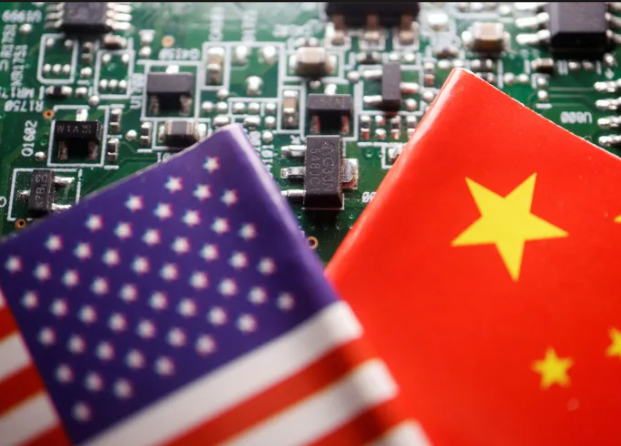
BEIJING, Oct 16: China has proposed new export controls covering 23 artificial intelligence technologies, including AI models, autonomous agents and computing clusters, in a move that reflects the growing importance of technological capabilities in its strategic competition with the United States.
The proposed measures, announced by China’s Ministry of Commerce on Friday, form part of a broader revision of the country’s technology export catalogue. The changes cover 40 technologies across artificial intelligence, biotechnology and solar energy, with the government seeking greater oversight of sensitive innovations that could affect national security.
The proposals distinguish between transferring underlying technology overseas and providing access to AI services through digital platforms. Application programming interfaces (APIs), websites, mobile applications and software-as-a-service platforms would remain outside the proposed restrictions, allowing Chinese developers to continue serving international customers through these channels.
The approach could enable companies such as DeepSeek and Alibaba to expand their international user bases while giving Beijing additional authority over the transfer of advanced technological capabilities beyond China’s borders.
The announcement comes as governments worldwide seek to balance technological innovation with concerns about national security, intellectual property and the potential misuse of advanced AI systems.
Beijing seeks to protect sensitive AI capabilities
Artificial intelligence has become a central area of competition between China and the United States. Both countries are investing in advanced models, computing infrastructure and specialised hardware to strengthen their positions in the global technology industry.
China’s proposed restrictions are intended partly to prevent sensitive technologies from being transferred overseas without appropriate oversight. According to the commerce ministry, certain AI capabilities could be misused to develop malicious software, potentially threatening critical infrastructure and national security.
The growing sophistication of AI systems has intensified these concerns. Advanced models can assist with software development, data analysis and complex technical tasks. Under certain circumstances, these capabilities may also be exploited to identify software weaknesses, automate malicious activities or support cyber operations.
Autonomous AI agents add another dimension to the challenge because they can be designed to execute multi-step tasks and interact with external systems. Depending on their capabilities and permissions, such tools may perform operations that previously required extensive human involvement.
Governments are therefore increasingly examining how advanced AI technologies should be transferred, deployed and controlled. China’s proposal reflects an effort to maintain greater oversight of capabilities considered strategically sensitive without necessarily preventing all international access to domestic AI products.
The precise effect of the proposed rules will depend on the final regulations, the technologies covered and the licensing requirements established for individual transactions.
Access to Chinese AI services could continue
An important feature of the proposed framework is its distinction between exporting technology and providing access to AI services.
Under the announced proposals, international customers would continue to be able to access Chinese AI models through APIs, applications, websites and cloud-based services that fall outside the restrictions. This could allow developers to maintain overseas business relationships without transferring the underlying technology itself.
APIs enable software applications to communicate with AI systems hosted by another company. Businesses can use these interfaces to incorporate language processing, automated analysis and other AI capabilities into their own products without developing a model from scratch.
Cloud-based delivery also allows AI providers to maintain greater control over their computing infrastructure and model deployment. Customers receive access to the service, while the provider retains control over the underlying systems.
For Chinese AI companies, this distinction could be commercially significant. International expansion often requires serving customers across different markets, industries and languages. Restricting direct technology transfers while preserving access through digital platforms could help companies continue developing international revenue streams.
However, overseas businesses seeking to acquire or deploy restricted technology directly may face additional compliance requirements. Companies planning partnerships, research collaborations or technology transfers would need to assess whether their proposed activities fall within the final rules.
The proposed exemptions also do not necessarily mean that every international transaction involving a Chinese AI company will remain unrestricted. Other applicable laws, contractual conditions and regulatory requirements may still affect individual arrangements.
DeepSeek’s rise adds to global competition
Chinese AI developers have attracted international attention by offering increasingly capable models, including products designed to compete with systems developed by leading American technology companies.
DeepSeek’s R1 model, which emerged in early 2025, helped intensify debate about the cost of developing competitive AI systems and the potential for alternative approaches to model training and deployment.
Chinese companies have increasingly sought to establish a presence in international markets through accessible pricing, developer tools and online services. Their expansion has added pressure to a market in which American firms have historically held substantial advantages in computing resources and advanced AI infrastructure.
Export restrictions could influence how these companies structure their international operations. Providers may have greater incentives to deliver their products through hosted services rather than transfer certain underlying technologies to overseas partners.
Such a model can preserve commercial access while allowing the provider to maintain closer control over the technology. It may also influence how international customers evaluate cloud dependency, data governance, service reliability and the long-term availability of AI products.
For developers, access to models through APIs can reduce the cost and complexity of adopting AI. Yet organisations that rely heavily on an external provider must also consider the possibility of changes to pricing, service terms or regulatory requirements.
The long-term implications will depend on how the Chinese rules are implemented and how other countries respond to the changing international AI landscape.
US restrictions remain a key factor
The proposal comes amid continuing competition between Washington and Beijing over access to advanced computing hardware and AI development capabilities.
US restrictions on China’s access to leading-edge AI chips have created obstacles for Chinese firms seeking to train the most advanced models. Access to high-performance processors, advanced semiconductor manufacturing and large computing clusters remains an important factor in the development of frontier AI systems.
Chinese companies have responded by pursuing alternative hardware arrangements, improving software efficiency and exploring different approaches to training and operating models. The extent to which these efforts can close the technological gap remains an important question for the global industry.
The competition is no longer limited to chips. It increasingly involves software, cloud infrastructure, research talent, intellectual property and the ability to commercialise AI products internationally.
China’s proposed export controls could give the government additional leverage over the movement of domestic AI capabilities. At the same time, restrictions may affect the ability of overseas businesses to obtain certain technologies directly from Chinese developers.
Both countries face the challenge of protecting strategically important capabilities while maintaining the economic benefits associated with international trade and technological cooperation.
Despite tensions, Washington and Beijing have also pursued limited dialogue on risks associated with advanced AI. The existence of such discussions highlights the shared concern that powerful systems could create security challenges extending beyond national borders.
Open-source technologies receive different treatment
China’s proposal indicates that technologies already publicly available through open-source releases or academic publications would remain outside the proposed controls. The ministry also said most AI technologies would continue to be freely exportable, with simplified licensing arrangements for certain open-source exports and Chinese companies operating their own computing centres overseas.
This distinction could be important for researchers, software developers and organisations that build on publicly available AI tools.
Open-source technologies can support experimentation, independent evaluation and adaptation for different languages and applications. They may also help smaller businesses access capabilities that would otherwise require substantial financial resources.
However, public availability does not eliminate every potential risk. Open-source models can be adapted for beneficial or harmful purposes, depending on how they are deployed and the safeguards surrounding them.
The regulatory challenge is to determine which technologies warrant additional oversight without unnecessarily restricting legitimate research, commercial innovation or international collaboration.
Clear definitions will be essential. Businesses will need to understand how the rules distinguish between publicly available software, proprietary model weights, technical knowledge, specialised computing infrastructure and services delivered through remote platforms.
Uncertainty over these categories could complicate compliance, particularly for multinational companies whose development teams and computing resources operate across several jurisdictions.
Biotechnology and solar technologies also included
The proposed changes extend beyond AI, covering a total of 40 technologies across three major fields: artificial intelligence, biotechnology and solar power.
The biotechnology provisions include restrictions on transferring intellectual property ownership involving certain novel cell and gene therapies and small interfering RNA technologies. These areas are associated with advanced medical research and emerging treatment approaches.
The inclusion of solar technologies indicates that the review also addresses innovations in an industry with significant economic and strategic importance.
By bringing several technology sectors into the same review, Beijing is seeking broader oversight of innovations that could affect national interests and international competitiveness.
The measures could have implications for businesses involved in research partnerships, licensing agreements, manufacturing arrangements and overseas technology deployment. Companies operating in the affected sectors will need to examine the proposed requirements before entering into transactions that may fall within the scope of the revised catalogue.
The ministry said exporters must register certain overseas technology transfers from Friday while the proposals undergo further consideration. The public consultation period is scheduled to close on November 15, after which the final rules may clarify the scope of the restrictions.
Implications for global technology companies
The proposed controls could influence how international businesses source AI capabilities and establish partnerships with Chinese technology providers.
Companies seeking to transfer advanced systems across borders may need to conduct additional legal and technical reviews. These could involve identifying the technologies covered, determining whether a licence is required and establishing procedures to document transactions.
Cloud service providers and software developers may continue to benefit from the proposed exemptions for certain forms of online access. Nevertheless, they will need to monitor the final regulations and determine whether their operating arrangements satisfy all relevant conditions.
The changes may also encourage companies to diversify their technology suppliers. Businesses that depend on a single provider for essential AI functions could face operational difficulties if access becomes restricted or commercial terms change.
For smaller firms, compliance costs could become an additional consideration when selecting AI tools. Organisations may need to assess not only model performance and pricing but also the regulatory environment governing the transfer and use of the underlying technology.
The final impact will depend on the breadth of the restrictions and how consistently they are enforced.
A wider debate over AI governance
China’s proposal reflects a broader international debate over how governments should regulate advanced AI without undermining innovation.
AI technologies can support scientific research, industrial productivity, education and public services. At the same time, they may create risks involving cybersecurity, sensitive information, intellectual property and the use of automated systems in critical operations.
Governments are exploring different approaches to these challenges, including export licensing, safety testing, transparency requirements and controls on access to specialised computing resources.
International differences could create a more fragmented technology market, with companies facing different requirements depending on where their products are developed, hosted and sold.
For businesses operating across borders, understanding these rules will become an increasingly important part of technology strategy.
China’s proposed export controls represent another step in the effort to protect sensitive capabilities while preserving selected channels for international commercial activity. As the consultation process continues, technology companies and overseas customers will be watching closely to determine how the final framework affects research, investment and access to AI services.
The outcome could help shape not only China’s technology exports but also the wider balance between national security, international competition and global access to artificial intelligence.

