


China Proposes New Export Controls on Solar Manufacturing Technologies
Beijing's proposal covers 12 solar-manufacturing technologies, including processes used for advanced photovoltaic cells, as countries seek greater control over strategically important clean-energy supply chains.
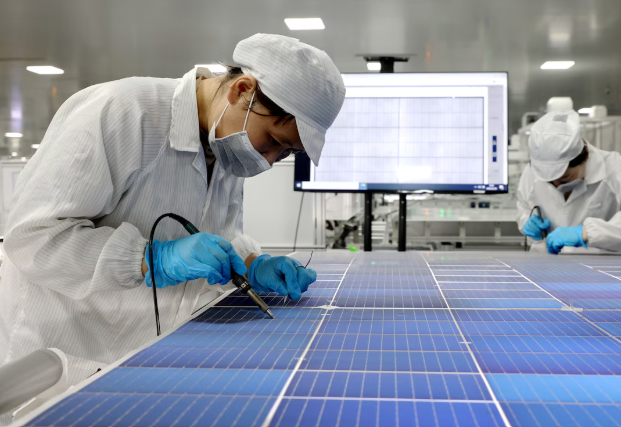
China, Oct 19 : China has proposed new export controls covering 12 technologies used in solar equipment manufacturing, a move that could have implications for the global renewable energy industry and countries seeking to expand domestic production of photovoltaic components.
The proposal, reported by Reuters on October 18, forms part of a wider review of technologies that Beijing considers strategically important. Chinese authorities have cited national security concerns and the growing relevance of solar-manufacturing capabilities to sensitive sectors, including aerospace and defence.
The proposed restrictions come as governments worldwide seek to strengthen their control over advanced technologies, reduce supply-chain vulnerabilities and protect industrial capabilities. Solar power has become an important part of these discussions because manufacturing expertise can influence the cost, efficiency and availability of renewable-energy equipment.
China occupies a significant position in the global solar manufacturing sector. Its proposed controls could therefore attract attention from manufacturers, investors and policymakers in countries seeking to develop their own photovoltaic industries.
However, the announcement concerns proposed restrictions rather than a blanket prohibition on all solar exports. The final impact will depend on the technologies covered, the conditions adopted by authorities and how the measures are implemented.
What the proposed restrictions cover
According to Reuters, China’s proposed changes include technologies used to manufacture thin silicon wafers, perovskite and tandem solar cells, as well as processes associated with fluidized-bed polysilicon production.
These technologies play different roles in the production of photovoltaic equipment.
Silicon wafers form the foundation of many conventional solar cells. Improvements in wafer production can help manufacturers reduce material waste, improve manufacturing efficiency and lower costs.
Perovskite solar cells have attracted attention because of their potential to deliver high conversion efficiency through relatively thin layers of light-absorbing material. Researchers are also investigating tandem designs that combine different photovoltaic materials to capture a wider portion of the solar spectrum.
Tandem cells can potentially improve energy conversion compared with conventional single-junction designs, although manufacturing costs, durability and large-scale production remain important considerations.
Fluidized-bed processes offer an alternative method for producing polysilicon, a key material used in conventional solar manufacturing. Their commercial advantages depend on factors such as energy consumption, production efficiency and operating conditions.
By targeting technologies associated with manufacturing processes rather than only finished products, export controls could influence the ability of overseas companies to establish or expand production facilities.
The proposed measures are part of a broader review of strategic technology exports, rather than an isolated decision concerning a single category of solar equipment.
Why the decision matters for global solar manufacturing
The renewable energy industry depends on a complex international supply chain involving raw materials, specialised equipment, production technologies and finished components.
Countries may import solar panels from one market while obtaining manufacturing equipment, technical expertise or production materials from another. Restrictions affecting one stage of this chain can therefore influence investment decisions across several industries.
If access to certain manufacturing technologies becomes more difficult, overseas producers could face additional challenges in establishing production facilities or improving existing operations.
Potential consequences include higher development costs, longer project timelines and increased spending on alternative manufacturing methods. The scale of any effect would depend on how widely the proposed restrictions apply and whether substitute technologies are readily available.
Companies already operating production facilities outside China may be affected differently from new entrants. Established manufacturers could have accumulated technical knowledge and developed alternative processes, while newer businesses may depend more heavily on external expertise.
The proposal may also encourage manufacturers to examine the resilience of their supply chains. Companies could respond by diversifying suppliers, investing in research and development, or cooperating with partners in countries that possess relevant manufacturing capabilities.
Such changes generally take time. Developing a commercially competitive production process requires more than access to equipment; it also involves engineering expertise, quality control, testing and the ability to manufacture components consistently at scale.
Implications for India’s solar ambitions
India is among the countries seeking to expand domestic solar manufacturing and reduce dependence on imported technology and components.
A stronger domestic manufacturing base can help support renewable-energy deployment, create industrial employment and reduce exposure to disruptions in international supply chains. It can also encourage investment in research, engineering and specialised production equipment.
China’s proposed controls could prompt Indian manufacturers and policymakers to examine which parts of the solar supply chain remain dependent on foreign technology.
The possible implications are not uniform across the sector. Restrictions on advanced manufacturing methods could present challenges for businesses seeking to develop particular types of solar cells, while established production lines using different technologies might be less directly affected.
Indian companies could respond by investing in domestic research, expanding technical partnerships and developing alternative sources of manufacturing equipment and expertise.
Universities, public research institutions and private-sector laboratories may also have opportunities to strengthen work on next-generation photovoltaic materials and production methods.
Nevertheless, replacing established manufacturing technologies is not an immediate process. Domestic alternatives must meet commercial requirements relating to efficiency, reliability, production costs and long-term performance.
India’s response would therefore depend on the specific technologies covered by China’s final rules, the existing capabilities of local manufacturers and the availability of viable alternatives.
The proposal should not be interpreted as evidence that India’s entire solar industry will face an immediate disruption. Its consequences would need to be assessed technology by technology.
A wider contest over strategic technologies
The proposed solar restrictions reflect a broader international trend in which governments are increasingly treating advanced technologies as matters of economic security and strategic competition.
Artificial intelligence, semiconductor production, biotechnology and renewable-energy manufacturing have all become areas of policy attention. Governments are seeking to protect sensitive capabilities while maintaining access to international markets and encouraging domestic innovation.
China’s broader review of export controls has included other advanced technology areas, including artificial intelligence and chip-related capabilities. The solar proposal is therefore part of a larger effort to exercise oversight over technologies considered strategically significant.
Such measures can have consequences beyond the countries introducing them. Manufacturers may need to reassess where they locate research facilities, how they transfer technical knowledge and which suppliers they use for critical production processes.
Export restrictions can also influence competition between companies. Firms with access to specialised expertise may retain an advantage, while competitors may have to invest more heavily in research or seek alternative production methods.
At the same time, governments introducing controls must balance security objectives with the interests of their domestic industries. Excessively broad restrictions could affect commercial relationships and complicate international research cooperation.
The final scope of the Chinese proposal will therefore be important in determining how businesses and trading partners respond.
Innovation and the future of solar technology
The solar industry continues to develop as manufacturers seek to improve efficiency, lower costs and increase the durability of photovoltaic products.
Research into tandem cells, alternative materials and improved manufacturing processes could help expand the range of commercially viable solar technologies. However, laboratory performance does not always translate directly into successful mass production.
Manufacturers must demonstrate that new technologies can operate reliably under different environmental conditions and remain economically competitive over their expected lifetimes.
Access to manufacturing expertise is particularly important in this transition. A company may possess a promising design but still require specialised machinery, process knowledge and extensive testing before it can produce components at commercial scale.
Restrictions affecting technology transfers could consequently influence the pace at which some manufacturers develop new production capabilities.
On the other hand, tighter controls may encourage investment in alternative technologies and strengthen efforts to develop domestic expertise. The extent of that response will depend on available funding, research capacity and market demand.
For governments pursuing renewable-energy targets, maintaining a reliable supply of affordable solar equipment remains a central consideration. Policymakers will need to weigh the benefits of industrial self-reliance against the costs and time required to develop alternative production systems.
Consultation will shape the final outcome
Reuters reported that China’s proposed changes were open for public consultation until November 15, 2026. This process provides an opportunity for affected businesses and other stakeholders to examine the proposal and communicate their concerns before a final decision.
Manufacturers will be watching for clarity on the exact technologies covered, the licensing or approval requirements and the treatment of existing commercial arrangements.
Companies planning investments in new factories may need to assess whether their proposed production methods could fall within the final controls. Suppliers and research organisations will also have an interest in understanding how the measures affect technical cooperation and the movement of manufacturing knowledge.
The outcome could influence decisions on future production capacity, research partnerships and investment in alternative photovoltaic technologies.
For India and other countries seeking to strengthen their solar industries, the proposal highlights the importance of developing expertise across the manufacturing chain rather than relying solely on the assembly of finished products.
China’s proposed restrictions do not determine the future of the global solar market by themselves. Their significance will depend on the final regulatory framework and the ability of manufacturers to adapt.
As the consultation progresses, the renewable-energy sector will be assessing whether the measures lead to substantial changes in technology access, encourage new investment in competing production methods or produce a combination of both outcomes.
The wider lesson is that the transition to clean energy depends not only on installing solar panels but also on maintaining reliable access to the technology, equipment and expertise required to manufacture them.

