


Chinese Humanoid Robot Sets 100-Metre Record in 9.39 Seconds
Tiangong Ultra's sprint has drawn attention to the rapid progress of humanoid robotics and high speed machine mobility.
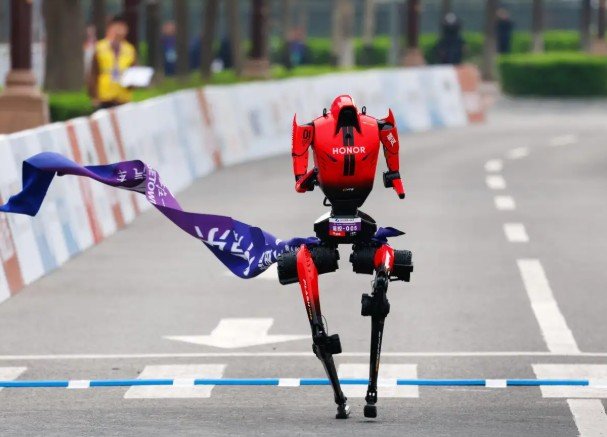
BEIJING, Aug 24: A Chinese humanoid robot has attracted global attention after completing a 100-metre sprint in 9.39 seconds, highlighting rapid advances in robotic movement and machine control.
The robot, known as Tiangong Ultra, achieved the performance in a demonstration that showcased its ability to move at speeds exceeding those typically associated with humanoid machines. Reports about the run have sparked renewed interest in China’s expanding robotics industry.
The achievement demonstrates how developers are increasingly focusing not only on making robots capable of walking but also on improving balance, coordination, power delivery and rapid movement.
Robotics moves beyond basic mobility
Humanoid robots have traditionally faced significant engineering challenges when attempting to move quickly while maintaining stability.
Developers must coordinate multiple systems simultaneously, including motors, sensors, control software and onboard computing. High-speed movement also requires robots to respond rapidly to changes in their surroundings and maintain balance during acceleration and deceleration.
The Tiangong Ultra demonstration points to advances in these areas and reflects the broader competition among robotics companies to develop machines capable of operating in increasingly demanding environments.
China accelerates humanoid development
China has emerged as a major centre for humanoid robotics, with companies and research institutions investing heavily in machines designed for industrial, commercial and potentially consumer applications.
The growing capabilities of these robots could eventually support tasks that require mobility in environments designed for humans, including factories, warehouses and other workplaces.
However, high-speed demonstrations represent only one measure of progress. Developers still need to improve areas such as battery endurance, reliability, safety, dexterity and the ability to perform useful tasks consistently.
The latest sprint nevertheless illustrates how quickly humanoid robotics is evolving and how competition is pushing machines toward greater speed and physical capability.

