


Congress Goes Solo, Intensifies TMC vs BJP Battle Ahead of Bengal Polls
Collapse of Left alliance narrows opposition space as parties brace for a polarised assembly election
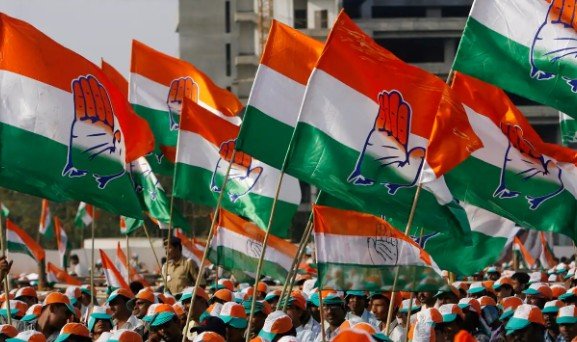
Kolkata, Feb 11 : The Congress’ decision to contest the upcoming West Bengal Assembly elections independently has sharpened the state’s political landscape, further entrenching the rivalry between the ruling Trinamool Congress (TMC) and the Bharatiya Janata Party (BJP). With the Left-Congress partnership now dissolved, analysts believe the electoral contest is increasingly heading toward a two cornered fight focused on vote consolidation rather than alliance strategies.
Senior leaders across parties acknowledge that the absence of a joint front has effectively eliminated the possibility of a viable third alternative. A senior Congress functionary, speaking on condition of anonymity, said breaking the TMC-BJP dominance will be challenging but maintained that the party’s leadership sees little risk in attempting a revival through a standalone campaign.
For the first time since 2006, the Congress plans to field candidates in all 294 constituencies. Insiders describe the move as both a strategic reset and a response to organisational fatigue after years of alliances that yielded limited political gains. The decision, formalised during recent consultations between central and state leaders, brings an end to an electoral understanding with the Left that covered the 2016 and 2021 Assembly polls as well as the 2024 Lok Sabha election.
Political observers warn that the split could intensify polarisation. The BJP is expected to benefit from a more unified anti-incumbency vote, while the TMC may strengthen its hold over minority communities, estimated to comprise nearly 30 percent of the electorate. Although some leaders, including Adhir Ranjan Chowdhury, favoured continuing the alliance, many state unit members argued that repeated partnerships had diluted the party’s identity.
State Congress president Suvankar Sarkar said workers increasingly believe the party must rebuild independently after making concessions in alliances dating back to 2001 first with the TMC and later with the Left. National political considerations, including the Congress’ direct contest with Left parties in Kerala, also reportedly influenced the decision.
The party’s electoral history in Bengal reflects its dilemma. In 2011, its alliance with the TMC helped end the Left Front’s 34-year rule, delivering 42 seats to Congress as Mamata Banerjee swept to power. However, subsequent elections exposed a steady decline. The 2016 tie-up with the Left produced 44 seats for Congress but masked a shrinking vote share of just over 12 percent. By the 2019 Lok Sabha polls, when the party fought alone, it secured only two seats with a vote share below six percent even as the BJP expanded rapidly.
The BJP’s ascent has been closely linked to shifting opposition dynamics. Its vote share rose from 17 percent in 2014 to nearly 40 percent in 2019, while the TMC’s parliamentary tally dipped despite retaining a strong support base. BJP leaders now argue that voters seeking change have a clearer alternative.
Within the TMC, reactions are mixed. Party insiders suggest the absence of another secular challenger could consolidate minority votes in its favour, though a more cohesive anti-TMC bloc may simultaneously aid the BJP. After 15 years in power, the ruling party is also expected to confront anti-incumbency pressures.
Community representatives say early signs already point toward strategic voting. Some minority leaders believe supporters who previously backed a Left-Congress combine may now rally behind the TMC to counter the BJP.
Past election data supports the view that triangular contests often favour the incumbent. In the 2021 Assembly polls, the TMC captured nearly 48 percent of the vote against the BJP’s 38 percent, while the Left and Congress failed to win seats but influenced margins in closely fought constituencies. A similar pattern emerged in the 2024 Lok Sabha elections, where the TMC secured 29 seats, the BJP 12, and the Congress just one.
CPI(M) leader Sujan Chakraborty said the alliance had aimed to present a secular platform despite obstacles, adding that voters would ultimately judge the Congress’ new path. Political analyst Moidul Islam noted that the breakup does little to revive either partner but instead solidifies a bipolar contest one that leaves the idea of a Third Front largely theoretical.
As the state heads toward another high-stakes election, the Congress’ solo gamble underscores an acceptance of Bengal’s evolving political reality, where the battle lines appear firmly drawn between the TMC and the BJP.

