


Congress Targets Centre Over Slow Private Investment and ‘Raid Raj’ Allegations
Congress Attacks Centre Over Weak Private Investment and Business Uncertainty
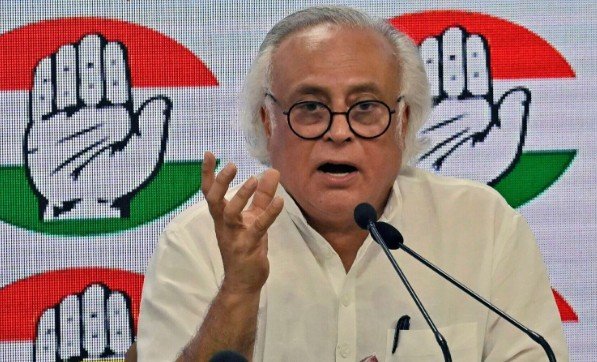
Mumbai, May 05 : Congress Questions Government’s Economic Policies
The Congress on Tuesday sharply criticised the Narendra Modi-led government over what it described as a continuing slowdown in private corporate investment, arguing that India’s economic growth potential is being affected by weak investor confidence and stagnant consumer demand.
Senior Congress leader and party communications in-charge Jairam Ramesh claimed that despite multiple policy measures aimed at encouraging businesses, private investment has failed to gain meaningful momentum in recent years.
The remarks came amid a broader political debate over India’s economic performance and the role of corporate investment in sustaining long-term growth.
Congress Highlights Lack of Corporate Spending
In a statement posted on social media, Ramesh argued that the government had reduced corporate tax rates and repeatedly promoted improvements in the ease of doing business environment, yet these measures had not translated into higher investment activity from major companies.
According to the Congress leader, the country continues to face a structural challenge where large firms are earning strong profits but remain reluctant to invest in expansion projects and job creation.
He referred to comments reportedly made by Chief Economic Adviser V Anantha Nageswaran, who noted that corporate profits among major listed companies had risen significantly after the COVID-19 pandemic even as private capital expenditure remained below expectations.
Ramesh said this trend supports the opposition’s argument that deeper economic concerns continue to affect investment decisions.
Slow Consumer Demand Blamed for Investment Weakness
The Congress leader linked the slowdown in private investment to weak consumer demand and stagnant real wages across the country.
He argued that companies are unlikely to invest aggressively unless household purchasing power improves and consumers begin spending more consistently.
According to the opposition party, the limited growth in wages has reduced demand across several sectors, discouraging industries from expanding production capacity or launching new projects.
Economic experts have frequently highlighted the importance of domestic consumption in driving India’s long-term economic growth, particularly in manufacturing and infrastructure-related sectors.
Opposition Targets ‘Raid Raj’ Allegations
Another major point raised by Congress was the alleged atmosphere of uncertainty created by investigative agencies.
Ramesh accused the government of creating what he described as an “ED-CBI-IT raid raj,” referring to actions carried out by agencies such as the Enforcement Directorate, Central Bureau of Investigation, and Income Tax Department.
He claimed that repeated investigations and raids have generated fear among sections of the business community, making investors cautious about taking independent financial risks.
The BJP-led government has consistently denied opposition allegations regarding misuse of central agencies and maintains that investigative actions are conducted according to law.
Crony Capitalism Allegation Raised Again
The Congress also renewed allegations of crony capitalism, accusing the government of favouring select corporate groups in investment-heavy sectors.
Ramesh alleged that growing concentration of economic influence among a few large business houses has reduced incentives for broader private sector participation.
Using the term “Modani,” often employed by opposition leaders to criticise alleged links between the government and industrial conglomerates, he argued that smaller companies face disadvantages in accessing opportunities and investments.
The ruling government has repeatedly rejected accusations of favouritism and insists that its policies are designed to support overall economic growth and industrial expansion.
Debate Intensifies Over India’s Economic Direction
The latest exchange reflects increasing political focus on India’s economic trajectory ahead of major policy discussions and upcoming electoral battles.
While the government continues to highlight strong GDP growth, infrastructure development, and digital expansion as signs of economic progress, opposition parties argue that issues such as unemployment, weak wage growth, and uneven investment patterns require urgent attention.
Economists believe private corporate investment remains critical for sustaining employment generation, industrial productivity, and long-term economic competitiveness.
The debate over investment trends is expected to remain central to India’s economic and political discourse in the coming months.

