


Delimitation Bill 2026 Put on Hold After Women’s Reservation Amendment Fails in Lok Sabha
Government halts constituency overhaul as crucial constitutional amendment misses two-thirds majority, intensifying debate over representation and federal balance
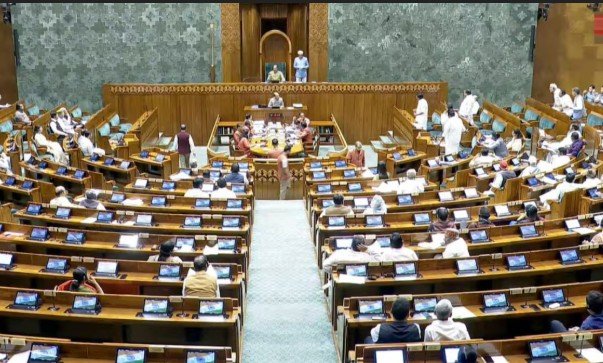
NEW DELHI, Apr 18: The Centre has decided to shelve the much-debated Delimitation Bill 2026 after the Constitution Amendment Bill aimed at implementing women’s reservation failed to secure passage in the Lok Sabha, marking a significant political setback for the government.
Parliamentary Affairs Minister Kiren Rijiju confirmed that the decision was taken as both legislative measures were closely linked. He emphasized that the delimitation exercise was contingent upon the successful rollout of women’s reservation, making it impractical to proceed after the amendment fell short in the Lower House.
The women’s reservation amendment garnered 278 votes in favour and 211 against, failing to meet the constitutionally mandated two-thirds majority required for passage. The outcome has not only stalled the reservation policy but also derailed the government’s broader plan to restructure parliamentary constituencies.
Rijiju further stated that the Centre would withdraw its proposal to extend the women’s quota to Union Territories, reinforcing the government’s position that the two reforms were designed to be implemented together. Despite the setback, he reiterated the ruling party’s commitment to enhancing women’s representation in legislative bodies.
The shelving of the bill brings a temporary halt to what was expected to be a major overhaul of India’s electoral framework. The proposed legislation aimed to redraw Lok Sabha constituencies and increase the total number of seats ahead of the next delimitation exercise, which is scheduled after the current freeze on seat redistribution ends in 2026.
Under the proposal, states and Union Territories with only one parliamentary seat such as Sikkim, Nagaland, and Mizoram would not have seen any increase in representation. Meanwhile, states with an odd number of constituencies were expected to gain additional seats through rounding adjustments, and most others could have witnessed up to a 50 percent rise in seat allocation. The bill also proposed a modest increase in representation for Scheduled Castes.
However, the initiative had already sparked intense political debate across the country. Opposition leaders voiced concerns that population-based delimitation could disproportionately favour northern states, potentially diminishing the political weight of southern regions.
Among the most vocal critics has been M. K. Stalin, who argued that such a move could upset the federal balance and penalize states that have effectively implemented population control measures. Similar apprehensions have been echoed by several regional parties, turning the issue into a broader debate on equity and representation.
Delimitation, mandated under the Constitution, involves redrawing parliamentary and assembly constituencies based on census data to ensure balanced representation. With the freeze on seat redistribution set to expire in 2026, expectations had been building around a major restructuring of India’s electoral map.
The linkage between delimitation and the implementation of 33 percent reservation for women in Parliament and state assemblies added another layer of political sensitivity to the issue. The failure of the amendment has now cast uncertainty over both reforms.
With the Delimitation Bill 2026 now on hold, the future of constituency restructuring remains unclear. The development is likely to trigger further political negotiations and debates, as stakeholders across the spectrum weigh in on how best to balance representation, demographic realities, and the principles of federalism in the world’s largest democracy.

