


Diljit Dosanjh’s Delhi Concert Gets Police Clearance After Security Concerns
The October 30 show at Jawaharlal Nehru Stadium will go ahead after organisers agreed to strengthen security, traffic management and crowd control arrangements following an initial refusal of permission.
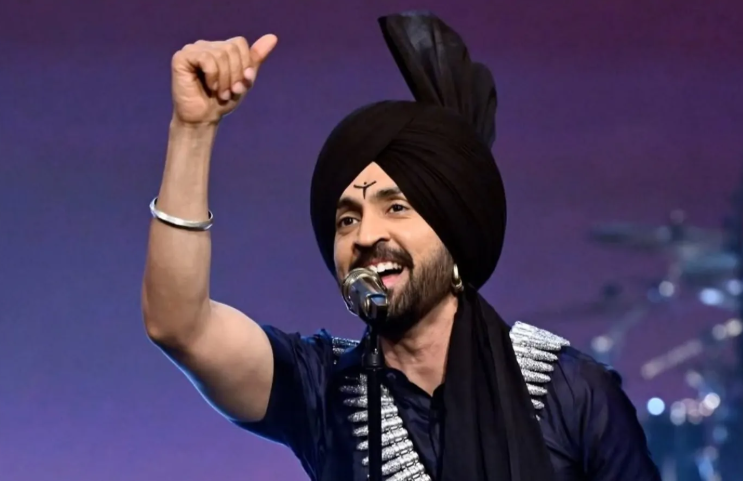
NEW DELHI, Oct 24: Punjabi singer and actor Diljit Dosanjh’s much anticipated Delhi concert has received police clearance following a brief period of uncertainty over security arrangements, allowing the capital’s leg of his Aura India Tour to proceed as scheduled on October 30.
The concert, planned at Jawaharlal Nehru Stadium, had faced a setback after Delhi Police initially withheld permission, citing specific threat-related inputs, the demands of the ongoing festive season and other law-and-order responsibilities. However, following discussions with the organisers and the submission of a more detailed security plan, authorities reconsidered the decision and granted approval on Friday.
The development brought relief to fans who had been concerned about a possible cancellation. It also gave organisers, ticketing partners and businesses associated with the event greater clarity ahead of a concert expected to attract a substantial audience.
Dosanjh subsequently addressed the speculation surrounding the show in a video shared on social media, confirming that he would meet his Delhi fans on October 30. His message came after reports about the initial denial of permission had generated considerable discussion online.
BookMyShow Live, the event’s ticketing partner, also clarified that the concert had not been cancelled. The company said permission had been temporarily withheld while additional safety, traffic and crowd management requirements were addressed.
According to reports, the organisers held multiple rounds of discussions with Delhi Police and presented revised arrangements intended to meet the authorities’ concerns. The discussions covered security deployment, vehicle parking, pedestrian movement, entry and exit management, and measures to prevent congestion around the stadium.
Security arrangements strengthened
The scale of the proposed security operation was a key factor in the reconsideration of the event. Officials indicated that the initial proposal for private security personnel needed to be strengthened to manage the expected turnout effectively.
Reports said authorities sought the deployment of approximately 1,500 to 2,000 private security personnel to support crowd management. Their responsibilities would include regulating queues, directing visitors towards designated entrances, assisting concertgoers and helping maintain orderly movement around the venue.
Police also stressed the importance of communicating gate numbers and parking information to ticket holders before the event. Clear instructions are expected to help reduce confusion during entry and departure, particularly when large numbers of people arrive within a short period.
Parking arrangements were another important element of the plan. Organisers were asked to identify adjoining parking facilities and provide information to visitors arriving by private vehicles.
Authorities also discussed restricting vehicle movement in the immediate vicinity of the stadium. Reports indicated that an area extending approximately 500 to 700 metres around the venue could be designated as a pedestrian-only or no-car zone, subject to the final arrangements. Vehicles authorised for the event would be handled under the applicable restrictions.
The measures are intended to reduce the risk of traffic bottlenecks and make it easier for spectators to reach the stadium entrances. The organisers will also need to coordinate with police on crowd dispersal after the performance, when a large number of people are likely to leave simultaneously.
The stadium has a reported capacity of around 55,000, making advance planning essential for an event of this scale. The final arrangements must account not only for ticket holders but also for performers, technical crews, event staff and other personnel working at the venue.
Why permission was initially withheld
The initial decision reflected concerns about the security environment and the additional responsibilities faced by the police during the festive period. Authorities said the proposed arrangements required further attention before the concert could be approved.
The episode also unfolded against the backdrop of reported threats connected to the singer and his performances. Police have treated security inputs seriously while assessing the arrangements required to protect the artist, audience members and those working at the event.
The initial refusal did not mean that the concert had been permanently cancelled. BookMyShow Live emphasised this distinction after reports of the setback prompted uncertainty among ticket holders.
The subsequent approval followed discussions in which organisers addressed the concerns raised by law-enforcement officials. The outcome illustrates the importance of coordination between event promoters and public authorities when planning large gatherings.
While the clearance allows preparations to continue, it does not remove the need for strict compliance with the approved security and traffic plan. Organisers will be expected to implement the agreed arrangements and ensure that spectators receive the necessary information before arriving at the stadium.
A major event for fans and the live-entertainment sector
The uncertainty surrounding the concert highlighted the financial and logistical commitments involved in staging a major live performance. Large events require advance spending on stage construction, sound and lighting equipment, transport, technical staff, venue preparation, security and other operational requirements.
A cancellation or postponement close to the scheduled date could leave organisers and suppliers facing substantial costs that may be difficult to recover. Ticketing platforms would also have to manage customer queries and potential refunds, while spectators could face additional expenses related to travel and accommodation.
Hotels, transport operators, food vendors and other local businesses can benefit when concerts draw audiences from outside the host city. The approval therefore has implications beyond the performance itself, particularly for companies and workers whose schedules depend on the event going ahead.
The incident also comes at a time when Indian cities are competing to attract major concerts and international performers. Reliable venues, transparent permission procedures, efficient transport arrangements and strong safety standards are important factors in building confidence among promoters and artists.
Delhi-NCR is an established market for live entertainment, but large events require careful coordination across multiple agencies. The latest episode demonstrates how security requirements and the practical needs of organisers must be addressed together to avoid last-minute uncertainty.
Delhi concert marks the tour’s opening leg
The October 30 performance is scheduled to open the Delhi leg of Dosanjh’s Aura India Tour. Other announced stops include Indore, Ahmedabad, Mumbai and Bengaluru, with Chandigarh also expected to form part of the itinerary, although details of that show are to be announced.
The tour adds to the singer’s growing presence in India’s live-music market. Known for combining Punjabi music with contemporary pop influences, Dosanjh has developed a substantial audience across India and among international listeners.
For fans awaiting the Delhi performance, the police clearance means preparations can continue towards the scheduled date. The immediate focus will now shift to the implementation of security arrangements, traffic planning and clear communication with concertgoers.
The final outcome will depend on organisers fulfilling the conditions agreed upon with authorities and ensuring that the event proceeds in an orderly manner. With permission now granted, the uncertainty that dominated the previous two days has eased, leaving the singer and his team to prepare for the October 30 show.

