


Drug-Free J&K
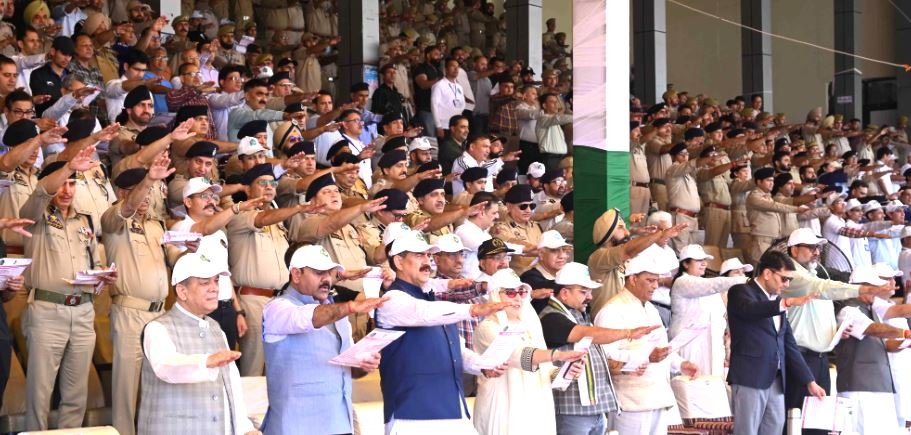
The launch of the 100-day Nasha Mukt Jammu Kashmir Abhiyaan from the MA Stadium is significant not only because of its scale but because it seeks to frame the fight against drug abuse as a moral, social, and administrative responsibility shared by the entire society. Drug addiction is no longer an issue that can be viewed as a private tragedy or a limited law and order concern. It has emerged as a wider challenge to families, communities, and the future of youth. In Jammu and Kashmir, where aspirations of the younger generation are closely tied to the region’s social stability and development, any determined effort against narcotics assumes deep public importance.
One of the strongest aspects of this campaign is that it does not rely on one approach alone. It combines awareness, public participation, law enforcement, and rehabilitation in a single framework. This balance is essential. Awareness creates social understanding, public mobilization generates ownership, strict action disrupts trafficking networks, and rehabilitation offers support to those who have already been drawn into addiction. If these elements move together with consistency, the campaign can become more than a temporary drive. It can begin to reshape how society understands and responds to the drug menace. The call for mass participation is particularly important. No administration, however strong, can tackle the problem successfully in isolation. Families, schools, colleges, social organizations, religious figures, panchayats, mohalla committees, and ordinary citizens all have a role to play. When a campaign reaches villages, towns, schools, and neighborhoods, it begins to move from official messaging towards social intervention. That transition matters. Drug abuse survives not only because of traffickers but also because of silence, fear, stigma, and social disengagement. A people’s movement can help break that silence. At the same time, public participation must be matched by a firm message against those who profit from destroying lives. The warning that traffickers will face the full force of the law, including seizure of assets, freezing of bank accounts and revocation of official documents, is a strong signal that the state intends to act not only against visible offenders but also against the financial and organizational structure of the narcotics trade. Such action is necessary because drug abuse does not spread by accident. It is sustained by networks, logistics, and calculated profiteering. Any serious anti-drug policy must therefore strike at the supply chain with determination. Yet the campaign is most credible where it distinguishes between traffickers and victims. This distinction is morally and socially important. Those engaged in smuggling and organized drug distribution require uncompromising legal action. Those struggling with addiction require treatment, counseling, and the chance to recover. The notification of rules for treatment, counseling, and rehabilitation centers reflects an understanding that a genuine anti-drug strategy must also create trustworthy institutional support for recovery. A society that only punishes and does not heal will not solve the problem at its roots. The emphasis on grassroots intelligence also deserves close attention. Panchayats, ward committees, chowkidars, lambardars, and local networks can often see signs of trouble earlier than distant systems can. Their involvement, if handled sensitively and responsibly, can make intervention more timely and grounded. At the same time, such participation must remain guided by fairness, accuracy, and accountability so that innocent people are not caught in the process. Community vigilance becomes effective only when it is supported by trust and careful institutional handling. The broader social vision behind the campaign is equally important. Anti-drug sports tournaments, debates, quizzes, marches, and public pledges are not marginal activities. They are part of shaping a culture where youth are offered belonging, purpose, and awareness before addiction finds them. Prevention is often strongest when it gives young people positive spaces, not merely warnings. The campaign’s youth-centered design, therefore, has real value. Its true test, however, will lie beyond symbolism. A padyatra can inspire, but sustained follow-up will determine whether the momentum lasts. Reviews, feedback, mapping of affected areas, institutional coordination, and continuity in both enforcement and rehabilitation will decide whether this becomes a lasting intervention or a short burst of visibility. Public movements against social evils succeed when they are carried forward patiently after the initial energy fades.
Jammu and Kashmir needs exactly this combination of firmness and compassion. The fight against drugs is not only about curbing crime. It is about protecting homes, restoring lives, and defending the region’s future from quiet destruction. If this campaign remains people-driven, ethically anchored, anti-drug, and administratively serious, it can become one of the more meaningful social interventions of recent years. That possibility makes it worthy of both public support and sustained official resolve. The government deserves strong praise for finally taking the drug menace head-on with clarity, courage, and zero-tolerance resolve. By combining mass awareness, strict enforcement, and rehabilitation, it has sent a firm message that Jammu and Kashmir’s future will not be surrendered to narcotics.

