


Ebola Outbreak Prompts Fresh Concern as Kenya Reports Second Death
Kenya reports another fatality as Nigeria investigates a genetically related infection, while a new clinical trial begins in the Democratic Republic of the Congo to evaluate vaccine candidates against Bundibugyo virus.
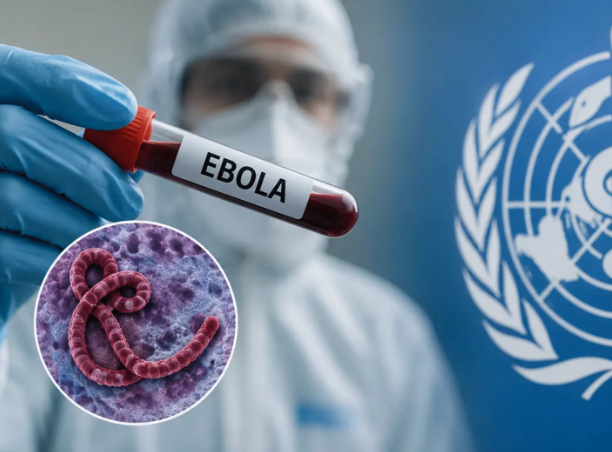
NAIROBI/ABUJA, October 24: Health authorities across parts of Africa have intensified efforts to contain an expanding outbreak of Bundibugyo virus disease, an Ebola related illness, following a second reported death in Kenya and investigations into the source of Nigeria’s confirmed infection.
The latest developments have renewed attention on disease surveillance, contact tracing, hospital infection-control measures and cross-border cooperation. The World Health Organization (WHO), in its October 23 update, reported continued transmission in the Democratic Republic of the Congo (DRC), alongside imported cases in Kenya and Nigeria.
Kenya’s health authorities reported nine confirmed cases by October 23, including two deaths, according to reports published on Friday. Nigeria has confirmed one case and is investigating how the infection occurred, as the patient had travelled from Uganda but had no established travel connection to the DRC, where the outbreak began.
Genomic analysis has indicated that the virus detected in Nigeria is closely related to the strain identified in Kenya’s first confirmed case. Nigerian health officials have cautioned, however, that this genetic similarity does not establish a direct link between the patients or explain the route through which the infection reached Nigeria.The developments come as the DRC continues to face a major outbreak, with thousands of confirmed infections and deaths reported across several provinces. Authorities are working to identify infections early, monitor exposed individuals and strengthen protective measures in healthcare facilities.
Kenya reports another death
Kenya’s second reported Ebola-related death involved a 65-year-old woman who was a close relative and direct contact of the country’s first confirmed patient. She developed symptoms while in quarantine and subsequently died despite receiving medical care in Nairobi.
The country’s first patient, a man who had travelled from the DRC through Uganda, died on October 5. Investigations identified eight additional cases linked to the original infection, including four family members and four healthcare workers.
The identification of healthcare workers among confirmed cases highlights the importance of infection prevention in clinical settings. Medical personnel may be exposed while examining, treating or providing routine care to infected patients, particularly before the illness is recognised and appropriate precautions are introduced.
By October 22, Kenyan authorities had identified 135 contacts associated with the outbreak. Health teams have been monitoring exposed individuals, arranging quarantine where required and coordinating care for confirmed patients.
Despite the additional fatality, officials have reported no evidence of wider community transmission beyond the identified cluster. This distinction is important because infections confined to known contacts can be more readily monitored than cases arising in unrelated communities.
The investigation nevertheless requires continued vigilance. Authorities must establish whether anyone exposed to infected individuals has developed symptoms, identify further contacts where necessary and ensure that suspected cases receive prompt assessment.
Nigeria investigates the source of infection
Nigeria confirmed its first imported case of Bundibugyo virus disease on October 20 after laboratory testing identified the infection in a woman who had recently travelled from Uganda.
According to the WHO, the patient developed symptoms on October 7, sought medical attention in Abuja on October 11 and tested positive on October 20. She was isolated and was receiving medical care following confirmation.
The Nigeria Centre for Disease Control and Prevention activated its incident management system to coordinate the response. Initial investigations identified 44 contacts who required monitoring, while public health teams intensified surveillance and infection-control measures at the private healthcare facility where the patient had received treatment.
On October 23, Nigeria’s health minister, Muhammad Ali Pate, announced that genomic analysis showed the virus was closely related to the strain found in Kenya’s index case. Officials stressed that investigators had not established a direct epidemiological connection between the two patients.
The findings have added a new dimension to efforts to reconstruct the movement of the virus. Investigators are examining travel histories, possible exposure events and contact networks to determine how the infections occurred.
A genetic relationship between viral samples can provide valuable clues about transmission patterns, but it does not by itself prove that one patient infected another. Investigators need to combine laboratory findings with travel records, timelines and epidemiological evidence before drawing conclusions.
Nigerian authorities are continuing to monitor contacts, assess test results and strengthen preparedness at healthcare facilities. The response also includes providing protective equipment and ensuring that medical personnel can recognise and safely manage suspected infections.
DRC remains the centre of the outbreak
The DRC continues to bear the largest burden of the ongoing outbreak. In its October 23 disease update, the WHO reported 9,704 confirmed cases and 4,687 deaths across 66 health zones in eight provinces, using data available through October 20.
The reported figures corresponded to a crude case fatality ratio of 48.3 per cent. This measure describes the proportion of reported confirmed cases that have died; it should not be interpreted as an individual patient’s probability of dying or as a final estimate of the outbreak’s fatality rate.
The WHO also reported that transmission remained active in multiple areas. Of the 66 affected health zones, 50 had recorded at least one new case during the preceding 21 days.
The geographical spread creates substantial operational challenges. Health authorities must deliver medical supplies, maintain laboratory testing, trace contacts and support isolation facilities across areas where access to healthcare may be difficult.
Another concern is the number of deaths occurring outside treatment centres. The WHO reported that 307 of the 482 deaths recorded since its previous update occurred in communities, while 175 occurred in treatment centres.
Deaths outside medical facilities can indicate that patients are not being identified or referred for appropriate care early enough. They may also complicate the identification of people who had contact with infected individuals.
Early detection is particularly important because the symptoms of Ebola-related illnesses can initially resemble those of other infections. Fever, weakness, headache and muscle pain may occur alongside gastrointestinal symptoms as the illness progresses. A clinical assessment and appropriate laboratory testing are needed to determine whether a suspected case involves Bundibugyo virus.
The WHO has called for stronger surveillance, rapid case identification, cross-border coordination and effective infection prevention and control. It has also advised against restrictions on travel to or trade with affected countries based on the information available in its October 23 assessment.
Vaccine trial begins in the DRC
Amid the containment effort, a significant research development emerged on October 23, when the first participant was vaccinated in the TUMAINI clinical trial in Bunia, in the DRC’s Ituri province.
The Phase 2/3 trial will evaluate vaccine candidates against Bundibugyo virus, addressing a major gap in protection against this particular virus species.
Although a vaccine is licensed for the Ebola virus responsible for other outbreaks, there is currently no licensed vaccine specifically approved against Bundibugyo virus disease. The effectiveness of existing Ebola vaccines against this strain has not been established in humans.
The TUMAINI trial is designed to assess the safety and immune response associated with candidate vaccines and generate evidence about their ability to protect against disease. The study uses an adaptive platform approach, allowing multiple candidates to be evaluated within a coordinated framework.
The first candidate to enter the trial is Ervebo, a vaccine licensed against a different Ebola virus species. Two Bundibugyo-specific candidates, being developed by Moderna and by the University of Oxford in collaboration with the Serum Institute of India, are expected to enter the trial after preparations are completed.
The trial will use a ring-vaccination approach, focusing on people at elevated risk of infection, including contacts of confirmed cases. The approach can help researchers assess vaccine performance while supporting the broader outbreak response.
However, the start of the study should not be interpreted as confirmation that a vaccine already protects people against Bundibugyo virus. Clinical trials are needed to establish safety and effectiveness, and the results must be assessed before a candidate can be considered for wider use.
The research is being conducted with the involvement of the DRC’s health authorities and scientific partners. The Institut National de Recherche Biomédicale and the University of Antwerp are co-leading and co-sponsoring the trial, with national oversight provided by the DRC Ministry of Health. Protecting healthcare workers and communities
The spread of cases across borders has underlined the importance of preparedness at hospitals, laboratories and points of entry. Health facilities need clear procedures for recognising suspected cases, isolating patients when necessary, notifying public health authorities and using appropriate protective equipment.
Healthcare workers should follow infection-control protocols when assessing patients with compatible symptoms and relevant exposure histories. Suspected cases require prompt evaluation by trained professionals rather than reliance on symptoms alone.
Contact tracing is another central component of the response. Public health teams identify people who may have been exposed, assess their risk and monitor them for symptoms during the appropriate follow-up period. If a contact becomes symptomatic, rapid assessment can reduce delays in diagnosis and help prevent further transmission.
Community engagement is equally important. Accurate information can encourage people to seek medical attention promptly, cooperate with health teams and avoid practices that may expose others to infectious bodily fluids.
Authorities must communicate the risks without creating unnecessary fear or stigma. Not every person who has travelled through an affected region has been exposed to the virus, and a possible exposure does not mean that an individual is infected.
The ongoing outbreak also demonstrates why regional coordination matters. Countries need reliable information-sharing arrangements, laboratory capacity, trained response teams and supplies that can be deployed quickly when a suspected case is identified.
Continued monitoring remains essential
The latest reports present two simultaneous challenges: containing the existing outbreak in the DRC and preventing imported infections from establishing further chains of transmission in other countries.
Kenya’s identified cluster and Nigeria’s investigation show why rapid action after confirmation is necessary. At the same time, the continued number of infections in the DRC highlights the difficulty of controlling an outbreak that is active across multiple health zones.
The launch of the TUMAINI trial offers a potential avenue for improving future protection, but its findings will take time to establish. Until effective prevention tools are demonstrated, surveillance, timely clinical care, infection-control measures and contact monitoring remain essential.
Health authorities are continuing investigations in affected countries, while international partners support surveillance, clinical response and research. The coming days will be important for clarifying the source of Nigeria’s infection, monitoring the situation in Kenya and assessing progress against transmission in the DRC.

