


Final Phase Voting Underway for 142 Seats in Bengal Assembly Elections
Massive turnout expected as high-stakes contest between Mamata Banerjee and Suvendu Adhikari enters decisive stage
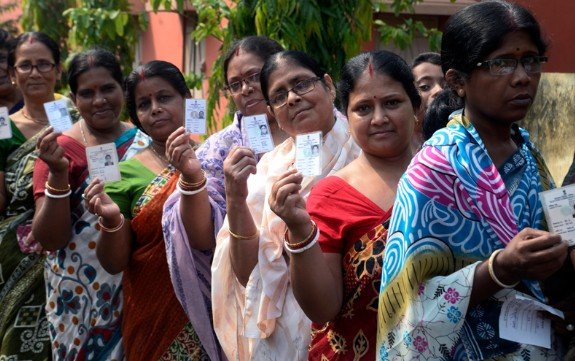
KOLKATA, Apr 29: Voting commenced on Wednesday for 142 constituencies in the concluding phase of the West Bengal Assembly elections, marking a crucial moment that could determine the future political landscape of the state. With heightened security and intense political rivalry, the focus has shifted to the southern districts, traditionally considered the stronghold of the ruling All India Trinamool Congress (TMC).
Polling began at 7 am across key regions including Kolkata, Howrah, North and South 24 Parganas, Nadia, Hooghly, and Purba Bardhaman. Voters were seen queuing early at polling stations, reflecting strong public participation in what is being described as a decisive electoral phase.
South Bengal Holds the Key
Unlike the earlier round that centered on northern districts, this phase places the electoral spotlight on southern West Bengal. In the previous 2021 Assembly elections, the TMC had dominated this region by securing 123 out of the 142 seats, leaving the Bharatiya Janata Party (BJP) with limited gains.
For the BJP, breaking into this belt is critical. Without making significant inroads here, its path to forming the government remains uncertain.
High-Profile Constituencies Draw Attention
The Bhabanipur seat has emerged as the centerpiece of this phase, featuring a high-voltage contest between Chief Minister Mamata Banerjee and BJP leader Suvendu Adhikari. The battle is being viewed as a symbolic rematch of the Nandigram contest, where Adhikari had previously defeated Banerjee.
Other prominent constituencies witnessing keen contests include Kolkata Port, Bhatpara, Barrackpore, Dum Dum, Sandeshkhali, Jadavpur, and Ballygunge, among others. Senior TMC leader Firhad Hakim is also contesting from Kolkata Port.
Robust Security and Monitoring Measures
To ensure smooth polling, the Election Commission of India has implemented extensive security arrangements. A total of 2,321 companies of central armed forces have been deployed across seven districts, with the highest concentration in Kolkata.
Polling is being conducted at over 41,000 stations, all under webcasting surveillance. Authorities have also deployed drones equipped with cameras for real-time monitoring. Additionally, a large number of observers including general, police, and expenditure officials—have been stationed to oversee the process.
Voter Base and Participation
Approximately 3.21 crore voters are eligible to cast their ballots in this phase, including a significant number of women voters and members of the third gender. The strong turnout recorded in the earlier phase over 93 percent has set expectations high for this round as well.
Electoral Roll Revision Sparks Debate
One of the major controversies surrounding this phase is the Special Intensive Revision (SIR) of electoral rolls. Large scale deletions of voter names in several districts have triggered political tensions.
The TMC has alleged that the exercise disproportionately affected minorities, migrant populations, and economically weaker sections. On the other hand, the BJP has defended the revision as a necessary step to eliminate fraudulent entries and ensure electoral integrity.
Decisive Outcome Awaited
As the final votes are cast, attention will now turn to May 4, when counting will take place. The results are expected to determine whether the TMC retains its dominance or if the BJP can mount a significant challenge in West Bengal’s political arena.

