


Give Hockey Priority
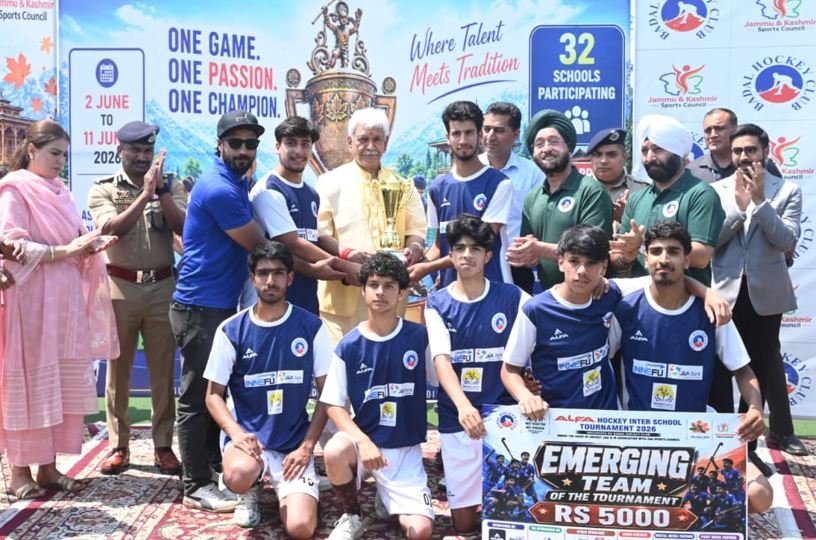
The ALFA HOCKEY Inter-School Tournament in Srinagar has brought renewed attention to a sport that carries both history and promise in Jammu and Kashmir. Hockey has long been associated with discipline, speed, teamwork and national pride, but its future depends on how seriously it is introduced, supported and sustained at the school and grassroots levels. The participation of young players from 32 schools across districts, including Kupwara, Bandipora, Kulgam and Shopian, reflects a welcome expansion of sporting enthusiasm beyond traditional centres and into the wider social landscape of the Union Territory.
School-level tournaments are not small events in the larger journey of sports development. They are the first real platforms where children discover confidence, learn pressure, understand teamwork and develop competitive spirit. A young player who steps on the turf today may become a district, national or international player tomorrow if the system provides the right coaching, exposure and encouragement. This is why inter-school competitions must be viewed not merely as annual events but as essential building blocks of a serious sporting ecosystem. The focus on hockey assumes special importance because the game requires structured training, modern surfaces and regular competition. The development of synthetic hockey turfs at Polo View Srinagar, Pulwama and Poonch has already opened new opportunities for aspiring players from cities, border districts and remote areas. The ongoing development of similar facilities at Bandhu Rakh and K.K. Hakku Stadium in Jammu can further strengthen the foundation for advanced training and talent identification. Infrastructure alone does not create champions, but without infrastructure, talent often remains trapped at the level of possibility. Jammu and Kashmir has no shortage of young energy. What it needs is a dependable pathway from school grounds to professional coaching, from local tournaments to regional competitions and from regional success to national platforms. A well-designed talent pipeline can ensure that promising players are not lost due to lack of guidance, equipment, training or exposure. The idea of building such a pipeline is timely, because sports today are not limited to recreation. They are a vehicle of discipline, confidence, employment, social mobility and nation-building. The tournament also highlights the importance of institutional collaboration. The combined efforts of the J&K Sports Council, Badal Hockey Club and Hockey Jammu and Kashmir show that meaningful sports development requires partnership between Government institutions, local clubs, coaches, schools and communities. When these stakeholders work together, they create a supportive environment in which children feel encouraged to participate and parents feel confident that sports can offer both character-building and future opportunity. Grassroots sports also have a strong social value. In a region where young people require constructive spaces for expression, competition and ambition, hockey and other team games can play a powerful role. Sports keep youth physically active, mentally focused and socially connected. They reduce the appeal of negative influences and create a culture of discipline and healthy rivalry. A child who learns teamwork on the field often carries the same values into society. However, the revival of hockey cannot depend only on tournaments and ceremonies. It requires sustained planning. Schools must be encouraged to include regular sports practice in their routine. Coaches must be trained and deployed where talent exists. Girls and boys from rural and border areas must receive equal access to facilities. Equipment support, transport assistance, nutrition awareness and medical care must become part of the sports development model. Talent should not suffer because a player lives far from a city or comes from a modest background. The larger goal should be to make Jammu and Kashmir a recognized centre of hockey excellence. This is possible only when every promising child is identified early, coached properly and given repeated opportunities to compete. The success of one tournament should lead to more tournaments, better scouting and stronger follow-up. The system must not allow enthusiasm to fade after the closing ceremony.
The ALFA HOCKEY Inter-School Tournament has shown that the passion exists, the talent exists and the institutional will is growing. What is now required is continuity, accountability and deeper investment at the grassroots level. If schools, sports bodies and the administration continue to work with seriousness, Jammu and Kashmir can produce players who will not only represent the region with pride but also contribute to India’s hockey future. The journey from playgrounds to national platforms must begin with confidence, and this tournament has taken a meaningful step in that direction.

