


Google and Samsung Prepare AI Smart Glasses Launch, Challenge Meta in Wearable Technology Market
Google and Samsung have joined hands with Warby Parker and Gentle Monster to introduce a new range of AI-powered smart glasses featuring Gemini assistance, real-time translation and hands-free communication, with pre-orders beginning ahead of the December launch.
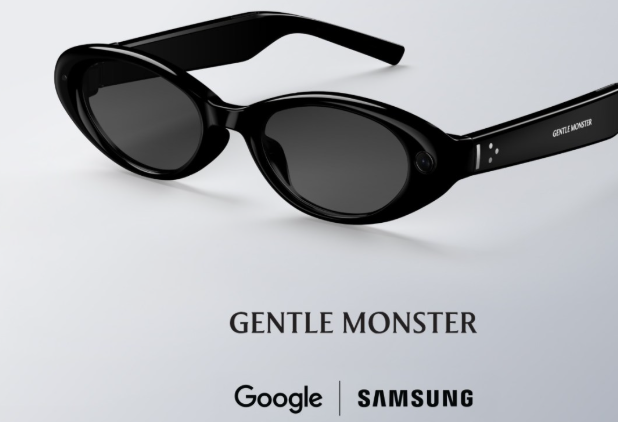
NEW DELHI, Nov 14: Google and Samsung are preparing to enter a new phase of wearable technology with the launch of artificial intelligence-powered smart glasses developed in collaboration with eyewear brands Warby Parker and Gentle Monster.
The companies announced that their intelligent eyewear collections would become available in the United States and South Korea from December 10, with pre-orders opening on November 12.
The new devices combine Samsung’s hardware engineering, Google’s Gemini artificial intelligence technology and the design expertise of the two eyewear companies.
The initiative represents a significant step in the development of wearable AI products, as technology companies increasingly seek to move digital assistants beyond smartphones and computers.
The glasses are designed to provide hands free assistance, helping users understand their surroundings, communicate across languages and access information without constantly looking at a mobile screen.
The launch also places Google and Samsung in more direct competition with Meta, which has established a strong presence in the smart-glasses market through its collaboration with eyewear manufacturer Ray-Ban.
The latest development highlights growing interest in wearable devices that combine traditional fashion accessories with cameras, microphones, speakers and artificial intelligence.
Rather than focusing exclusively on entertainment or photography, the new collection is intended to provide practical assistance during everyday activities.
Gemini brings artificial intelligence into everyday eyewear
The main feature of the new glasses is their integration with Google’s Gemini assistant.
Users will be able to interact with the AI system through natural conversations and receive assistance without needing to hold a smartphone.
The technology is designed to help people understand objects and surroundings, obtain information and communicate more easily while moving between different locations.
For example, a user visiting an unfamiliar place could ask Gemini questions about something they are viewing.
Similarly, someone travelling abroad could use supported language features to understand conversations and communicate with people who speak different languages.
The glasses are also intended to keep users connected through hands-free interactions, making it possible to access certain digital services while carrying out other activities.
Google said the devices would work with compatible smartphones, including supported Pixel and Samsung Galaxy models, as well as selected iPhones.
This approach gives the product access to a wider group of potential customers rather than restricting it to one smartphone ecosystem.
The glasses are designed without an integrated display, placing greater emphasis on voice interaction and audio assistance.
This design choice could help maintain a familiar appearance while avoiding some of the additional weight and complexity associated with display-based wearable devices.
Warby Parker and Gentle Monster bring fashion-focused designs
A major feature of the partnership is the involvement of established eyewear brands.
Warby Parker and Gentle Monster are contributing their respective design identities to the new collections, helping position the devices as everyday fashion accessories rather than conventional electronic gadgets.
The combined range includes 30 design variations.
Gentle Monster is bringing more contemporary and distinctive styling, while Warby Parker is focusing on comparatively traditional eyewear designs.
The collection includes different frame shapes, colours, lens options and sizes, giving consumers greater choice.
The collaboration reflects an important challenge facing the smart-glasses industry.
Unlike smartphones and laptops, eyewear is highly visible and closely connected to personal appearance.
Consumers are unlikely to adopt smart glasses on a large scale if they appear uncomfortable, unusually bulky or difficult to incorporate into everyday clothing.
By working with established fashion brands, Google and Samsung are attempting to address this issue.
The companies want the technology to remain relatively unobtrusive while offering useful digital capabilities.
The devices weigh approximately 40 to 44 grams, depending on the model, according to Samsung’s published specifications.
They use Qualcomm’s Snapdragon AR1 Gen 1 platform to support their hardware functions.
The combination of lightweight construction and integrated AI features is intended to make the glasses suitable for regular use.
Pricing and availability announced
Samsung confirmed that the new collections would begin reaching customers on December 10 in the United States and selected markets in South Korea.
The initial launch will be geographically limited, with no confirmed release schedule for India, the United Kingdom or several other international markets at the time of the announcement.
In the United States, Warby Parker Intelligent Eyewear will start at $395.
The Gentle Monster collection will be priced between $449 and $489, depending on the selected design.
Pre-orders began on November 12 through the participating brands’ retail and online channels.
Customers will also be able to experience demonstrations at selected retail locations when general availability begins.
The pricing places the products within the premium segment of the wearable technology market.
However, the companies will need to demonstrate that the AI features provide enough practical value to justify the additional expenditure compared with ordinary prescription glasses or sunglasses.
The initial availability in the United States and South Korea also suggests that the companies are adopting a phased market-entry strategy.
Such an approach could help them assess consumer demand, identify technical problems and improve the product experience before considering wider international expansion.
Privacy protection becomes a central feature
The growing popularity of camera-equipped smart glasses has created concerns about privacy and the recording of people without their knowledge.
Unlike smartphones, which generally make it clear when someone is taking a photograph, smart glasses can be used discreetly.
This has raised questions about the potential recording of conversations, public spaces and private interactions.
Google and Samsung have therefore highlighted several safeguards designed to improve transparency and give users greater control.
According to Samsung, the glasses include an external LED indicator intended to signal when camera capture is active.
The system is designed to disable camera capture if the indicator is covered or not functioning properly.
The companies have also introduced measures concerning the handling of visual information.
Samsung said that visuals collected through Gemini would not be used for AI model training or advertising targeting.
When users ask Gemini about something they are looking at, the system is designed to automatically redact bystanders’ faces before responding.
Users will also retain control over application permissions and their Gemini activity.
These protections are intended to address concerns that wearable AI products could collect sensitive information without sufficient transparency.
However, the effectiveness of such measures will depend on how they operate in everyday conditions and how clearly users understand the permissions associated with the devices.
The glasses are designed for individuals aged 18 and above, with age verification required for activation and application downloads.
The companies have also emphasised responsible use, particularly when camera and audio functions are involved.
Meta competition intensifies in smart eyewear
The announcement comes as Meta continues to expand its smart-glasses business.
Its partnership with Ray-Ban helped establish a commercially recognisable category of eyewear combining conventional styling with digital features.
The products have demonstrated that consumers may be willing to adopt wearable technology when it offers practical functions without significantly changing the appearance of ordinary glasses.
Meta’s devices have helped popularise features such as hands-free photography, video recording, audio playback and AI-assisted interactions.
Google and Samsung are now seeking to challenge that position by bringing Gemini into a new range of fashion-focused eyewear.
The competition could accelerate innovation across the industry, particularly in voice assistance, translation, camera technology and wearable computing.
For Google, the project also offers an opportunity to extend Gemini beyond smartphones, web browsers and computers.
The company has been investing in artificial intelligence across its product ecosystem, and wearable devices provide another potential route for connecting users with its services.
Samsung, meanwhile, can use its experience in mobile hardware and consumer electronics to develop products that integrate with its wider Galaxy ecosystem.
The involvement of Warby Parker and Gentle Monster could provide an additional advantage by making the devices attractive to consumers who prioritise appearance alongside technology.
Wearable AI market faces practical challenges
Despite the growing interest, smart glasses still face several challenges before they can become mainstream consumer products.
Battery life remains an important consideration because continuous camera use, wireless connectivity and AI processing can consume considerable power.
Comfort is another concern, particularly for consumers who already wear prescription glasses throughout the day.
Connectivity and smartphone compatibility will also influence the overall experience.
Many AI functions depend on an internet connection or access to a compatible mobile device, meaning performance could vary depending on network availability and regional restrictions.
Language support and the accuracy of real-time assistance will be equally important.
A translation system that works well in controlled conditions may face difficulties with background noise, different accents and overlapping conversations.
Similarly, AI-generated descriptions of objects and surroundings can contain mistakes.
Google has cautioned that its AI-based visual assistance should not be treated as a replacement for medical devices, mobility aids or safety-critical navigation systems.
Such limitations will need to be communicated clearly to consumers.
A new direction for personal computing
The introduction of Gemini-powered smart glasses reflects a wider shift towards computing devices that operate in the background and respond to users through natural interactions.
For many years, digital technology has largely depended on screens, keyboards and touch-based interfaces.
Wearable AI products are attempting to reduce that dependence by allowing people to obtain information through voice commands and contextual assistance.
If the technology becomes sufficiently reliable, smart glasses could eventually support activities involving travel, communication, shopping, education and workplace productivity.
However, their long-term success will depend on balancing convenience with affordability, privacy, battery performance and user comfort.
The December launch will provide an important opportunity for Google and Samsung to assess whether consumers are ready to embrace another category of AI-powered personal devices.
The partnership also demonstrates how technology companies are increasingly working with fashion and lifestyle brands to bring advanced computing into products that people already use.
As competition in wearable artificial intelligence intensifies, the next generation of smart glasses could become an important part of the broader consumer technology industry.

