


Gujarat Faces Teacher Shortage in 2,335 Schools as Officials Cite Lack of Transfer Powers
UDISE+ data highlights staffing gaps affecting thousands of pupils, prompting the state education department to seek explanations from district level officers and announce recruitment measures.
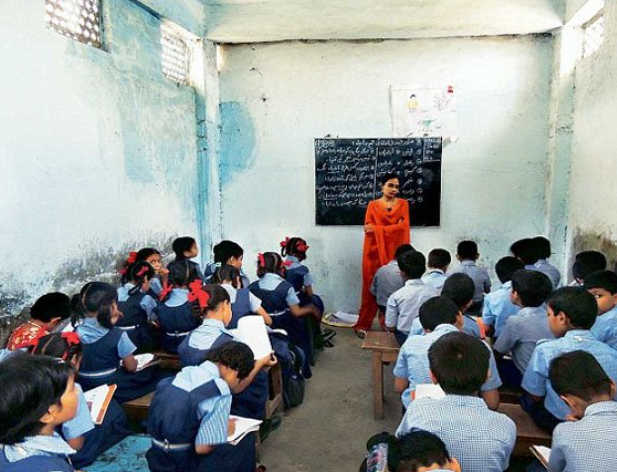
AHMEDABAD, Oct 9: A shortage of teachers in thousands of schools across Gujarat has brought school staffing and administrative accountability into focus, after official education data revealed that 2,335 schools in the state were functioning with only one teacher.
The findings, contained in the Union Ministry of Education’s Unified District Information System for Education Plus (UDISE+) report for 2025–26, have prompted questions about teacher deployment, recruitment and the ability of local education authorities to address vacancies.
The Gujarat education department had issued notices in August to District Primary Education Officers (DPEOs) and Administrative Officers (AOs), holding them responsible for failing to resolve staffing deficiencies in schools under their jurisdiction. The notices described the situation as an administrative failure and warned of possible disciplinary action.
However, several officials responded that they did not have the administrative authority to transfer existing teachers or appoint replacements independently. They argued that decisions concerning teacher transfers and recruitment rested with the state government, limiting their ability to correct shortages at the district level.
The issue has highlighted a wider challenge for school education: ensuring that every institution has sufficient teaching staff while clearly defining the responsibilities of authorities at different levels of administration.
Official data reveals the scale of the problem
According to the UDISE+ report, Gujarat had 53,425 government and private schools during the reporting period. Of these, 2,335 were operating with just one teacher.
The report also showed that approximately 80,053 children were enrolled in schools with a single teacher. The figures indicate that the staffing shortage affects not only individual institutions but also a substantial number of pupils whose daily classroom instruction depends on a very limited teaching workforce.
The data further recorded an average of seven teachers per school across the state, with average enrolment standing at 217 students per institution. These statewide averages, however, do not necessarily reflect the staffing conditions in individual schools.
A school with several teachers may contribute to a comparatively healthy state average, while a smaller institution with limited staff can continue to struggle. The single-teacher figures therefore draw attention to the uneven distribution of educational resources and the importance of examining staffing at the school level.
The report also identified 74 teachers posted in schools with no enrolled children. This finding raises separate questions about the alignment of teacher deployment with student enrolment and the need to periodically review the functioning of schools with very low or zero enrolment.
The data provides an important basis for planning recruitment and reviewing the distribution of teaching staff. At the same time, the figures need to be considered alongside local circumstances, including school locations, enrolment patterns and the availability of personnel.
Education department seeks accountability
Following the publication of the UDISE+ findings, the Director of Primary Education issued notices to district-level officers, citing provisions of the Right of Children to Free and Compulsory Education Act, 2009, and the Gujarat Civil Services (Discipline and Appeal) Rules, 1971.
The notices questioned the failure to maintain the prescribed pupil teacher ratio and described the situation as a serious administrative lapse. They also warned that disciplinary measures, including the possible curtailment of increments, could be considered against officials found responsible.
The department directed the officers to arrange the required teaching staff and provide certificates confirming that the prescribed pupil-teacher ratio had been maintained in the schools under their jurisdiction.
The action was intended to establish accountability for staffing deficiencies and press district authorities to take corrective steps.
However, the responses submitted by the officers brought attention to a distinction between monitoring responsibilities and administrative powers. Officials maintained that they could identify vacancies and report the problem but could not independently transfer or replace teachers without the necessary authority.
A district-level officer, speaking anonymously to The Indian Express, said that the powers required to make such changes rested with the state government rather than with the officers who had received the notices.
The disagreement has raised questions about how responsibility should be distributed when local officials are expected to address problems but lack direct control over the decisions needed to resolve them.
Right to Education provisions at the centre of the issue
The Right of Children to Free and Compulsory Education Act, 2009, establishes requirements for elementary education, including prescribed pupil-teacher ratios.
The Gujarat education department cited Section 25(1) and the Schedule of the Act in its notices, arguing that schools must maintain the required staffing levels.
Maintaining an appropriate pupil-teacher ratio is important because teachers are responsible for delivering lessons, assessing student progress and providing individual attention to children. Where a school has only one teacher, managing multiple classes and administrative responsibilities can become particularly difficult.
The extent of the challenge depends on factors such as the number of enrolled children, the classes being taught and the organisation of the school day. Nevertheless, a single teacher may have to divide time between different groups of students, making it harder to provide sustained attention to every learner.
Adequate staffing is also important for attendance monitoring, assessment, classroom management and the implementation of academic programmes. Where personnel are insufficient, these responsibilities can place additional pressure on the available teacher.
The department’s intervention has therefore focused on compliance with staffing norms as well as administrative responsibility for ensuring that schools are adequately staffed.
Government announces recruitment measures
Director of Primary Education Prakash Trivedi confirmed that the district level officers had submitted their explanations in response to the notices. He said no action had been taken against them at the time of the report.
Trivedi also explained that arrangements had been made to provide temporary teachers in schools reporting zero teachers, although these arrangements did not appear in the UDISE+ data as regular appointments and salaries were not recorded through the same system.
The state government has decided to recruit permanent teachers for schools operating with zero or one teacher as part of its ongoing recruitment process, according to the director.
The proposed recruitment is an important step towards addressing staffing gaps, although its effectiveness will depend on the number of appointments made, the locations where teachers are posted and the speed with which vacancies are filled.
Recruitment alone may not resolve every problem if the distribution of teachers remains uneven. Authorities will also need to match available personnel with the needs of individual schools and ensure that institutions with the greatest shortages receive appropriate attention.
A transparent system for tracking vacancies, appointments and transfers could help identify gaps more quickly and establish whether corrective measures are improving classroom conditions.
Zero-enrolment schools present a separate challenge
Alongside the single-teacher issue, the report identified schools with no enrolled students. The education department has directed district officers to initiate the process of closing such institutions, Trivedi said.
The decision raises a different set of administrative questions from those involving schools with insufficient teachers. While single-teacher schools require staffing interventions, institutions without enrolled children require an assessment of whether they should continue operating.
Any review of zero-enrolment schools needs to consider the circumstances behind the absence of students, including local population changes and the availability of alternative schools. Decisions should also take into account the accessibility of education for children living in the surrounding area.
The goal of rationalising school operations should remain consistent with the broader responsibility to provide children with access to elementary education.
The figures on zero enrolment schools and surplus deployment also point to the importance of periodically updating enrolment records and coordinating staffing decisions with changes in student numbers.
Impact on pupils and classroom learning
The shortage of teachers has implications beyond administrative compliance. For children, regular interaction with teachers is essential for developing basic literacy, numeracy and other foundational skills.
When a single teacher is responsible for multiple classes, lesson planning and individual assessments can become more demanding. Students who require additional explanation or support may have fewer opportunities for personalised instruction.
Teachers may also face difficulties balancing classroom teaching with record-keeping, school administration and other assigned duties. These competing demands can make it challenging to provide consistent attention to pupils across different age groups.
The effect of a staffing shortage is not identical in every school, and the UDISE+ figures alone do not establish the learning outcomes of the affected students. However, the number of children enrolled in single teacher institutions underlines the need to examine how staffing conditions affect everyday classroom experiences.
Filling vacancies would help improve the capacity of schools to organise lessons, monitor student progress and respond to the different learning needs of children.
Need for better coordination and monitoring
The disagreement between district officers and the education department points to the importance of clear administrative procedures. Authorities responsible for identifying staffing shortages need access to a practical mechanism for requesting and implementing transfers or new appointments.
A coordinated approach involving the state government, district offices and school administrations could help ensure that staffing information leads to timely decisions. Regular reviews of vacancies and enrolment would also help officials identify institutions that require urgent intervention.
The UDISE+ platform provides a nationwide framework for collecting and analysing school education data. Its usefulness depends not only on accurate reporting but also on how governments use the findings to plan recruitment, allocate resources and monitor implementation.
The Gujarat situation illustrates why education statistics must be linked to administrative action. Identifying schools with inadequate staff is an important first step, but meaningful improvement requires recruitment decisions, appropriate deployment and follow-up assessments.
Focus on ensuring adequate staffing
The Gujarat education department’s notices and the responses from district officers have brought the state’s teacher deployment system under scrutiny. The reported decision to recruit permanent teachers for single-teacher and zero-teacher schools offers a possible route towards reducing the identified gaps.
The next stage will depend on implementation: how quickly vacancies are filled, whether teachers are allocated according to school requirements and whether the prescribed staffing ratios are maintained.
For the thousands of children attending schools with only one teacher, the central concern remains access to consistent classroom instruction. Addressing that concern will require coordination between authorities, transparent staffing records and sustained monitoring of school-level requirements.

