


Gukesh and Sindarov Remain Level at 1-1 After Two Games in World Chess Championship
Defending champion D Gukesh and Uzbekistan's Javokhir Sindarov share the points in Geneva after two closely contested encounters, setting the stage for an intense battle in the 14 game title match.
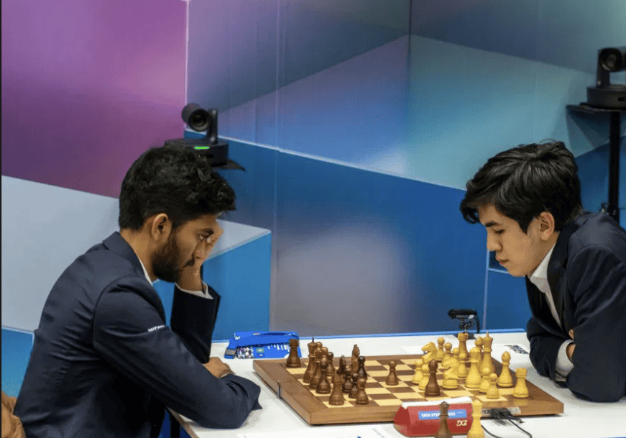
Geneva, Nov 26: India’s reigning world champion D Gukesh and challenger Javokhir Sindarov remained locked at 1-1 after the first two games of the 2026 FIDE World Chess Championship, with both players demonstrating strong defensive preparation and tactical discipline in Geneva.
The opening phase of the 14-game classical championship has produced a closely fought contest, with neither player managing to establish an early advantage. The two encounters have also highlighted the contrasting strengths of the competitors, as Gukesh looks to defend his world title while Sindarov seeks to create history by becoming Uzbekistan’s first classical world champion.
The second game, played on Wednesday, November 25, ended in a draw after Gukesh, playing with the white pieces, was unable to create a decisive advantage against his opponent. The Indian grandmaster maintained a solid position but Sindarov responded confidently, neutralising the pressure and preventing the defending champion from gaining control.
The encounter eventually concluded after 20 moves, leaving the overall score unchanged at 1-1.
The result followed an equally competitive opening game, which had also ended in a draw. Both players therefore entered the third game without any advantage on the scoreboard, making the early stages of the championship particularly important for building momentum.
Gukesh entered the contest carrying the expectations of Indian chess supporters after becoming the youngest undisputed world champion in history in 2024. His victory over China’s Ding Liren in Singapore marked a major milestone for Indian chess and strengthened the country’s position among the leading nations in the sport.
The 20 year old has since been working to establish himself as a consistent force at the highest level. Defending the championship, however, presents a different challenge because opponents now have extensive opportunities to study his playing style and prepare specific strategies.
Sindarov, meanwhile, has emerged as one of the most promising players of the new generation. The Uzbek grandmaster earned his place in the championship after an impressive qualifying campaign and will be determined to take advantage of the opportunity.
His qualification reflects the growing strength of Uzbekistan’s chess programme, which has produced several internationally recognised grandmasters in recent years.
The challenger has demonstrated that he is capable of competing against the world’s strongest players, and his performances in the opening games have reinforced expectations of a difficult title defence for Gukesh.
The second encounter was particularly important because Gukesh had the advantage of playing with white. In classical chess, the first move is generally considered a modest advantage, although converting it into a winning position requires precise preparation and sustained pressure.
Gukesh attempted to maintain a balanced position while looking for opportunities to put Sindarov under pressure. However, the challenger remained composed and successfully handled the Indian player’s approach.
The draw reflected the high level of preparation brought by both competitors. At this stage of a world championship, players often avoid unnecessary risks, especially when the opponent has demonstrated strong opening knowledge.
A single mistake can dramatically change the course of a game, making accurate calculation and time management essential.
The championship follows the traditional 14-game classical format, with the first player to reach 7.5 points declared the winner. If the match remains tied after all scheduled classical games, the title will be decided through faster time-control tie-breaks under the competition regulations.
Each game therefore carries significant importance, although players must also maintain their concentration across the entire match.
For Gukesh, the immediate priority will be to find opportunities to put the challenger under pressure without exposing himself to unnecessary risks.
The Indian grandmaster’s greatest strength has been his ability to remain resilient in complicated positions. His world championship victory demonstrated remarkable fighting spirit, particularly during the closing stages of the contest against Ding.
However, Sindarov’s confidence and preparation suggest that Gukesh will need to produce his best chess to retain the title.
The Uzbek challenger has also benefited from the experience of competing in high-level international events, where he has faced several established grandmasters.
The contest has attracted considerable attention in India because of Gukesh’s status as the country’s latest world champion. His success has inspired a new generation of chess players and strengthened public interest in the game.
Indian chess has enjoyed an exceptional period, with several players achieving success in international tournaments and team competitions. The country’s growing presence at the highest level has also been supported by improvements in training facilities, coaching programmes and competitive opportunities.
Gukesh’s title defence is consequently being viewed as an important moment for the country’s chess movement.
At the same time, Sindarov’s challenge represents the growing competitiveness of international chess, where younger players are increasingly capable of challenging established champions.
The opening two games have shown that neither competitor is willing to surrender an advantage easily. Both have displayed patience, sound positional understanding and the ability to manage difficult situations.
As the match progresses, the psychological battle will become increasingly important. Maintaining concentration, handling pressure and adapting to the opponent’s preparation could determine the eventual outcome.
The players will also need to manage their physical and mental energy because a 14-game classical championship can be demanding even for experienced competitors.
A long match requires careful preparation between games, including analysis of previous positions and adjustments to opening strategies.
The draw in the second encounter means that Gukesh and Sindarov will approach the remaining games with everything still to play for.
For the defending champion, the objective is to demonstrate why he remains among the strongest players in the world. For Sindarov, the opportunity is to challenge the established order and claim the biggest prize in classical chess.
The early results have ensured that the championship remains wide open, with supporters eagerly awaiting the next phase of the contest in Geneva.
Neither player has managed to establish dominance, and the coming games are expected to provide further insight into their preparation, confidence and ability to handle the pressure of a world title match.
The 1-1 scoreline may appear modest, but it reflects the competitive balance between two talented grandmasters who are determined to make their mark on chess history.
As the championship continues, every move will carry greater significance in the battle for the most prestigious individual title in the sport.

