


IMF Urges India to Let Rupee Adjust to Oil Shock as Currency Recovers
The International Monetary Fund says exchange-rate flexibility can help India absorb external economic shocks, as central bank measures and investment inflows support the rupee despite crude oil prices exceeding $110 per barrel.
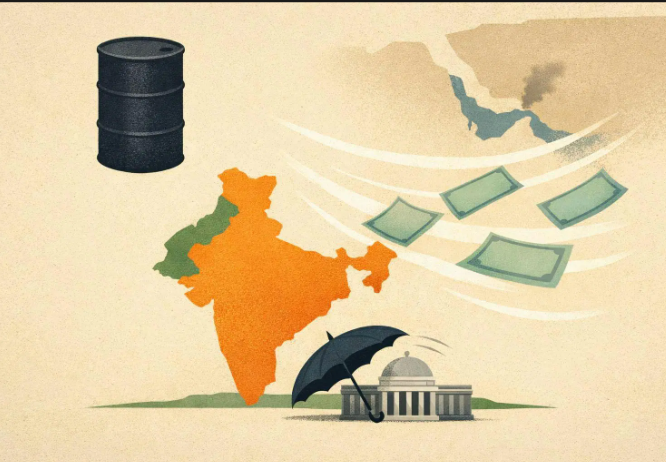
MUMBAI, Oct 21: The International Monetary Fund has urged India to allow the rupee to adjust more freely to external economic pressures, arguing that exchangerate flexibility can serve as the first line of defence when economies face global shocks.
Krishna Srinivasan, Director of the IMF’s Asia and Pacific Department, said currencies should be allowed to absorb part of the pressure created by changing international economic conditions. His comments came as India continues to manage volatility in its foreign-exchange market amid elevated crude oil prices, capital-flow fluctuations and uncertainty surrounding the global economy.
The advice comes at a challenging time for Indian policymakers. Higher energy costs can increase the country’s import bill, while demand for US dollars from importers and investors can place additional pressure on the domestic currency.
The Reserve Bank of India has introduced measures to support the rupee, including arrangements to meet the dollar requirements of state-run oil companies and steps intended to manage pressure arising from foreign-exchange transactions.
Although these interventions have helped the currency recover from recent lows, the IMF’s assessment highlights the limitations of relying on central bank action to maintain exchange-rate stability over an extended period.
The discussion also reflects a broader policy question facing emerging economies: how to balance currency stability with the need to preserve foreign-exchange reserves and allow markets to respond to changing economic fundamentals.
Rupee Gains Support From Investment Inflows
The rupee strengthened to a six-week high during trading on Wednesday, October 21, supported by foreign-exchange inflows linked to the Jio Platforms initial public offering and measures introduced by the central bank.
Reuters reported that the currency reached approximately 94.49 against the US dollar before trimming some gains. The recovery followed a period of weakness during which the rupee had approached record-low levels.
The movement suggested that additional dollar inflows and policy support were helping improve near-term market conditions. However, the currency’s recovery does not necessarily mean that the underlying pressures have disappeared.
India’s dependence on imported energy makes the exchange rate particularly sensitive to developments in global crude markets. When oil prices rise, domestic buyers generally need more dollars to purchase the same volume of petroleum unless prices or other conditions change.
This increases demand for foreign currency and can contribute to depreciation pressure on the rupee. A weaker currency, in turn, raises the cost of imported fuel and other goods priced in dollars.
The effect can extend beyond the energy sector. Businesses importing machinery, electronic components, chemicals and industrial materials may face higher input costs, while companies with foreign-currency debt could experience increased repayment burdens when measured in rupees.
Exporters can benefit from a weaker domestic currency because their overseas earnings may translate into more rupees. However, the advantage varies depending on their dependence on imported inputs, overseas demand and the currencies in which their expenses are paid.
For policymakers, the challenge is therefore not simply to prevent the rupee from weakening, but to ensure that currency movements do not create excessive volatility or undermine broader economic stability.
Central Bank Measures Provide Temporary Relief
The RBI has taken several steps to address the recent pressure on the foreign-exchange market.
One measure allows designated state-owned oil marketing companies to obtain dollars through a special arrangement, reducing their immediate need to purchase foreign currency directly in the spot market.
The central bank has also introduced measures affecting certain foreign-exchange derivative transactions, with the objective of limiting excessive speculative activity and managing demand for dollars.
Separately, authorities have pursued measures intended to attract foreign capital and strengthen the supply of foreign currency. Such initiatives can provide additional support when international investors are willing to bring funds into Indian markets.
These steps have helped ease immediate pressure, but the IMF has emphasised that intervention cannot substitute indefinitely for adjustments in the exchange rate.
When external conditions remain unfavourable, defending a currency at a particular level may require substantial resources. The effectiveness of intervention also depends on the scale and persistence of the underlying shock.
A flexible exchange rate can absorb some of the adjustment automatically, reducing the need for policymakers to use reserves to offset every market movement.
However, currency flexibility does not mean that central banks must remain inactive. Authorities can still intervene to address disorderly trading, excessive volatility or conditions that threaten financial stability.
The distinction is between smoothing abrupt market movements and attempting to prevent the exchange rate from responding to economic fundamentals.
Rising Crude Prices Add to India’s Import Burden
Energy costs remain one of the principal risks facing India’s economic outlook.
Brent crude futures rose above $110 per barrel on October 21 amid concerns over supply disruptions and attacks affecting shipping routes in West Asia. Prices remained elevated on Thursday as fears surrounding energy infrastructure and regional security continued to influence market sentiment. <Link url=”https://economictimes.indiatimes.com/markets/commodities/news/oil-price-today-october-21-crude-oil-crosses-110-amid-middle-east-supply-concerns-what-lies-ahead/articleshow/135079942.cms” title=”Read the October 21 oil-market report”/>.
The continuing uncertainty surrounding the Strait of Hormuz has added to concerns about the reliability of energy shipments. Disruptions to tanker movements can increase freight costs, insurance premiums and the time required to transport crude oil.
For India, sustained increases in petroleum prices can affect the trade balance because a larger amount of foreign currency may be needed to finance energy imports.
Higher oil prices can also feed into domestic inflation. Transport, logistics, manufacturing and agriculture all depend directly or indirectly on fuel, meaning that rising energy costs can gradually spread through supply chains.
The extent of the impact depends on the duration of the price increase, government taxation decisions, fuel-pricing policies and the ability of businesses to absorb additional expenses.
If companies pass higher costs on to consumers, inflationary pressure may increase. If they absorb the increase instead, their profit margins may narrow, potentially affecting investment and employment decisions.
The combination of expensive oil and currency weakness can be especially difficult because the two factors may reinforce each other. Higher dollar-denominated import costs increase demand for foreign currency, while rupee depreciation makes each dollar of imported fuel more expensive in domestic terms.
This creates a difficult environment for economic management, particularly if the disruption continues for several months.
Inflation and Interest-Rate Decisions Under Scrutiny
Currency movements can complicate monetary policy because exchange-rate depreciation may increase the cost of imported goods and contribute to inflation.
If inflationary pressure becomes persistent, the RBI may face a more difficult decision over interest rates. Higher rates can help contain inflation and support financial stability, but they can also increase borrowing costs for households and businesses.
Companies planning capital expenditure may postpone investments if financing becomes more expensive. Consumers may also reduce spending on homes, vehicles and other purchases that depend on credit.
On the other hand, allowing the exchange rate to adjust can reduce the need for prolonged intervention, although it may initially make imports more expensive.
The appropriate response depends on the nature of the shock. Temporary supply disruptions may require a different policy approach from a sustained deterioration in the country’s external balance.
Policymakers must also consider the condition of domestic demand, inflation expectations, the availability of foreign capital and the strength of the banking system.
The IMF’s comments suggest that exchange-rate flexibility can help absorb part of the adjustment rather than requiring monetary authorities to shoulder the entire burden.
For India, this approach would involve balancing the benefits of market adjustment against the risks that sharp currency movements could create for importers, borrowers and financial markets.
Foreign Investment Offers an Additional Cushion
Capital inflows can help stabilise the foreign-exchange market by increasing the supply of dollars available to meet domestic demand.
The Jio Platforms IPO has become an important market event in this context. The public offering attracted strong institutional interest after opening on October 21, with the issue fully subscribed within approximately 100 minutes, according to market reports.
Such large transactions can generate foreign-exchange activity when overseas investors transfer funds into Indian assets. The actual effect on the rupee depends on the timing and scale of those transactions, the way funds are converted and broader market conditions.
The RBI and government have also taken steps to encourage foreign investment and overseas Indian deposits. IMF officials have viewed measures intended to support capital inflows positively, while distinguishing them from attempts to control the exchange rate directly.
Nevertheless, portfolio investment can be volatile. Investors may increase their exposure to Indian assets when growth prospects improve and global conditions are favourable, but they can also withdraw funds when risk appetite declines.
Long-term investment in productive capacity may provide a more durable source of foreign currency than short-term portfolio movements. However, attracting such investment depends on business confidence, regulatory predictability, infrastructure and the expected returns on capital.
India’s economic outlook will therefore depend on both its ability to attract investment and its capacity to manage external shocks.
Implications for Businesses and Consumers
A more flexible exchange rate can help the economy adjust, but its effects are not uniform across sectors.
Import-dependent businesses may face higher costs when the rupee weakens. Companies that rely on overseas machinery, technology, industrial components or petroleum products may need to revise budgets and pricing strategies.
Export-oriented businesses could gain from improved rupee earnings, although the benefit depends on the extent of their imported inputs and their exposure to international competition.
Airlines, transport operators and logistics companies are particularly sensitive to fuel costs. Higher petroleum prices can increase operating expenses, while currency depreciation can raise the rupee cost of aircraft leasing, maintenance and other dollar-denominated obligations.
Households may also feel the effects through transport expenses, prices of goods and services, and the cost of imported products.
The overall impact will depend on how long the current energy-market disruption lasts and whether companies can pass on higher costs without significantly weakening demand.
Businesses may respond by improving energy efficiency, diversifying suppliers, managing currency exposure and reviewing their use of foreign-currency borrowing.
Outlook
The IMF’s advice places the emphasis on allowing market forces to absorb a reasonable share of external economic pressure while preserving the ability of authorities to respond to disorderly conditions.
The rupee’s recent recovery shows that policy measures and investment-related inflows can improve short-term sentiment. However, sustained oil prices above $110 per barrel remain a significant risk for India’s external accounts and inflation outlook.
The central bank will need to weigh the benefits of intervention against the costs of prolonged support, while monitoring capital flows, energy prices and domestic financial conditions.
For businesses and investors, currency movements are likely to remain closely linked to developments in West Asia, crude oil markets and foreign investment.
Ultimately, India’s resilience will depend not only on the direction of the rupee but also on the strength of its economic fundamentals, the sustainability of capital inflows and its ability to manage higher import costs without undermining growth.

