


India Approves NPR 33 Million Grant for Monastery Project in Nepal
New High Impact Community Development Project aims to preserve Buddhist heritage, strengthen local infrastructure, and deepen India-Nepal development cooperation.
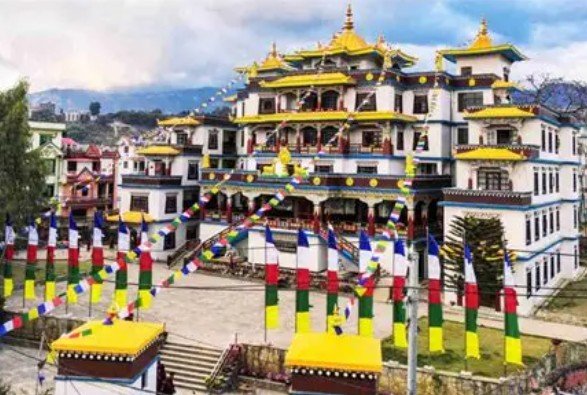
KATHMANDU, Jul 15: India has reaffirmed its commitment to strengthening development cooperation with Nepal by announcing financial assistance of NPR 33 million for the construction of a Buddhist monastery in Solukhumbu district. The initiative, unveiled on Tuesday, forms part of India’s ongoing High Impact Community Development Projects (HICDPs) programme, which supports grassroots infrastructure and community welfare in neighbouring countries.
The project is expected to contribute significantly to the preservation of Nepal’s rich Buddhist traditions while providing improved facilities for religious, educational and cultural activities in the region. It also reflects the growing partnership between India and Nepal, which continues to expand across sectors such as education, healthcare, connectivity, culture and community development.
Foundation Stone Laid in Solukhumbu
The foundation stone for the Ngagyur Nyingma Palyul Dhongag Chholing Monastery was jointly laid by Ajay Kumar Singh, Second Secretary at the Embassy of India in Kathmandu, and Mina Karki Basnet, Chairperson of the concerned rural municipality.
The ceremony was attended by local government representatives, community leaders, monks and residents, highlighting the importance of the monastery for the local Buddhist population. Officials described the project as an important step towards strengthening cultural heritage while supporting regional development.
According to the Indian Embassy, the monastery will serve as a centre for religious learning, meditation and community activities once completed.
Sixth Community Development Project in Solukhumbu
The monastery project marks the sixth High Impact Community Development Project undertaken by India in Nepal’s Solukhumbu district.
Over the years, India has supported several community-oriented projects in the district, including educational institutions, health facilities and public infrastructure aimed at improving the quality of life for local residents.
These projects are designed to address local developmental needs while promoting sustainable growth through close coordination with Nepal’s provincial and local governments.
Preserving Cultural Heritage
Local leaders welcomed India’s assistance and noted that the monastery would play an important role in preserving the region’s centuries-old Buddhist traditions.
Municipal Chairperson Mina Karki Basnet expressed confidence that the new monastery would become an important cultural and spiritual centre for the people of Likhu Pike Rural Municipality. She said the project would help protect religious heritage while creating a space for future generations to learn about traditional Buddhist teachings and practices.
Community representatives also appreciated India’s continued support for local development initiatives, describing the partnership as beneficial for both countries.
Supporting Grassroots Development
India’s High Impact Community Development Projects focus on improving infrastructure at the community level by funding projects identified in consultation with local authorities.
The programme supports the construction of schools, hospitals, health centres, cultural institutions, roads, bridges and other public facilities that directly benefit local communities.
By prioritising small but impactful infrastructure projects, the initiative aims to improve public services, create employment opportunities during construction and strengthen local institutions.
The monastery project aligns with these objectives by combining cultural preservation with community development.
India’s Regional Development Partnership
High Impact Community Development Projects represent one of India’s key development assistance mechanisms across South Asia.
Besides Nepal, similar initiatives are being implemented in Bhutan, Sri Lanka and the Maldives, where India partners with local governments to deliver projects that respond to community needs.
These programmes complement India’s broader “Neighbourhood First” policy, which seeks to strengthen regional cooperation through development partnerships, infrastructure investment and people-to-people engagement.
Officials say the projects are selected based on local priorities and implemented in close collaboration with partner governments.
Expanding India-Nepal Cooperation
India remains Nepal’s largest development partner, contributing to projects in sectors including transport, education, energy, health, water supply and cultural conservation.
Over the past several decades, New Delhi has supported the construction of schools, hospitals, roads, bridges, integrated check posts and cross-border railway links aimed at improving connectivity and economic cooperation.
The two countries also maintain close collaboration in disaster management, hydropower development and capacity-building programmes.
The latest monastery project adds another dimension to bilateral cooperation by focusing on the protection of Nepal’s religious and cultural heritage.
Boosting Local Tourism Potential
Apart from its religious significance, the monastery is expected to contribute to local tourism once completed.
Solukhumbu district, globally recognised as the gateway to Mount Everest, attracts thousands of domestic and international visitors every year. Cultural attractions such as monasteries, traditional villages and Buddhist heritage sites complement the region’s adventure tourism offerings.
Local authorities believe the new monastery could become an additional destination for pilgrims and cultural tourists, generating economic opportunities for nearby communities through hospitality, handicrafts and local businesses.
A Symbol of Enduring Friendship
The latest financial assistance reflects the enduring partnership between India and Nepal, built on centuries-old cultural, historical and people-to-people ties.
Officials from both countries have consistently highlighted development cooperation as one of the strongest pillars of bilateral relations. Community-based projects such as the Solukhumbu monastery demonstrate how targeted investments can improve local infrastructure while preserving cultural identity.
As construction begins, the project is expected to serve not only as a place of worship but also as a symbol of friendship, mutual trust and shared heritage between India and Nepal.
With the addition of this sixth High Impact Community Development Project in Solukhumbu, India continues to reinforce its commitment to supporting Nepal’s socio-economic progress through sustainable, locally driven development initiatives.

